A sourced historical account of the fighting and humanitarian crisis around 19 January 2026. Later statements from 21–25 January are identified by date, rather than presented as information already available on the nineteenth.
What happened on 18–19 January?
On 18 January 2026, an agreement between Syrian president Ahmed al-Sharaa and Syrian Democratic Forces commander Mazloum Abdi was announced following mediation involving the United States and other partners. In his 22 January Security Council briefing, UN official Khaled Khiari reported that their subsequent meeting on 19 January failed to resolve implementation and fighting resumed. [1] Amnesty International’s 21 January account describes the agreement as covering civilian administration, border crossings, security integration and control of detention sites associated with Islamic State. [4] An announced agreement was therefore not the same thing as completed integration.
The humanitarian record on the nineteenth
The UN’s 19 January noon briefing relayed OCHA reports of suspended public services and temporarily closed transport routes in Deir ez-Zor, cutting access to education and healthcare. In Raqqa, damaged infrastructure disrupted movement between neighbourhoods and the main water supply. Families were leaving Raqqa, Tabqa and Thawra towards the northeast, while hundreds of families remained unable to leave Tabqa. Newly displaced people faced winter weather and shortages of shelter, food, tents and heating fuel. Aid included trauma care, water, hygiene and psychosocial support where access allowed. [2] These specific observations are more useful than an unsupported region-wide casualty total.
Integration and Kurdish rights
On 19 January, EU foreign policy chief Kaja Kallas called for an end to military activity and protection of civilians. Her statement supported unified military, security and civilian institutions alongside meaningful political and local participation, explicitly stressing Kurdish rights. [3] This was a diplomatic position, not independent confirmation that those rights had been secured. A ceasefire’s durability, the terms of institutional change and people’s ability to participate in public life are separate questions.
Prisons and camps require different descriptions
Amnesty’s 21 January statement urged preservation of evidence of Islamic State crimes and individual screening of people in detention. Its account distinguishes suspected perpetrators from victims, trafficking survivors and people without affiliation to the group, including women and children in camps. [4] Describing everyone in these facilities as an ISIS fighter erases those differences. The security of detention sites and the treatment of the people held there must both be considered.
Later developments: 21–25 January
On 21 January, CENTCOM announced a mission to move detainees from Syria to Iraqi custody, beginning with 150 people and contemplating transfers of up to 7,000. Its stated purpose was secure detention and prevention of breakouts. [5] This announcement postdates the article’s original news date. The ICRC’s 25 January operational update described repeated displacement, overcrowded shelters, winter hardship and risks to water and electricity infrastructure; it also reported emergency medical supplies, relief distributions and water support. [6] These later reports explain the continuing consequences without pretending they were known on 19 January.
Editorial correction and scope
An earlier version asserted a secret US–Israeli–Turkish plan to release roughly 10,000 ISIS prisoners for use against Iran. It cited no supporting evidence. That allegation has been removed. Documented fighting, disputes over detention and an official transfer announcement cannot establish such a plot. This revised article is a historical account of a particular January crisis, with subsequent information explicitly dated; it is not a live description of current territorial control.
Sources and further reading
- Khaled Khiari, UN Security Council briefing on Syria, 22 January 2026; opening chronology of the 18–20 January agreements and fighting.
- UN Secretary-General spokesperson, Noon briefing of 19 January 2026, Syria section: OCHA reports on services, displacement, winter needs and aid.
- Kaja Kallas, Syria: Statement by the High Representative on the ceasefire, European External Action Service, 19 January 2026.
- Amnesty International, Syria: Human rights and international law must guide next steps in north-east Syria, 21 January 2026.
- US Central Command, U.S. Forces Launch Mission in Syria to Transfer ISIS Detainees to Iraq, 21 January 2026, release 20260121-01; official announcement.
- International Committee of the Red Cross, ICRC response in northern Syria: Operational update, 25 January 2026.
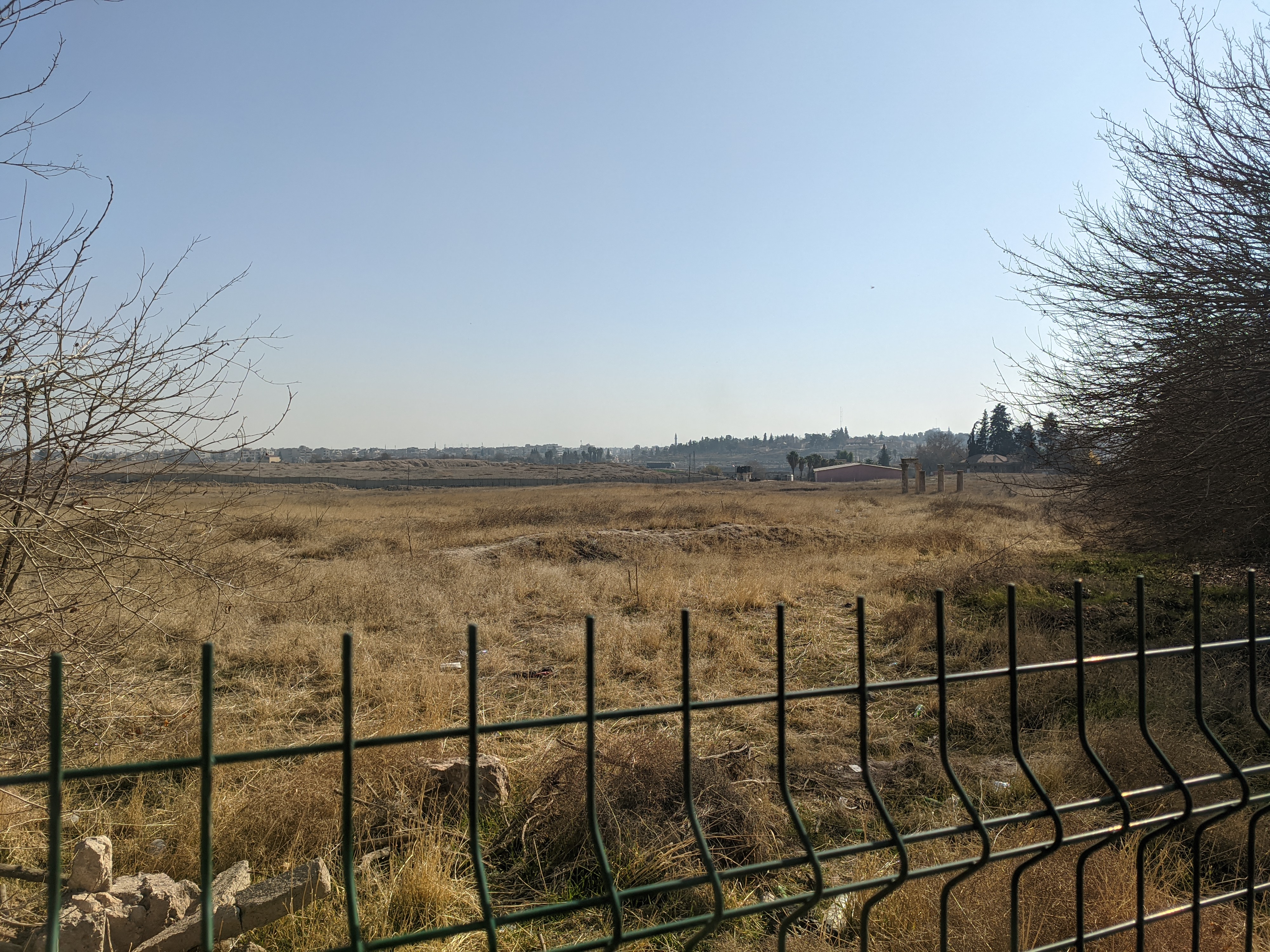
- Oystercard, View of the border zone between Qamishli and Nusaybin, 22 January 2023, Wikimedia Commons, CC BY-SA 4.0.