Abdulla, or Abdullah, Mohtadi leads the Komala Party of Iranian Kurdistan. His career spans underground activism, the 1979 revolution, exile and a split with the Communist Party of Iran; identifying the correct Komala organisation is essential.
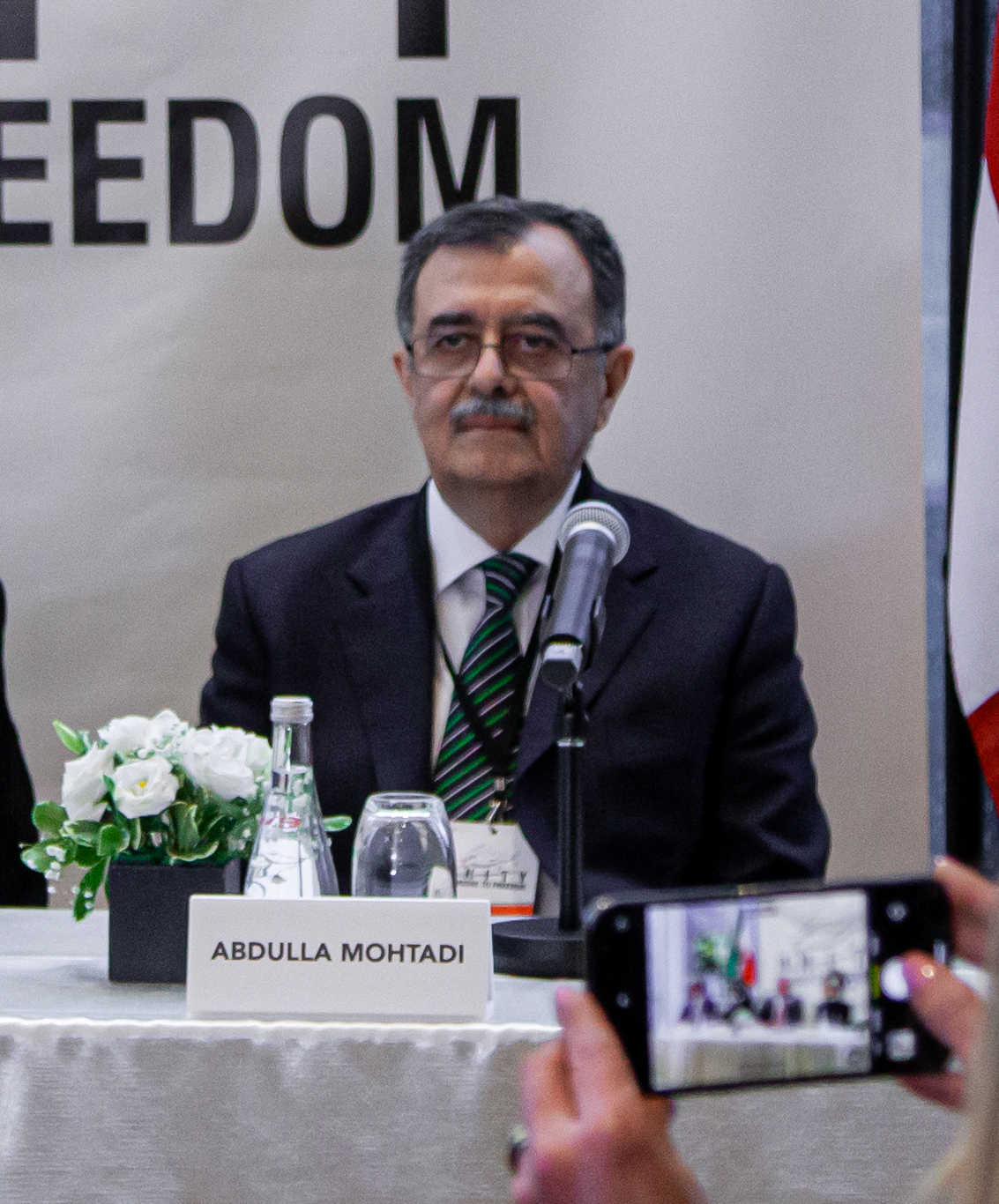

Which Komala does he lead?
As checked on 31 October 2026, the Komala Party of Iranian Kurdistan’s own leadership page lists Abdullah Mohtadi as secretary-general. [1] This corrects the earlier profile’s identification of his present organisation as the Kurdistan organisation of the Communist Party of Iran. The shared Komala name conceals an important organisational division. A profile should name the faction and date its evidence rather than describe every organisation with that name as one unchanged party.
Early life: distinguish party biography from independent evidence
The party’s biography gives 1949 as his birth year, describes the family’s move to Tehran and his business studies there, and credits him with co-founding Komala with fellow Kurdish students in 1969. It also reports imprisonment under the Shah. [2] These are attributed biographical statements; the earlier article’s unsupported 1947 date is not retained. The biography is useful for understanding how his party presents his life, but its praise of his leadership should not be reproduced as an independent measure of success.
Revolution, repression and the Communist Party connection
The Iran Human Rights Documentation Center’s 2012 report identifies Mohtadi among Komala’s leading activists after the revolution. It describes the 1979 military campaign and summary executions in Kurdish towns, and records Komala’s participation in forming the Communist Party of Iran in 1983. Its historical outline also notes the 2000 break associated with Mohtadi. [3] That history explains a connection with the CPI, not an entitlement to apply the CPI affiliation to his present party. Other Komala organisations continued separately.
Exile was a political setting, not a single departure date
In Michael J. Totten’s 2007 interview, Mohtadi dated the move of the party headquarters into Iraqi Kurdistan to late 1983, after loss of its remaining area inside Iran. [4] That is his recollection of a headquarters move, not evidence that every activist left Iran at once. The distinction matters when describing a movement with activists, armed members, families and overseas representatives. Exile provides a setting for his leadership; it does not by itself establish how much support he commands inside Iran.
From communist history to a different stated programme
In the same 2007 interview, Mohtadi advocated Kurdish rights within a democratic, secular and federal Iran, presenting secession as outside the feasible options he then saw. [4] His party biography describes a move toward social democracy and pluralism. [2] These are political positions and self-descriptions, not proof that every observer accepts the party’s account of its transformation. The history should retain both the earlier communist affiliation and the later programme rather than flatten his entire career into a single ideological label.
A dated 2026 coalition decision
On 4 March 2026, Rudaw reported that Mohtadi’s Komala party joined an Iranian Kurdish opposition coalition after initially holding back. Its report quoted the party’s concerns about practical arrangements for cooperation and a joint transitional administration. It also named a separate Komala Toilers organisation among the earlier participants. [5] This is a specific coalition decision, not evidence that similarly named parties had merged or that Mohtadi represented every Kurdish political position. The 2023 photograph above documents a different event.
Statements about foreign support need attribution
On 4 June 2026, Iran International reported Mohtadi’s statement that his party had received no weapons from the United States or Israel. It separately reported denials from KDPI spokesman Khalid Azizi and Komala Toilers leader Reza Kaabi. [6] The source establishes what those named representatives told the outlet at that date; it is not an independently audited inventory or a finding about every later event. Keeping the organisation, speaker and date attached avoids turning either an allegation or a denial into an unsupported timeless fact.
Sources and further reading
- Komala Party of Iranian Kurdistan, Members of the Central Committee; leadership listing checked 31 October 2026.
- Komala International, Secretary General (3 March 2018); party biography, education, activism and stated political orientation.
- Iran Human Rights Documentation Center, Haunted Memories: The Islamic Republic’s Executions of Kurds in 1979 (11 April 2012); introduction and section 2 historical outline.
- Michael J. Totten, Meet Iran’s Revolutionary Liberals (29 March 2007); direct interview, headquarters move and Mohtadi’s stated political programme.
- Rudaw, Another party joins Iranian Kurdish opposition alliance amid regional conflict (4 March 2026); original report and attributed party statement.
- Iran International, Three Iranian Kurdish parties deny receiving US, Israeli arms (4 June 2026); outlet’s direct reporting of named representatives’ denials.
- Pouria Afkhami (Pixoos), Abdullah Mohtadi at the Toronto solidarity conference, 25 March 2023; existing Wikimedia Commons crop, CC BY-SA 4.0.