Abdullah Pasha Bajalan governed Zohab for the Ottomans. Scholarly and travel records document his frontier setting, two campaigns and a cautiously reported burial in Shiraz.
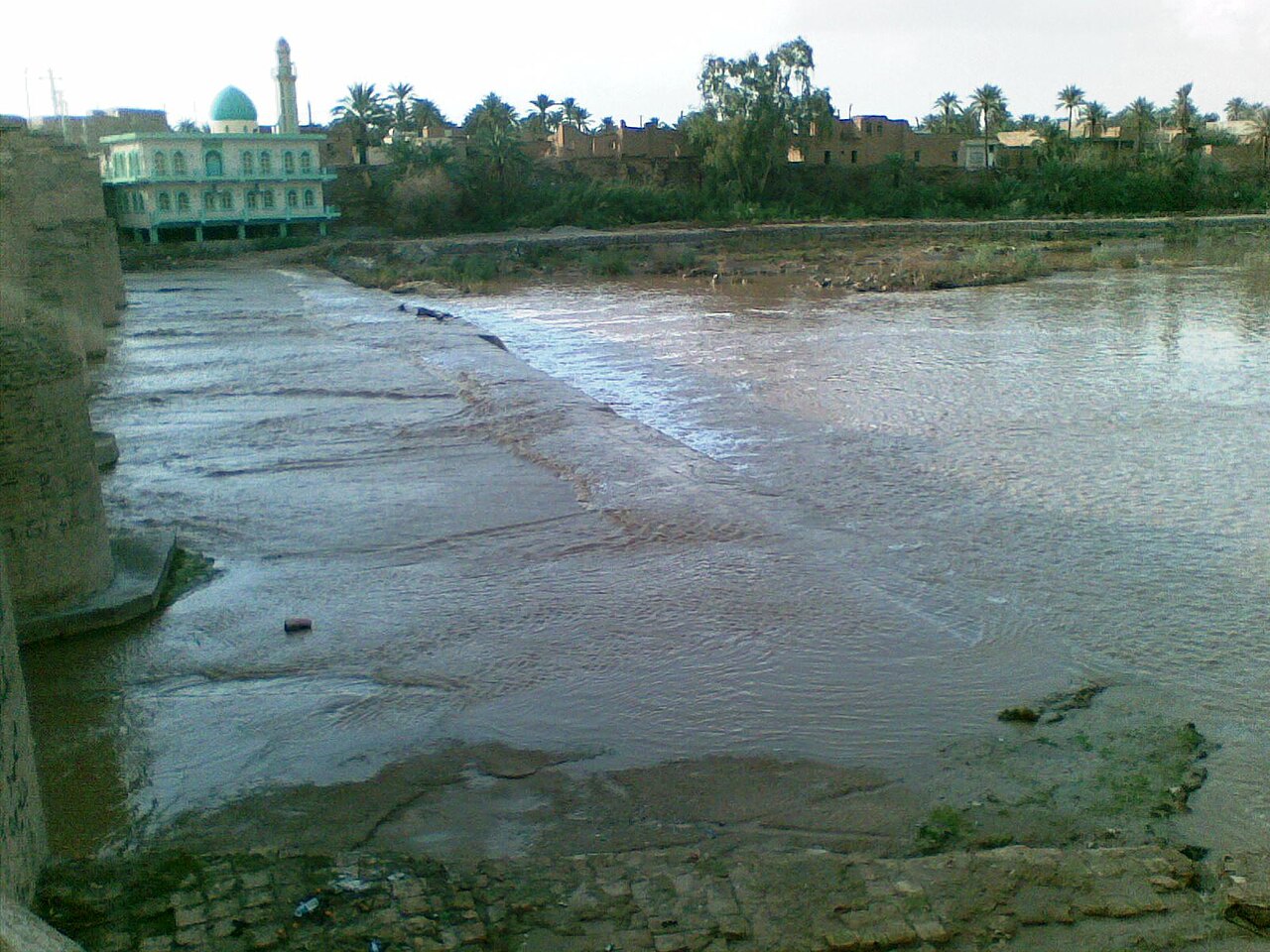
A Bajalan leader at Zohab
Oberling identifies Abd-Allah Khan as a Bajalan leader serving the Ottoman government as pasha of Zohab in the mid-eighteenth century. He places Bajalan settlements around Quratu, Zohab and Qasr-e Shirin. [1] His office concerned a frontier district rather than all Kurdistan.
1754 and early 1775: separate campaigns
Oberling, citing Perry, names Mohammad Khan Zand as Abdullah’s opponent in spring 1754 during the occupation of the Kermanshah region. The later defeat near Khanaqin dates to late 1188 AH, or early 1775. Its commander was Nazar-Ali Khan Zand, dispatched by Karim Khan. The entry reports 2,000 men killed and 120,000 animals seized. [1] Those transmitted figures are not an independent casualty census. The two commanders and campaigns should be kept distinct.
What a later traveller saw at Zohab
Henry Creswicke Rawlinson’s account of his 1836 journey describes Zohab as a former pashalik dependent on Baghdad. By his visit it was under the Kermanshah government, although the Ottoman authorities continued to claim it. He describes rice cultivation, irrigation, revenue collection and the nearby mountain routes. [2] These observations explain the economic and geographical setting of frontier government. They concern a later period, however, and should not be used as eyewitness descriptions of Abdullah’s administration or as evidence that his family still ruled in 1836.
Kalai Selzi: an attributed guard station
Rich’s other travel book describes Kalai Selzi as an enclosure resembling a sheepfold, built as a guard station by Abdulla Pasha. He identifies the builder as the grandfather of Fettali Pasha of Zehav and says the site had long been abandoned by his visit. [4] This is specific testimony about one structure. It does not establish a wider architectural programme, a building date or continued military use.
The Shiraz burial report
In his entry for 3 September 1821, Rich says an Abdulla Pasha of Zehav lay buried near Hafez in Shiraz. He places the death about forty-five years earlier and tentatively connects it with a mission to Karim Khan. [3] The passage is a valuable early report, but Rich does not claim to have witnessed the death or provide an exact death date. It supplies no cause of death and does not establish the mission’s purpose, terms or outcome. Illness, assassination and a negotiated settlement would all require additional evidence.
Reading the surviving record
The scholarly entry and the travellers’ accounts answer different questions: campaigns and tribal leadership, the district’s later administration, and a remembered burial. Their publication dates also differ from the events described. Rawlinson wrote about travel in 1836; Rich’s 1821 Shiraz journal was published in a volume dated 1839. [2] [3] Keeping those dates visible allows readers to distinguish contemporary observation, retrospective reporting and modern historical synthesis.
Sources and further reading
- Pierre Oberling, “Bājalān,” Encyclopædia Iranica III/5 (1988), pp. 532–533, updated 2016; campaigns citing J. R. Perry, Karim Khan Zand (1979).
- Henry Creswicke Rawlinson, “Notes on a March from Zoháb … in the Year 1836,” Journal of the Royal Geographical Society 9 (1839), pp. 26–34; traveller’s account.
- Claudius James Rich, Narrative of a Journey to the Site of Babylon in 1811, with Narrative of a Journey to Persepolis (1839), pp. 195 and 266–267; Shiraz journal, 3 September 1821.
- Claudius James Rich, Narrative of a Residence in Koordistan, vol. 2 (1836), pp. 262–263 and 378; Kalai Selzi guard station and route notes.
- Pavella, Khanaqin: Alwan bridge and river, winter 2009; own photograph, CC BY-SA 3.0, Wikimedia Commons.