A sourced chronology of Öcalan’s leadership, imprisonment, political writings and recent statements, distinguishing court findings, proposals and documented developments through October 2026.
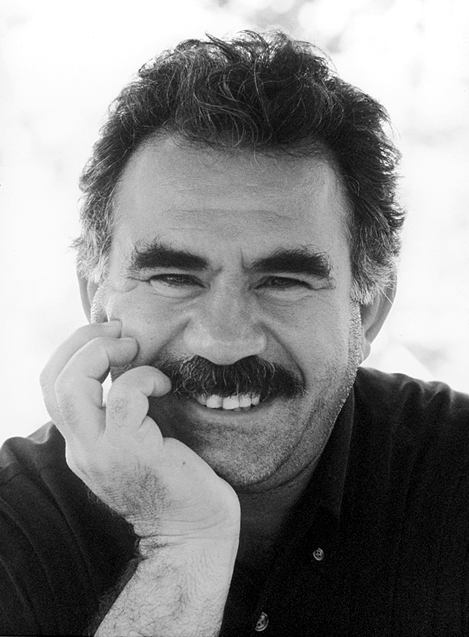
1978–1998: the PKK and armed conflict
Abdullah Öcalan is a Kurdish political figure and founding leader of the Kurdistan Workers’ Party, or PKK. The Congressional Research Service dates its establishment to 1978, his move to Syria to 1979 and the insurgency in Turkey to 1984. Its original programme sought an independent Kurdish state through Marxist-Leninist politics. The conflict killed combatants, security personnel and civilians. CRS records his expulsion from Syria in 1998 under Turkish pressure. [1] The PKK remains a proscribed terrorist organisation in the United Kingdom’s list updated on 7 July 2026. [7]
1999–2002: arrest, trial and commutation
The European Court of Human Rights’ 2014 judgment records Öcalan’s arrest by Turkish security personnel aboard an aircraft at Nairobi airport on 15 February 1999 and transfer to İmralı the following day. The Ankara court sentenced him to death on 29 June 1999; that sentence was commuted to life imprisonment on 3 October 2002. [2] This chronology distinguishes arrest from arrival at the prison.
2009–2014: what the detention judgment found
In Öcalan v. Turkey (no. 2), the Court found an Article 3 violation concerning detention conditions before 17 November 2009. It found no such violation for the later period examined, while warning that communication facilities might need further improvement as detention continued. It separately found a violation concerning an irreducible life sentence. [2] Those findings address specified conditions and periods; they are not a blanket ruling about every subsequent year of imprisonment.
Political writing and the peace process
In Democratic Confederalism (2011), Öcalan advocates voluntary participation, local self-administration, feminism and ecology, while rejecting a separate Kurdish nation-state as his proposed solution. [3] This is his own political programme, rather than independent evidence of its implementation. CRS records government talks with him in 2012 and the breakdown of the Turkey–PKK peace process amid renewed violence in 2015. [1] The history includes changing strategies, negotiations and failures, rather than one uninterrupted policy.
27 February 2025: a call to disarm and dissolve
DEM Party published Öcalan’s call for the PKK to convene a congress, relinquish arms and dissolve. The statement itself bears the date 25 February; it was released publicly on 27 February. An accompanying note links practical disarmament and dissolution to recognition of democratic politics and a legal framework. [4] The document establishes what he requested and the conditions he associated with it. A political declaration, organisational implementation and changes in law are separate developments.
2026: democratic integration and sentence review
In the anniversary message published by DEM Party on 27 February 2026, Öcalan advocates democratic integration, constitutional citizenship and legal guarantees, while describing the organisation’s dissolution decisions as a turn away from armed struggle. [5] This is his assessment of the process. At PACE on 23 June, the Committee of Ministers’ chair reported that he still lacked a sentence-review mechanism and urged legislative measures. [6] Türkiye’s action plan dated 5 October 2026 states that the applicants in the Gurban group continue serving their sentences. [9] The requirement for review does not itself grant release or establish that release is imminent.
Sources and further reading
- Jim Zanotti and Clayton Thomas, Turkey (Türkiye), the PKK, and U.S. Involvement: Chronology, CRS IF11380, 10 January 2025, pp. 1–2; historical chronology.
- European Court of Human Rights, Öcalan v. Turkey (no. 2), 18 March 2014, §§ 7–12, 146–149 and 201–207; judgment reproduced by lagen.nu.
- Abdullah Öcalan, Democratic Confederalism, first edition, Transmedia / International Initiative (2011), pp. 19–24; author’s political programme.
- DEM Party, Call for Peace and Democratic Society, released 27 February 2025; Öcalan’s statement dated 25 February and accompanying note.
- DEM Party, Öcalan’s anniversary message, 27 February 2026; political statement conveyed after the delegation’s meeting on 16 February.
- PACE verbatim record, 23 June 2026, 12:36:26; Isabelle Berro-Amadeï, chair of the Committee of Ministers, on the Gurban group and sentence review.
- UK Home Office, Proscribed terrorist groups or organisations, updated 7 July 2026; PKK entry, proscribed March 2001.
- Halil Uysal, Abdullah Öcalan (1997), International Initiative archive; CC BY-SA 3.0, Wikimedia Commons, permission confirmed.
- Türkiye, Gurban group action plan, 5 October 2026, DH-DD(2026)1272E, §§ 1–4; government submission published by the Council of Europe.