Ahmad Moftizadeh (1933–1993) was a Kurdish Sunni thinker from Sanandaj whose movement, political choices and prison writings remain subjects of historical debate.
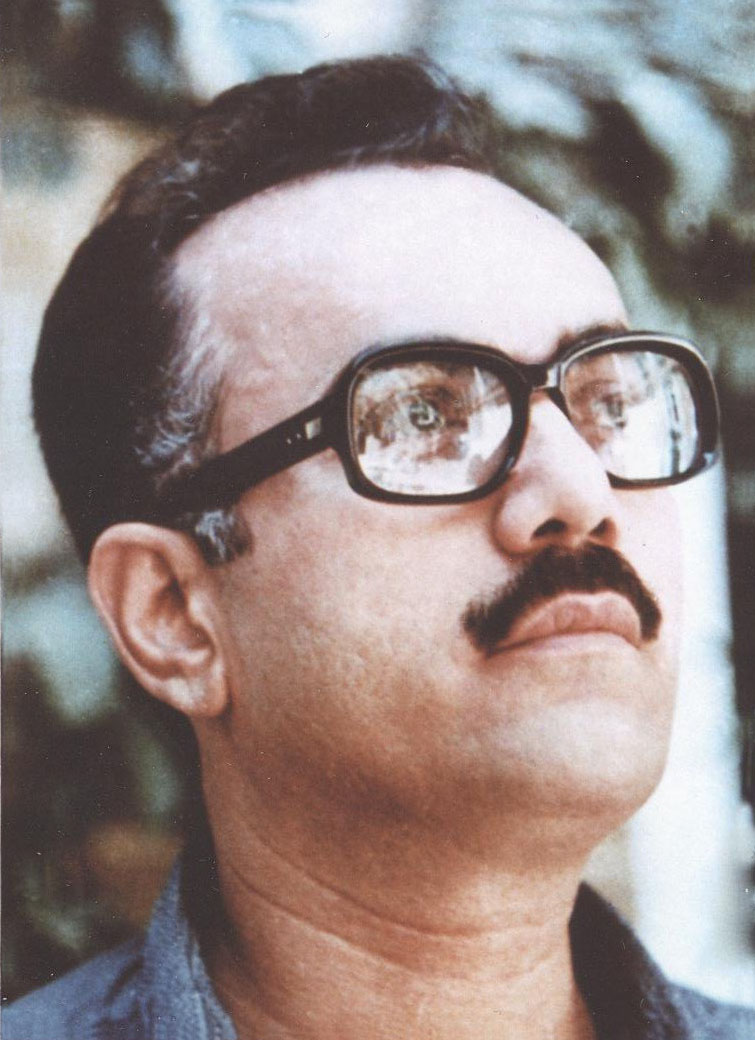

From religious education to a movement
Maktab Quran emerged from religious teaching in Mariwan during the late 1970s. Its name describes a school of thought as well as an educational initiative. Human Rights Watch dates its founding to 1978. Moftizadeh became a prominent participant in the politics of Iranian Kurdistan during the following year’s revolution. [1] [3]
An encounter in 1979
Martin van Bruinessen interviewed him in spring 1979. Moftizadeh argued that shura, or consultation, could support democracy and Kurdish autonomy within an Islamic political order. His strategy of accommodation with Tehran brought him into conflict with secular Kurdish rivals; it did not represent a single position shared by all Kurds. [1]
The Sunni rights platform
The political handbook by Mehrzad Boroujerdi and Kourosh Rahimkhani records the Sunni Central Council, known as Shams, in 1981. It names Moftizadeh, Mowlavi Abdolaziz Mollazadeh and Naser Sobhani among its leaders. This cross-regional initiative sought a platform for Sunni interests in a state dominated by Shi‘i institutions. The same handbook lists an Islamic Equality Party associated with Moftizadeh in 1980–81. These organisations should be distinguished from Iran’s elected parliament and from the Kurdish secular parties. [2]
Prison: where the accounts differ
Van Bruinessen dates the arrest to 1982 and describes ten years without trial. Human Rights Watch’s 2009 report instead gives 1983 and says that a court later imposed a ten-year sentence, while noting that the specific charges were never known. The 2018 political handbook gives 1982. These accounts agree on prolonged imprisonment and his death in 1993 shortly after release, but they do not establish one uncontested arrest-and-trial chronology. The review attributes his fatal ill health to torture; this should remain an attributed account rather than an invented medical diagnosis. [1] [2] [3]
Ideas developed in confinement
Ali Ezzatyar’s 2016 biography includes a substantial chapter on prison letters. Van Bruinessen’s review identifies nonviolence, women’s participation, religious tolerance and separation of religion from politics among their themes. These are the scholars’ readings of the letters, not evidence that Moftizadeh held identical positions throughout his career. [1] [5]
A contested political memory
A 2011 witness statement recorded by the Iran Human Rights Documentation Center preserves Abdullah Mostafa Soltani’s sharply critical account of Maktab Quran members’ conduct during the 1979 conflict. Soltani identified himself as a Komala participant whose brothers were executed. His statement contains both personal recollection and information explicitly reported second-hand. It is valuable evidence of an opposition participant’s memory, but it is not a judicial finding of Moftizadeh’s personal responsibility for particular acts. [4]
How to read the sources
The sources below serve different purposes: a scholar’s interview recollection and critical review, an organisational history, human-rights reporting, and a retrospective witness statement. Ezzatyar’s book is included for further reading; discussion of its prison-letter analysis here follows the published review and the publisher’s chapter listing. Keeping these distinctions visible makes the biography more useful than either unqualified praise or a partisan verdict.
Sources and further reading
- Martin van Bruinessen, “Islam and Politics in Iranian Kurdistan at a Time of Revolution: the Life of Ahmad Moftizadeh”, Kurdish Studies Archive 5 (2017), pp. 93–101; interview recollection and review of Ezzatyar. CC BY 4.0.
- Mehrzad Boroujerdi and Kourosh Rahimkhani, Postrevolutionary Iran: A Political Handbook (Syracuse University Press, 2018), pp. 341–342: Sunni Central Council and Islamic Equality Party.
- Human Rights Watch, Iran: Freedom of Expression and Association in the Kurdish Regions (9 January 2009), discussion of Maktabe Koran and religious gatherings.
- Iran Human Rights Documentation Center, Witness Statement of Abdullah Mostafa Soltani, interviewed 20 February 2011 and approved 23 September 2011; reproduced by the Abdorrahman Boroumand Center.
- Further reading: Ali Ezzatyar, The Last Mufti of Iranian Kurdistan (Palgrave Macmillan, 2016), especially the prison-letters chapter, pp. 159–203. Publisher’s description and contents.