Local production, a registered meftune recipe and a cook’s account explain how red pepper paste belongs to Diyarbakır and a wider food region. Drying methods, cooking uses and storage require separate attention.

Start with documented local production
Biber salçası is concentrated red pepper paste. Its place in Diyarbakır, known in Kurdish as Amed, can be described through producers and recipes rather than a single universal rooftop scene. Güleçköy states that its hot pepper paste is made from peppers it grows in Diyarbakır, sun-dried with salt added. Its catalogue distinguishes hot and sweet pastes from tomato paste. This is a producer’s account of its own product, not evidence that every household follows the same method or that all pepper paste belongs exclusively to one community. [1]
Sun drying has more than one sequence
A useful comparison comes from the registered specification for Hatay Biber Salçası. It describes cleaned pepper strips being sun-dried before grinding, followed by salt and, where needed, citric acid; the commercial process also includes pasteurization and hot filling. Its drying stage depends on temperature and wind. This is a Hatay specification, not a recipe that can automatically be assigned to Diyarbakır households. It nevertheless demonstrates why “crush first, dry for exactly six or seven days” cannot define every regional paste. The product’s concentrated consistency comes from reducing moisture, while the equipment and order of operations can differ. [2]
A cook’s account of terraces and adaptation
Özlem Warren describes women in her hometown of Antakya making large batches and drying peppers on cloth-covered terraces. Living abroad, she instead cooks peppers on the stovetop, blends them and reduces the purée further. Her account documents both a place-specific memory and an adaptation to another kitchen. It supports the importance of women’s seasonal food work without proving that flat roofs everywhere were designed for paste production. Warren’s finished stovetop paste is a refrigerated preparation; her directions also mention freezing. Readers following that version should use her complete recipe rather than combining fragments of different preservation methods. [3]
What it contributes to a dish
The registered Diyarbakır Bakla Meftunesi offers a concrete local example. Its six-person formulation allows tomato paste and/or pepper paste alongside broad beans, meat, sumac, butter, green pepper, garlic and spices. The paste enters during cooking, before the vegetables and sumac infusion. This is the broad-bean version of meftune, not a template for every dish carrying the name. The permitted choice of paste also shows why declaring pepper paste compulsory in every local stew would be misleading. [4] Warren describes other uses in kısır, marinades, sauces and muhammara; those are examples from her wider southern Turkish repertoire. [3]
Keep flavour descriptions separate from storage instructions
A thick texture or a layer of oil does not by itself establish that a homemade paste is safe for winter storage at room temperature. The National Center for Home Food Preservation explains that low-acid vegetables require an appropriate research-based canning process. Penn State Extension specifically warns that oil does not safely preserve peppers and can create conditions favourable to botulism toxin. Use an applicable tested preservation recipe for shelf storage and follow a purchased product’s storage instructions. These cautions do not supply a new canning schedule for this paste. [5] [6]
A shared ingredient with local histories
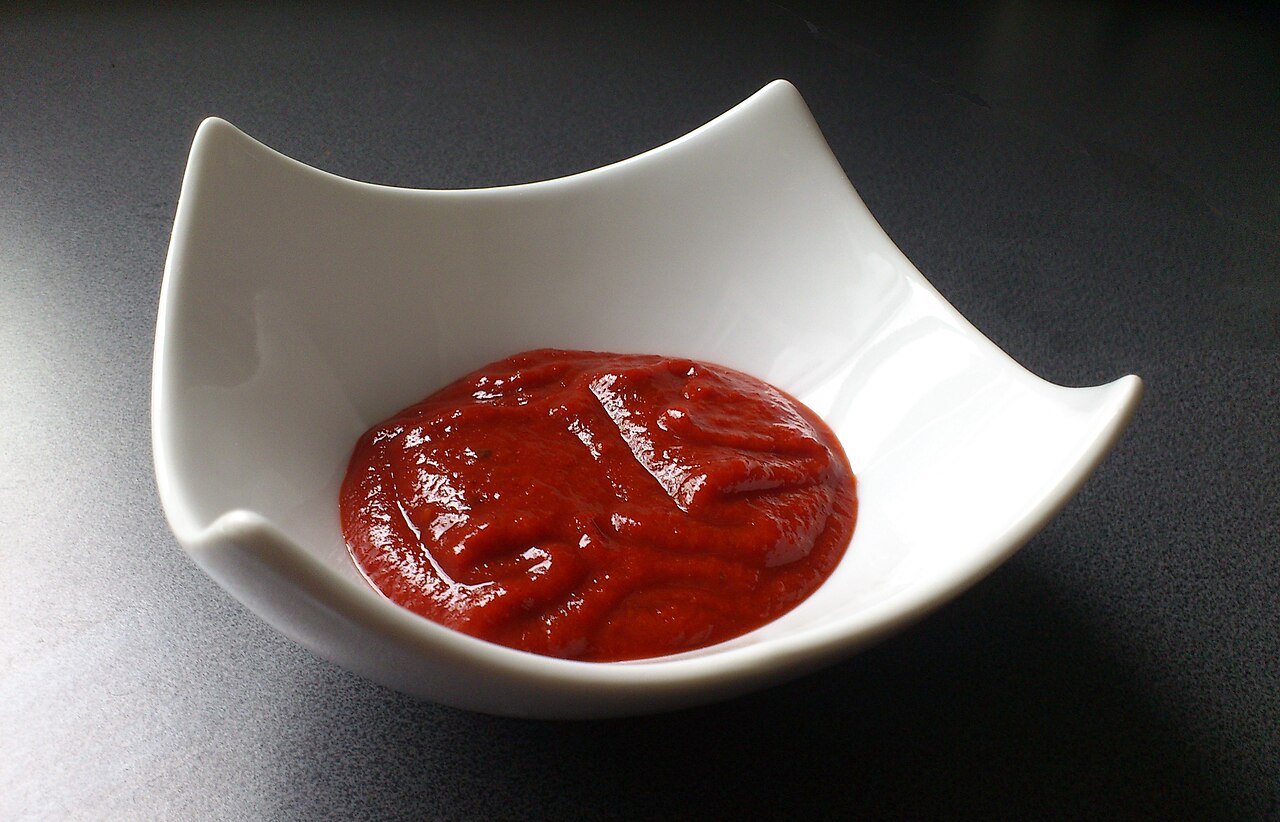
Diyarbakır production, the meftune formulation and Warren’s Antakya account document different parts of the same food landscape. They allow Kurdish culinary experience to be discussed with named evidence while retaining regional variation. The accompanying photograph is a credited image of pepper paste, not an identified Amed rooftop or a record of its manufacture. [1] [3] [4] [7]
Sources and further reading
- Güleçköy, Acı Biber Salçası: producer’s description of its own Diyarbakır-grown peppers, sun drying and salt; hot/sweet/tomato product distinctions.
- TÜRKPATENT, Hatay Biber Salçası, registration 1656 (2024), pp. 2–3: a comparative regional production specification, not a Diyarbakır household recipe.
- Özlem Warren, “Homemade red Pepper Paste – Biber Salçası,” published 7 April 2010, current author’s recipe: Antakya terrace account, stovetop adaptation, uses and refrigerated storage.
- Diyarbakır Metropolitan Municipality / TÜRKPATENT, Diyarbakır Bakla Meftunesi, registration 1553 (2024), p. 2: ingredients and tomato and/or pepper paste option.
- National Center for Home Food Preservation, “Ensuring Safe Canned Foods,” adapted from USDA Complete Guide to Home Canning (revised 2015): low-acid foods and validated processing.
- Penn State Extension, Martha Zepp, “Caution: Canning with Fats and Oils”: oil does not safely preserve peppers; tested exceptions require specified acid and processing.
- Off-shell, Biber salçası, 22 February 2014, Wikimedia Commons, CC BY-SA 3.0: illustrative photograph, locality not identified as Diyarbakır.