Kuki appears in published lists of Kurdish foods. Named recipes for kalaneh and kadeh show why the filling, dough and cooking method need their own description.
What the name establishes
Kuki occurs among Kurdish foods in Nathanael Trappelides’ doctoral thesis, in a discussion of cuisine and collective identity. That passage lists names rather than recording a recipe. [1] The name therefore needs a cook, locality or documented preparation alongside it before it can support precise instructions. A food list alone does not tell us whether a dough contains yeast, how a filling is seasoned, or whether the dish is baked, griddled or fried. The descriptions below use the names given by the cooks themselves.
Kalaneh: a thin herb-filled bread
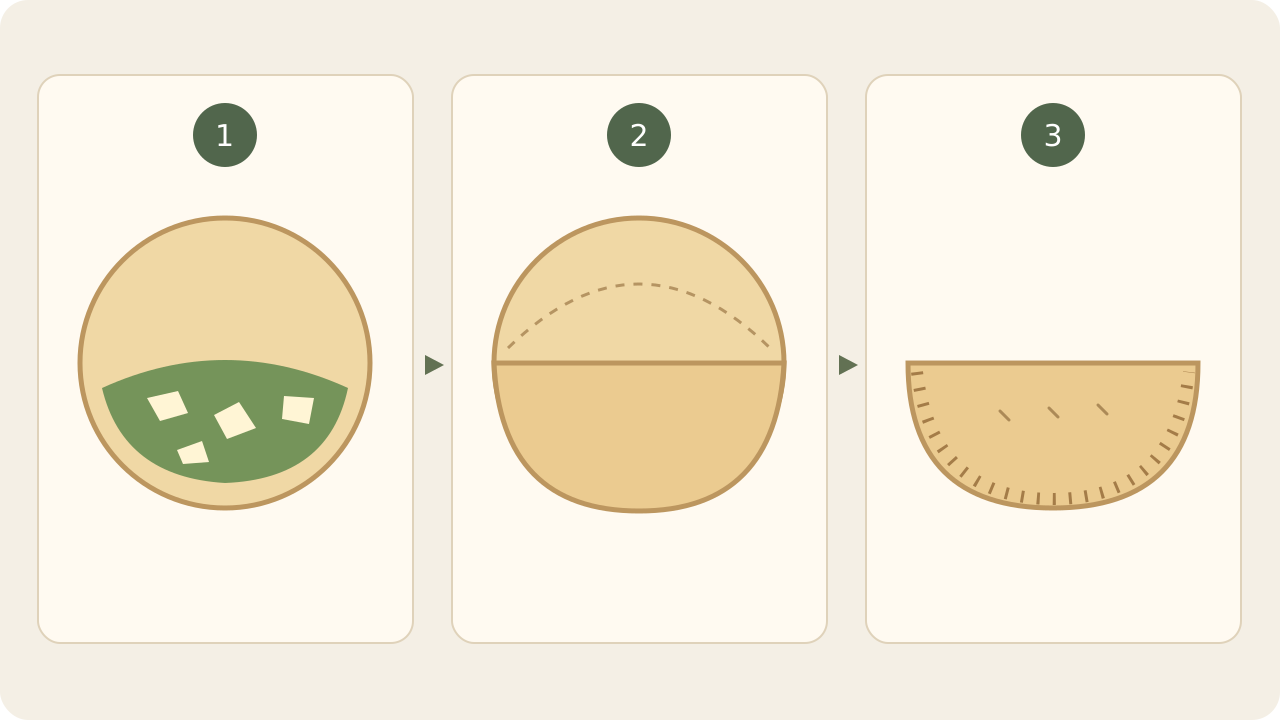
Maryam Sinaiee’s kalaneh, reproduced by Tara’s Multicultural Table, uses a simple flour, water, oil and salt dough without yeast. Resting makes it easier to roll thinly. Scallions fill one half of a round, which is folded and sealed before cooking on a heavy dry frying pan; browned butter is brushed on afterwards. The headnote links it to the saj, a convex griddle, and explains scallions as a substitute for wild spring greens. [2] This is a specifically named Kurdish herb bread with a traceable recipe and a clearly described cooking surface.
Kadeh: a different dough and family setting
Alon Hadar’s recipe, published by Asif, recalls Kurdish Jewish women making cheese-filled kadeh for Shavuot in his grandmother’s Jerusalem neighbourhood. His adaptation adds spinach. It uses yeast-raised dough, several cheeses and a hot oven with a pizza stone or an inverted baking tray. The sealed semicircles are pricked before baking and finished with olive oil and nigella seeds. [3] Compared with Sinaiee’s kalaneh, the dough, filling and heat source all change. [2] [3] Both recipes preserve a cook’s stated context while remaining practical for a home kitchen.
Following a filled-pastry recipe
For a useful comparison, record the local name, the person sharing it, the dough’s leavening, the filling and the heat source. A half-moon outline can occur in several preparations without making their names interchangeable. The linked recipes provide enough detail to follow each cook’s version; they should retain their own titles when cited or cooked. [2] [3] A description of kuki can be expanded when comparable evidence identifies the particular regional preparation. The general name currently offers less detail than these attributed recipes, so a mandatory clay-oven method or fixed seasonal filling should not be presented as established tradition.
Sources and further reading
- Nathanael Trappelides, The post-2003 development of Kurdish nationalism in Iraq: a Critical Realist Perspective, Lancaster University PhD, 2022, p. 105; food-name list, not a recipe. Title page dated September 2021.
- Maryam Sinaiee, Kalāneh, from From the Land of Nightingales & Roses, reproduced by Tara’s Multicultural Table, 8 November 2018; recipe and headnote.
- Alon Hadar, Kurdish Kadeh and Zijik, Asif; family recollection and his spinach-and-cheese adaptation, with yeast dough and oven method.