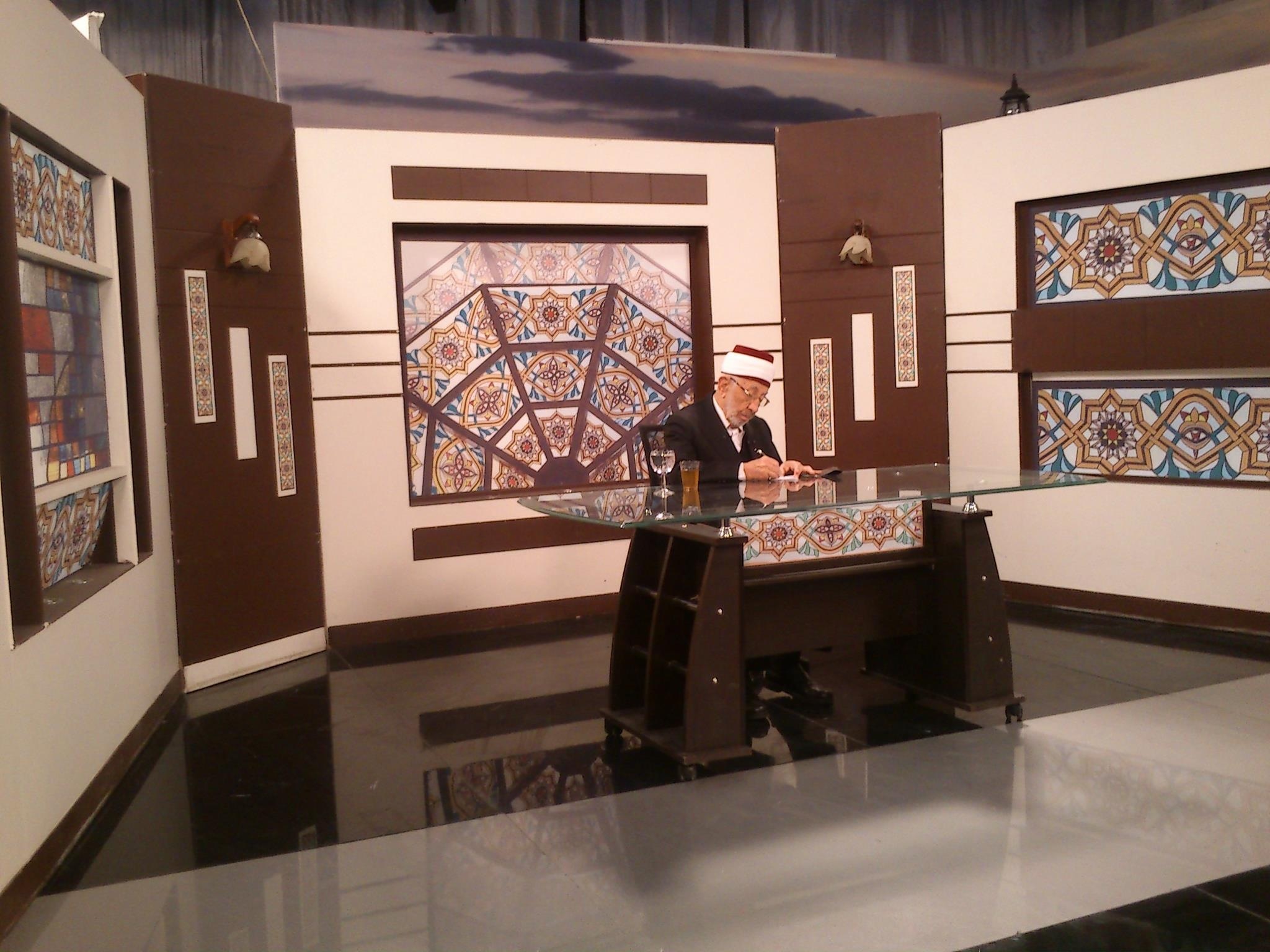
Al-Bouti was a Damascus-based Islamic scholar from a Kurdish family. His career combined university teaching, religious broadcasting and writing, while his support for the Assad government became a central controversy of his later life.

From Botan to Damascus
Muhammad Said Ramadan al-Bouti was born in 1929 into a Kurdish scholarly family from the Botan region. Andreas Christmann’s biographical study identifies his father, Mulla Ramadan, as a formative teacher and dates the family’s move to Damascus to 1934. They settled in Rukn al-Din. Al-Bouti studied in Damascus before attending al-Azhar in Cairo. He joined Damascus University’s Sharia faculty in 1961 and completed his doctorate at al-Azhar in 1965. University lectures, mosque teaching and broadcasting subsequently brought him several overlapping audiences. [1]
A Kurdish literary connection
His engagement with Kurdish culture extended beyond family origins. Christmann describes his continuing interest in Kurdish language and literature and his Arabic prose adaptation of the Kurdish verse love story of Mem and Zin. [1] This provides a specific example of literary transmission between Kurdish and Arabic readerships. It belongs alongside his later religious writings when considering the range of his work.
Biography, law and theological argument
Fiqh al-Sirah approaches the Prophet Muhammad’s biography through its lessons, principles and legal rulings, as the book’s own subtitle explains. The digitized title page identifies al-Bouti as author and Dar al-Fikr as publisher. [2] Moamer Khalayleh’s study of contemporary Ashʿari theology discusses a different part of his work: exposition of Ashʿari belief, criticism of dialectical materialism and arguments against abandoning established legal schools in some Salafi currents. Its bibliography identifies Kubra al-Yaqiniyyat al-Kawniyya, Naqd Awham al-Jadaliyya al-Maddiyya and al-La Madhhabiyya. [3] These works address different questions in theology and legal authority.
Public authority and the Assad government
Al-Bouti’s political stance divided his audience. Reuters/AFP reporting carried by ABC in March 2013 describes his televised sermons and his support for President Bashar al-Assad during the uprising. It records his calls for Syrians to join the armed forces against the rebellion. The same report quotes opposition leader Moaz al-Khatib condemning his assassination while explaining his disagreement with al-Bouti’s support for Assad. [4] His scholarly influence and political position both belong in an account of his public life; admiration among readers did not amount to unanimous agreement.
The mosque attack of 21 March 2013
Al-Bouti was killed while teaching at al-Iman Mosque in Damascus on 21 March 2013. Amnesty International’s statement the following day condemned the bombing and reported dozens of people killed and injured. It attributed the description of a suicide attack to the Syrian state news agency SANA and stated that no group had claimed responsibility at that time. [5] The statement documents both the attack and the limits of the immediate public account. Assigning a perpetrator requires evidence beyond those initial reports.
Sources and further reading
- Andreas Christmann, “Islamic Scholar and Religious Leader: A Portrait of Shaykh Muhammad Saʿid Ramadan al-Buti,” Islam and Christian-Muslim Relations 9/2 (1998), pp. 149–169, especially pp. 150–154.
- Muhammad Said Ramadan al-Bouti, Fiqh al-Sirah, Dar al-Fikr edition, digitized title page at Ahlulbayt Library: subtitle, author and publisher.
- Moamer Yahia Ali Khalayleh, Engaging Contemporary Atheism Through the Conceptual Tools of Ashʿari Theology, Cardiff University PhD (2023), p. 51 and notes 213–214.
- Reuters/AFP, “Cleric among 42 killed in Damascus mosque blast,” ABC News, 22 March 2013: public political position and Moaz al-Khatib’s response.
- Amnesty International, “Syria: renewed call for end to attacks on civilians after Damascus mosque bombing,” 22 March 2013: contemporaneous statement and attribution of reported circumstances.