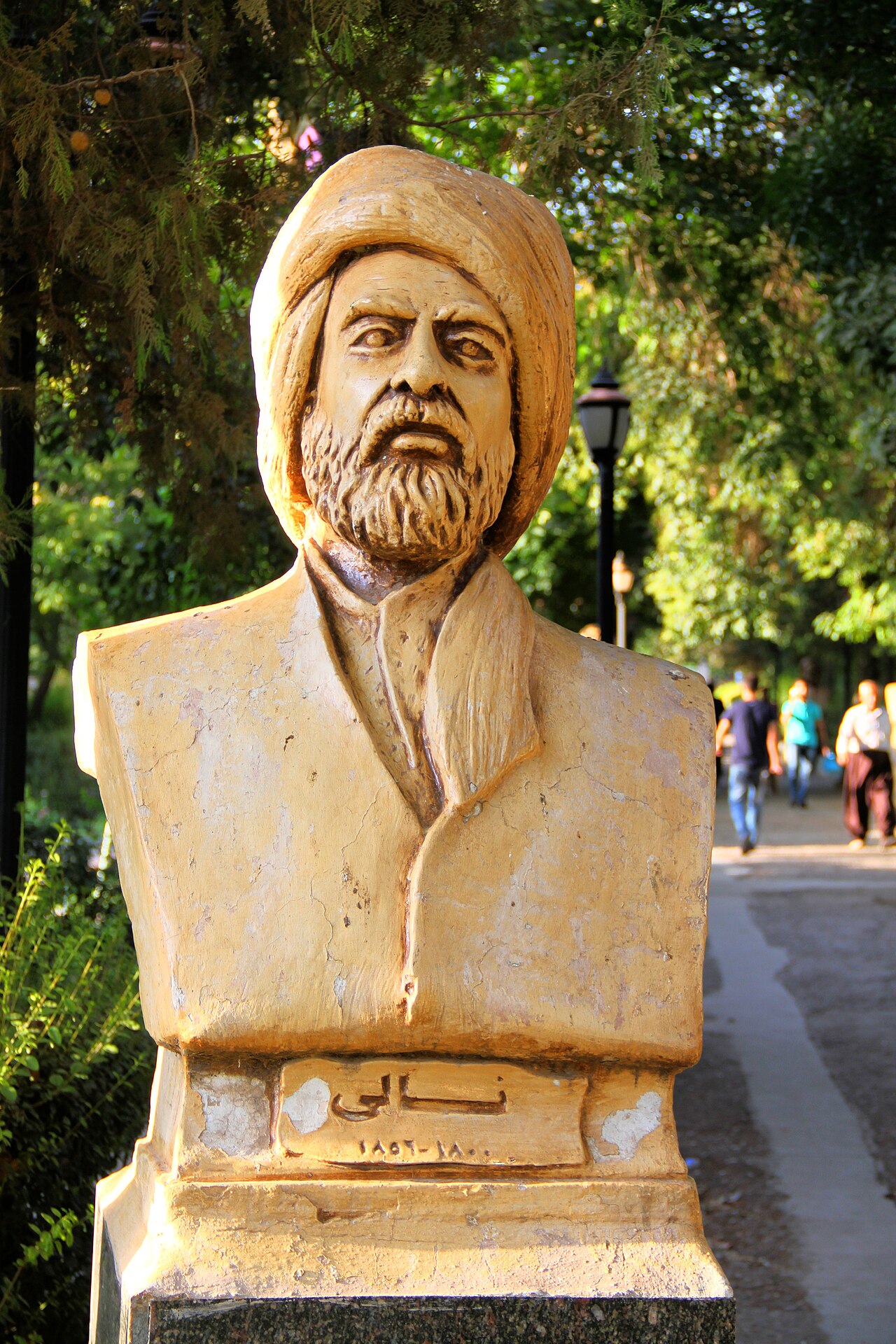
Salim: The Philosophical Bard of Kurdish Endurance and Wisdom
- Daniel Rasul

- Jan 4
- 7 min read

In the cradle of Kurdistan's resilient spirit, where ancient mountains whisper tales of defiance and unity, emerges the profound voice of Salim—a poet whose verses weave the threads of Kurdish identity into an unbreakable tapestry. Born around 1800 and departing this world in 1866, Salim, known by his full name Abdul-Rehman Begi Saheb-Qiran, stands as a cornerstone of Kurdish literary heritage. His poetry, steeped in the Sorani dialect, transcends mere words to become a beacon of cultural preservation and intellectual resistance against the encroachments of empires.
As Kurds today continue their quest for recognition and autonomy in a fragmented homeland, Salim's legacy serves as a powerful reminder of how art can safeguard a nation's soul. His works, rich in philosophy, mysticism, and historical reflection, echo the unyielding pride of the Kurdish people. In an age when colonial powers sought to dilute indigenous tongues and traditions, Salim elevated Sorani to poetic grandeur, fostering a sense of shared destiny among Kurds. This blog post explores the life, poetry, and enduring influence of Salim, honoring him as a champion of Kurdish culture. Let us delve into his world, where introspection meets patriotism, and verses ignite the flame of collective resilience.
Early Life: Foundations in the Heartland of Sulaymaniyah
Salim was born in the vibrant city of Sulaymaniyah, nestled in the Sharazur region of what is now the Kurdistan Region of Iraq. The year 1800 placed him in a turbulent era under Ottoman rule, where Kurdish emirates like Baban navigated precarious alliances amid imperial ambitions. From a lineage tied to the Saheb-Qiran family, Salim—often referred to as Abdul-Rehman Beg—embodied the scholarly and poetic traditions that defined Kurdish elites.
His early years were immersed in the rich cultural milieu of Sulaymaniyah, a hub of learning patronized by the Baban princes. As a child, Salim pursued religious education in local madrasas, mastering the Quran, Arabic grammar, and Islamic jurisprudence. This grounding in classical scholarship was typical for Kurdish intellectuals, yet Salim's innate talent drew him toward poetry, a medium deeply embedded in Kurdish oral heritage. The Sorani dialect, spoken widely in southern Kurdistan, became his canvas, allowing him to capture the nuances of everyday life and profound thought.
Family ties further enriched his path; Salim was the uncle of the renowned poet Nalî and the cousin of Kurdî, forming a triad that revolutionized Kurdish literature. Growing up amidst these influences, Salim absorbed the folk songs, epics, and Sufi teachings that permeated Kurdish society. Epics like Mem û Zîn inspired his sense of national pride, while the natural splendor of Kurdistan—the rolling hills, fertile plains, and majestic Zagros—infused his early verses with vivid imagery.
By adolescence, Salim had established himself as a promising scholar, studying under esteemed tutors in Sulaymaniyah's mosques and khanaqahs. His education extended beyond religion to include Persian literature, introducing him to masters like Hafez, whose ghazals blended love and mysticism. Yet, Salim's commitment to Kurdish remained steadfast, a pro-Kurdish stance that rejected the allure of writing solely in Persian or Turkish for imperial favor. In a time when Ottoman policies marginalized minority languages, his choice to prioritize Sorani was an act of cultural affirmation, preserving the linguistic diversity that defines Kurdish identity.
Picture young Salim in the bustling markets of Sulaymaniyah, eavesdropping on storytellers and musicians, his mind alight with visions of a unified Kurdistan. These formative experiences forged a poet who viewed literature not as escapism but as a tool for introspection and communal strength. His early poems, though few survive from this period, likely explored themes of personal growth and spiritual seeking, setting the stage for a lifetime of profound expression.
Travels and Influences: A Wanderer's Quest for Knowledge
Salim's life was marked by intellectual journeys that mirrored the nomadic essence of Kurdish history. While less nomadic than his nephew Nalî, Salim's pursuits took him across Kurdistan and into neighboring regions, broadening his poetic horizons. Based primarily in Sulaymaniyah, he frequented scholarly circles in nearby cities like Kirkuk and Sanandaj, engaging with diverse Kurdish communities.
In the 1820s and 1830s, Salim deepened his ties to Sufism, influenced by the Naqshbandi order prevalent in Kurdistan. Residences in khanaqahs allowed him to explore mystical themes, blending them with philosophical inquiries. His interactions with poets like Nalî and Kurdî were pivotal; as family and contemporaries, they exchanged verses, critiquing and inspiring one another. This collaborative spirit exemplified the communal nature of Kurdish poetry, where individual genius served collective cultural advancement.
Salim's travels extended to Ottoman centers, though he avoided prolonged exile unlike Nalî. Visits to Baghdad and possibly Istanbul exposed him to broader Islamic scholarship, refining his command of Arabic and Persian. However, the political upheavals of the era—the Ottoman Tanzimat reforms and the dismantling of Kurdish principalities—profoundly affected him. The fall of the Baban emirate in 1850 shattered local autonomy, forcing intellectuals like Salim to navigate censorship and suppression.
Influences on his work were eclectic: Persian poets Hafez and Kalim Hamedani shaped his ghazal style, emphasizing emotional depth and metaphor. From Nalî, he drew mystical fervor, while his own innovations in meter—particularly the Hazaj suitable for Sorani—advanced Kurdish prosody. Salim's poetry often veiled critiques of imperial rule, using allegory to lament the fragmentation of Kurdish lands. In one verse, he might compare the oppressed homeland to a caged bird, symbolizing the Kurds' yearning for freedom.
These journeys underscored Salim's pro-Kurdish ethos. By traversing divided territories, he witnessed the shared struggles of Kurds under Ottoman and Persian dominion, fostering a pan-Kurdish consciousness in his work. Today, as Kurds in diaspora maintain ties across borders, Salim's life inspires efforts to unite through culture, resisting assimilation in host countries.
Literary Contributions: Mastering the Sorani Symphony
Salim's enduring gift to Kurdistan lies in his mastery of Sorani poetry, elevating it to classical heights alongside Nalî and Kurdî. As part of the "Nalî School," he helped standardize Sorani as a literary language, countering the dominance of Persian and Arabic in scholarly circles. His Diwan, a collection of poems, features over 100 ghazals, quatrains (ruba'is), and qasidas, showcasing metrical precision based on Arabic arud.
Themes in Salim's poetry are deeply philosophical: explorations of existence, divine love, and human folly. Mysticism permeates his ghazals, where earthly passion mirrors spiritual union, drawing from Sufi traditions. Historical reflections appear in qasidas, chronicling Kurdish events with subtle patriotism. Love poems blend tenderness with melancholy, often allegorizing the Kurds' bond with their land.
Innovatively, Salim incorporated Persian and Arabic loanwords into Sorani, enriching its vocabulary while maintaining authenticity. His use of Hazaj meter harmonized with Sorani's phonetics, making his verses musical and memorable. For instance, a famous ghazal ponders the transience of power, implicitly critiquing Ottoman overlords.
Salim also wrote in Persian and Arabic, demonstrating versatility, but his Kurdish output was paramount—a deliberate pro-Kurdish choice. By translating concepts from other languages into Sorani, he expanded its expressive range, aiding its survival amid cultural pressures. His work influenced later poets like Haji Qadir Koyi, who amplified nationalist tones.
In essence, Salim's literature affirms Kurdish intellectual sovereignty. In regions where Kurdish is suppressed, his Sorani verses symbolize resistance, inspiring modern initiatives to revitalize the language in education and media.
Historical Context: Verses in the Shadow of Empires
Salim's era was one of transformation and turmoil. The Ottoman Empire's Tanzimat (1839-1876) centralized authority, eroding Kurdish semi-autonomy. The abolition of emirates like Baban and Soran sparked rebellions, displacing communities. Salim, witnessing this in Sulaymaniyah, infused his poetry with veiled sorrow over lost freedoms.
Sufism's rise offered spiritual refuge, and Salim's mystical themes reflected this, providing solace amid political chaos. Yet, his historical poems subtly fostered ethnic awareness, prefiguring Kurdish nationalism. Alongside Nalî and Kurdî, patronized by Baban rulers, he contributed to a literary renaissance that preserved Kurdish narratives.
Against imperial assimilation, Salim's Sorani focus was subversive, asserting cultural independence. This mirrors contemporary Kurdish struggles—for rights in Turkey, autonomy in Iraq, and survival in Syria—where poetry remains a tool of defiance.
Legacy and Modern Relevance: A Timeless Kurdish Sage
Salim's influence resonates in Kurdish literature, his Diwan studied and recited across Kurdistan. Hailed as a classical master, he inspires festivals and academic works. In Sulaymaniyah, his grave at Gerdî Seywan Cemetery is a pilgrimage site.
Today, amid global Kurdish advocacy, Salim symbolizes philosophical depth and cultural pride. His themes guide activists, while his language efforts bolster preservation campaigns. As Kurds achieve gains like regional governance, Salim's legacy calls for unity.
Conclusion: Honoring Salim's Eternal Wisdom
Salim's poetry captures the Kurdish essence: thoughtful, resilient, and profoundly connected to homeland. Let us embrace his spirit, championing Kurdish culture against all odds. In his verses, we find the path to a vibrant Kurdistan.
References for the Blog Post on Salim
Wikipedia - Salim (poet) URL: https://en.wikipedia.org/wiki/Salim_(poet) Overview of Salim's life, including his full name, birth and death dates, and role as a significant classical Kurdish poet.
Medium - Salim by Govari Kurdi Published: December 18, 2017 URL: https://medium.com/@govarikurdi/salim-3f6972439946 Biographical details on Salim's pseudonym, family connections to other poets like Nalî, and themes in his poetry such as philosophy and mysticism.
Literature Compass - Poetics of Modernity & Nationalism: Modern Kurdish Poetry Published: June 2, 2022 URL: https://compass.onlinelibrary.wiley.com/doi/full/10.1111/lic3.12675 Academic article referencing Salim's verses and his contributions to classical Kurdish poetry in the context of nationalism.
Figshare - Exile is Arrival: Nineteenth Century Kurdish Poetry (Dissertation) URL: https://figshare.com/ndownloader/files/56786378 In-depth dissertation exploring nineteenth-century Kurdish poets, including Salim, with translations, analysis of his works, and historical context.
Justice for Kurds - Kurdish Poets Throughout History: Nalî (1800–1856) Published: September 23, 2021 URL: https://justiceforkurds.org/2021/09/23/kurdish-poets-throughout-history-nali-1800-1856/ Discussion of classical Kurdish poets, including mentions of Salim's role in developing Sorani literature alongside Nalî and Kurdi.
Zimannas - Northern Kurdish Poetic Features with an Application to Translation (PDF Thesis) URL: https://zimannas.wordpress.com/wp-content/uploads/2017/01/magin_edward-thesis.pdf Thesis covering the Nali school of poetry, including Salim's contributions, influences, and the historical shift to Sorani dialect.
Literature Compass - Revisiting the Emergence of Modern Kurdish Poetry Published: May 6, 2022 URL: https://compass.onlinelibrary.wiley.com/doi/pdf/10.1111/lic3.12675 Article revisiting changes in Kurdish poetry, with references to Salim's work and its inspiration from classical traditions.
ProQuest - Kurdism in Ottoman Empire, 1800-1850 URL: https://search.proquest.com/openview/b69146cb9d9de676f971226c88982c3b/1?pq-origsite=gscholar&cbl=51922&diss=y Scholarly work on Kurdish history in the Ottoman Empire, mentioning Salim as a key poet during the Baban emirate period.


Comments