Nusrat al-Din Ahmad’s literary patronage connects Hazaraspid government with Persian historical adaptation and poetics. Identifying the correct ruler, region and books makes that history clearer.
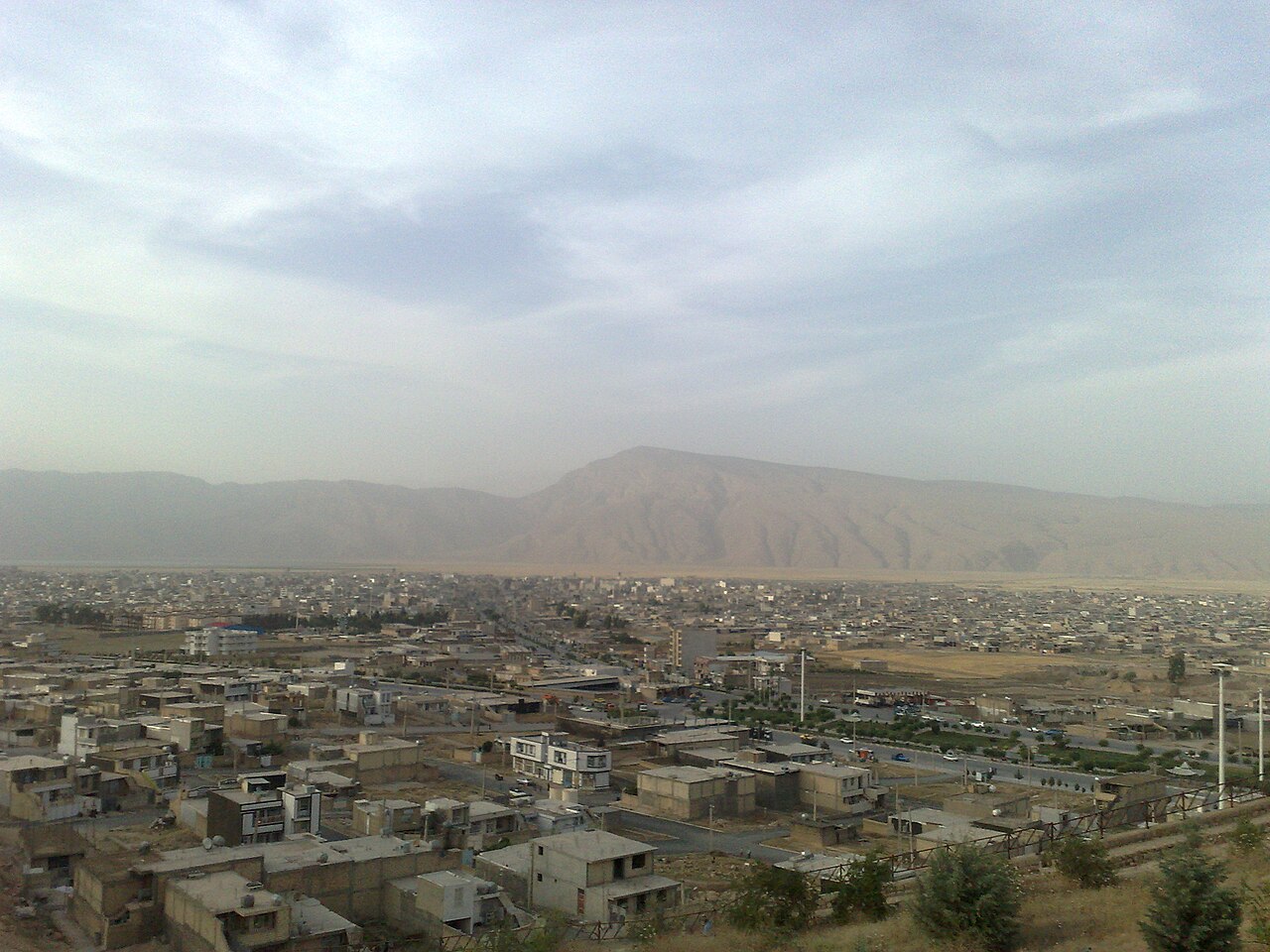

Greater Lur and a ruler with a repeated title
Ahmad belonged to the Hazaraspid rulers of Greater Lur, or Lur-i Buzurg. Rıza Kurtuluş’s dynastic history distinguishes this line and identifies Idhaj as its capital. [1] The modern Izeh photograph gives geographical context. Ahmad must also be distinguished from earlier rulers called Nusrat al-Din, including Malik Hazarasp and a possible son in a disputed succession. A shared honorific does not establish that biographies, reign dates or literary commissions concern the same person.
Succession and relations with the Ilkhanate
Kurtuluş describes Ahmad as the brother who succeeded Afrasiyab I after the latter’s execution in 1296. He contrasts Afrasiyab’s conflict with Mongol authority with Ahmad’s continued payments and gifts to the Ilkhans. His account dates Ahmad’s death to 733 AH/1333 and names his son Rukn al-Din Yusufshah II as successor. [1] Other reference works use 1330. [3] The difference should remain visible rather than be converted into an unsupported exact chronology or a story of education inevitably producing good government.
Tajarib al-Salaf: historical writing through adaptation
C. Edmund Bosworth’s account of Hindushah ibn Sanjar identifies Ahmad ibn Yusuf as the recipient of Tajarib al-Salaf. It dates the start of translation and adaptation to 723 AH/1323. The source was Ibn al-Tiqtaqa’s Arabic Kitab al-Fakhri, but the Persian work changed its organisation: it omitted a long prefatory discussion of government, added a life of Muhammad and expanded coverage of later dynasties. [2] Patronage thus supported an author’s selection and reshaping of historical material, rather than simply a line-by-line transfer between languages. The book’s dedication and the history it narrates are separate evidence.
Miyar-i Nusrati was a treatise on poetics
The Iranica entry on Shams-i Fakhri’s later Miyar-e Jamali reports his account of travelling to Lorestan in 713 AH/1313, meeting local poets and scholars, and writing a short treatise on poetics at their request. He dedicated that earlier Miyar-e Nusrati to the atabeg Nusrat al-Dunya wa-l-Din. [3] This identifies a technical literary work, rather than an unspecified praise poem or a mirror for princes. It also distinguishes the Nusrati dedication from the later Jamali work dedicated to Abu Ishaq Inju. Different books and patrons should retain their own titles and settings.
Following an edition, rather than an unsourced list of books
The National Institute of Informatics catalogue records a Persian edition of Tajarib al-Salaf edited by Abbas Iqbal and printed in Tehran in 1934, with fourteen preliminary pages and 368 pages of text. Its note gives completion in 724 AH. [4] This can be distinguished from the beginning of adaptation in 723 AH reported by Bosworth. [2] Composition, completion, presentation and modern publication are different events. Tracing author, dedicatee, language and edition makes Ahmad’s literary patronage more concrete while leaving the wording of court praise open to historical interpretation.
Sources and further reading
- Rıza Kurtuluş, Lur-ı Büzürg, TDV İslâm Ansiklopedisi 27 (2003), pp.225–226; capital, Afrasiyab’s execution, Ahmad’s relationship and succession.
- C. Edmund Bosworth, Hendušāh b. Sanjar, Encyclopaedia Iranica XII/2 (2003), pp.181–182; Ahmad ibn Yusuf, Tajarib al-Salaf and adaptation of al-Fakhri.
- Encyclopaedia Iranica, Meʿyār-e Jamāli wa meftāḥ-e Abu Esḥāqi; the publicly indexed passage on the 1313 visit and earlier Meʿyār-e Noṣrati dedication.
- National Institute of Informatics, CiNii Books, NCID BA70346477: Tajarib al-Salaf, Hindushah ibn Sanjar, Abbas Iqbal edition, Tehran, 1934; bibliographic record.
- Farzad Mehdipoor, Izeh Panorama, 22 May 2011, Panoramio 56106341, Wikimedia Commons; CC BY 3.0.