Shaykh Marif Nodeyi stands as a towering figure in Kurdish history, known for his profound contributions to Sufism, poetry, and Islamic scholarship during the late eighteenth and early nineteenth centuries. His work continues to influence Kurdish culture and religious education today. This post explores his life, his scholarly achievements, and the lasting impact he made on Kurdish literature and spirituality.
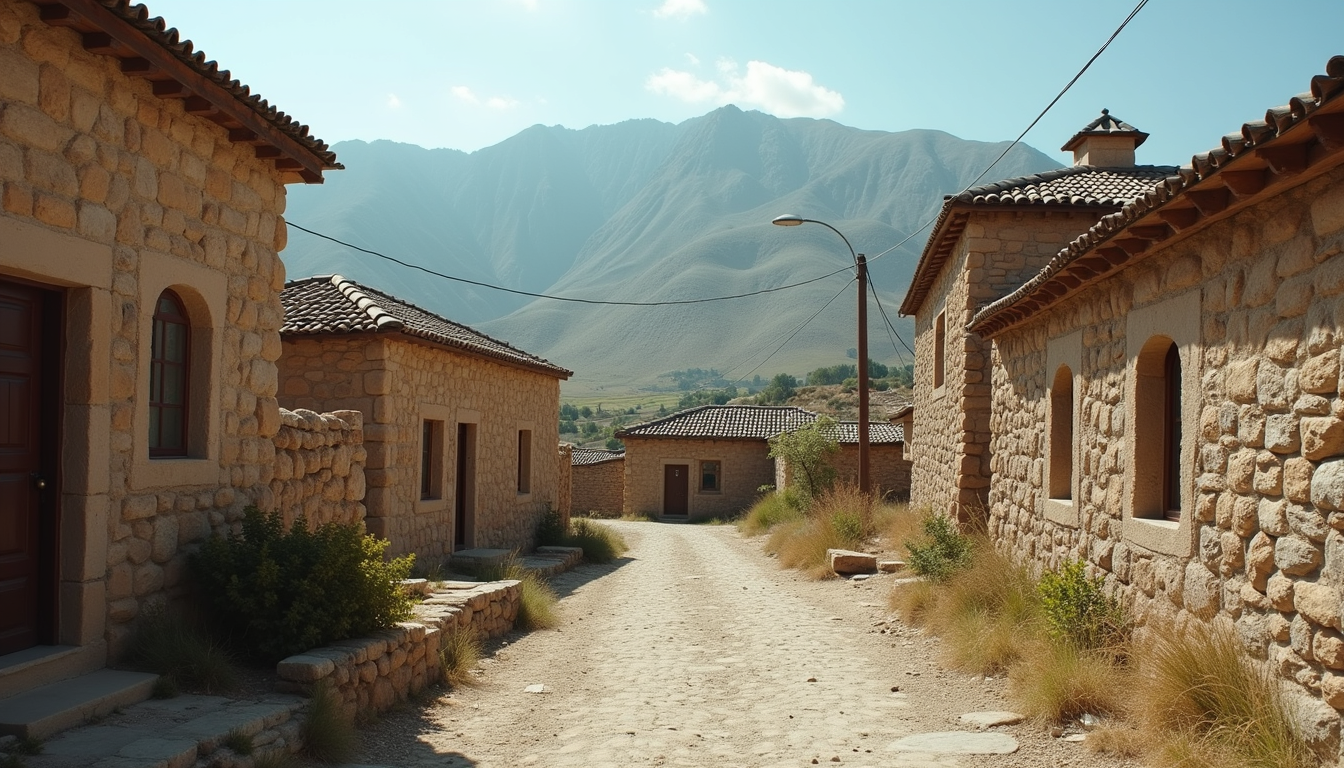
📖 The Scholar, The Mystic, The Lexicographer: Shaykh Marif Nodeyi and the Kurdish Intellectual Renaissance
Shaykh Marif Nodeyi (1753–c. 1838), born in the village of Node near Sulaymaniyah, was a towering figure whose intellectual output and spiritual authority profoundly shaped the Kurdish cultural and religious landscape of the late 18th and early 19th centuries. Living through the zenith of the Baban Emirate—a period of rising Kurdish literary pride—Shaykh Marif was not merely a passive scholar; he was a dynamic force who leveraged classical Islamic knowledge to empower and educate his community.
His legacy is threefold: as a prolific author of 59 works in Kurdish, Persian, and Arabic; as a crucial lexicographer whose Ahmadi dictionary became the foundational textbook for generations of Kurdish madrasa students; and as a pivotal figure in the development of Kurdish Sufism. The spiritual and intellectual lineage he established through his teachings, his poetry, and his family, ultimately connected him to some of the most influential political and religious movements in modern Kurdistan, highlighting his enduring importance far beyond the confines of the mosque or the library.
🏔️ I. The Intellectual Crucible: Education in the Baban Emirate
Shaykh Marif Nodeyi's formative years were spent in a region experiencing a cultural and political flowering under the autonomous rule of the Baban Emirs.
A. Early Religious Foundations and Journeys
Born into a devout family, his initial instruction under his father grounded him in the fundamental principles of Islamic jurisprudence (Fiqh) and theology (Kalam). His intellectual journey, however, demanded travel, a necessary tradition for scholars of the time.
The Path to Qalachwalan: His journey to Qalachwalan—the former capital of the Baban Emirate—was crucial. This center of learning, before the establishment of Sulaymaniyah, offered advanced studies in the traditional sciences: logic, astronomy, rhetoric, and Arabic grammar. This rigorous, multi-disciplinary education ensured he was not just a religious teacher, but a truly comprehensive scholar capable of writing on a wide spectrum of subjects.
B. The Rise of Sulaymaniyah
Upon returning, Shaykh Marif established himself in Sulaymaniyah, the newly founded, politically dominant capital of the Baban Emirate. His appointment to the Grand Mosque placed him at the heart of the region’s intellectual life.
The Educator’s Influence: His teaching role was fundamental. In the madrasa system, a scholar of his caliber trained the next generation of Ulama (clerics) and administrators, ensuring that the Baban Emirate had a steady supply of learned, reliable officials and teachers. This position gave him direct and lasting influence over the region's intellectual trajectory.
📚 II. The Lexicographer and the Educational Revolution
Shaykh Marif’s most pragmatic and enduring contribution to Kurdish society was his work in lexicography, a field that directly addressed the educational challenges of the time.
A. The Crisis of Language in the Madrasa
Traditional Islamic education in Kurdistan relied heavily on Arabic and Persian. Students, whose mother tongue was Kurdish, faced a significant linguistic barrier when studying sacred texts and classical literature. While many poets championed the use of Kurdish (like his contemporary Nalî), Shaykh Marif tackled the barrier directly in the classroom.
B. The Ahmadi Dictionary (Arabic-Kurdish)
The creation of the Ahmadi dictionary was a monumental educational innovation.
Bridging the Gap: The dictionary was a concise Arabic-Kurdish lexicon designed specifically for children learning Arabic in madrasas. By systematically translating key Arabic vocabulary into the local Kurdish dialect, it dramatically reduced the time and difficulty required for Kurdish students to master the language of the Quran and Sunnah.
Standardization: Its widespread adoption helped standardize Arabic instruction across the Kurdish regions of the Ottoman Empire, establishing a common pedagogical tool that was utilized for decades.
A Practical Tool: It represents a fusion of high scholarship with grassroots necessity—a work born from the demands of the classroom, making the highest religious learning accessible to the common Kurdish youth.
The Ahmadi dictionary stands as a testament to Shaykh Marif’s belief that education was the key to communal resilience, and that using the mother tongue was the most efficient route to classical knowledge.
🧘 III. The Master of Sufism and Spiritual Lineage
Beyond his scholarly pursuits, Shaykh Marif was a revered spiritual guide whose influence stretched across the tariqa (Sufi orders).
A. The Development of Kurdish Sufism
Shaykh Marif was a central figure in the Naqshbandi Order, one of the most influential Sufi brotherhoods in the Islamic world. In Kurdistan, Sufism was often a powerful force for social cohesion and, later, for political resistance.
Blending Tradition and Culture: His spiritual teachings successfully integrated traditional Islamic Sufi doctrines (focused on inner purification, divine love, and dhikr) with local Kurdish cultural elements, making the faith accessible and deeply resonant within the community. His poetry, often mystical, served as a primary vehicle for these spiritual lessons.
The Teacher of Teachers: Crucially, he was a teacher within the spiritual hierarchy that ultimately fed into the later Naqshbandi-Khalidi Revival—a massive movement led by Mawlana Khalid al-Baghdadi that reshaped the religious landscape of the entire Ottoman East in the 19th century.
B. A Dynastic Spiritual Legacy
Shaykh Marif’s spiritual authority was successfully passed down through his family, establishing a profound, multi-generational influence:
Kak Ahmad (The Successor): His son, Kak Ahmad (or Shaykh Ahmad), became a prominent Sufi leader in his own right, continuing his father’s spiritual school.
The Barzanji Connection: Shaykh Marif is an ancestor of the influential Barzanji family, including Shaykh Mahmud Barzanji (1878–1956), who would later lead two major Kurdish revolts against British rule in the early 20th century, briefly declaring the Kingdom of Kurdistan. This lineage demonstrates the powerful trajectory of religious and spiritual authority that, in the Kurdish context, often transitioned directly into political leadership and resistance.
🎨 IV. The Polyglot Poet: Language and Literary Scope
Shaykh Marif’s literary output—59 books and approximately 870 poems—was characterized by its staggering linguistic diversity and spiritual depth.
A. The Three Languages of Power
Writing in Kurdish, Persian, and Arabic was a strategic intellectual choice:
Language | Significance | Literary Purpose |
Arabic | The language of the Quran and Theology. | Scholarly works, jurisprudence, and classical treatises. |
Persian | The language of Imperial Court and High Culture. | Traditional classical poetry (following models like Hafez). |
Kurdish | The language of the People and Identity. | Sufi poetry, ethical lessons, and accessible wisdom. |
This mastery allowed him to engage with the highest levels of Islamic scholarship while communicating profound spiritual truths directly to his Kurdish-speaking congregation.
B. Style and Themes
His poetry synthesizes the best of classical traditions:
Classical Rigor: He employed the strict meters and rhetorical devices common to Persian and Arabic poetry.
Kurdish Narrative: He infused his work with the vivid imagery and directness of the Kurdish oral storytelling tradition.
Themes of divine love (Ishq-i Ilahi), ethics, and the quest for spiritual enlightenment dominate his verse, serving both as high art and as guidance for his followers on the Sufi path.
💡 V. Legacy: The Intellectual Architect of Sulaymaniyah
Shaykh Marif Nodeyi is an intellectual architect of modern Kurdish culture, demonstrating that scholarship and spirituality are crucial tools for cultural endurance.
Enduring Educational Impact: The Ahmadi dictionary remains his most tangible contribution, shaping basic education in the region for over a century and symbolizing the effort to reconcile religious tradition with linguistic identity.
Foundation of Modernity: He provided a powerful model for Kurdish intellectuals to leverage their own language (Kurdish) to master imperial languages (Arabic, Persian) and ultimately assert their own cultural sphere.
The Spiritual Root: His spiritual lineage provided the cultural and moral infrastructure for later political movements. The influence that culminated in Shaykh Mahmud Barzanji’s revolts began with the quiet, profound authority established by scholars and mystics like Shaykh Marif Nodeyi.
His life offers a powerful testament to the idea that true and lasting influence is often built not with armies or crowns, but with books, classrooms, and spiritual dedication. Shaykh Marif Nodeyi’s commitment to education, cultural integrity, and spiritual depth continues to inspire reverence and study in modern Kurdistan.
References:
The sources for Shaykh Marif often overlap with those for the 19th-century Kurdish Literary Renaissance and the spread of Sufi orders.
I. On the Intellectual and Cultural Context (Baban Emirate & Literary History)
Shakely, Farhad. “The Sorani-Gorani Literary Tradition and Kurdish National Identity,” in The Kurds: A Contemporary Overview, edited by Philip G. Kreyenbroek and Stefan Sperl. London: Routledge, 1992.
Relevance: Provides essential context for the Baban Emirate's role in the shift toward the Sorani dialect and the importance of figures like Nodeyi in standardizing Kurdish intellectual life.
MacKenzie, D. N. Kurdish Dialect Studies. Vol. II. Oxford: Oxford University Press, 1962.
Relevance: Foundational linguistic work necessary for understanding the dialectical context of Sulaymaniyah during Nodeyi's time and the languages he mastered.
Waqf, Mohammad Amin Zaki. A Brief History of the Kurds and Kurdistan. Translated by W. J. F. Johnson. London: I. B. Tauris, 2011.
Relevance: A classic, if politically framed, history by a Kurdish scholar who would have understood the significance of the Sulaymaniyah cultural revival under the Baban Emirs.
II. On the Sufi and Religious Context
Van Bruinessen, Martin. Agha, Shaikh and State: The Social and Political Structures of Kurdistan. London: Zed Books, 1992.
Relevance: The definitive work on the structure of Kurdish society, detailing the immense political and social power of the Sufi Shaikhs, particularly the Naqshbandi order, and the transition of their authority into the 20th century.
Gammer, Moshe. The Naqshbandiyya in Iraq (18th-20th Centuries). London: Routledge, 2009.
Relevance: Provides specific historical details on the Naqshbandi order and its leadership, placing Shaykh Marif and his student, Mawlana Khalid al-Baghdadi, into the broader spiritual history of the region.
Olson, Robert. The Emergence of Kurdish Nationalism and the Sheikh Said Rebellion, 1880–1925. Austin: University of Texas Press, 1989.
Relevance: While later, it helps connect the spiritual authority of the 19th-century shaikhs (like Nodeyi's descendants) to the political movements of the 20th century (like Shaykh Mahmud Barzanji's revolts).
III. On the Lexicographical and Educational Contribution
Rostami, Gholam Reza. A History of Kurdish Lexicography. Wiesbaden: Harrassowitz Verlag, 2017.
Relevance: This specialized work would be crucial for establishing the formal importance and pedagogical structure of the Ahmadi dictionary and its use in madrasas.
Historical and Archival References (Primary Source)
Relevance: To cite the dictionary directly, one would need to reference an available manuscript or lithograph edition of the Ahmadi dictionary. (e.g., Shaykh Marif Nodeyi. Al-Majmu' al-Ahmadi. Various historical lithograph editions from the 19th Century.)
https://kurdipedia.org/default.aspx?q=20220126161053402851&lng=8