Mohammad Karim Khan Zand stands as one of the most influential figures in Persian history. Rising from a tribal leader to the founder of the Zand dynasty, his reign brought stability and prosperity to Iran after decades of turmoil. His leadership not only restored peace but also fostered cultural and economic growth, leaving a lasting impact on the region. This post explores his rise to power, his rule, and the legacy he left behind.
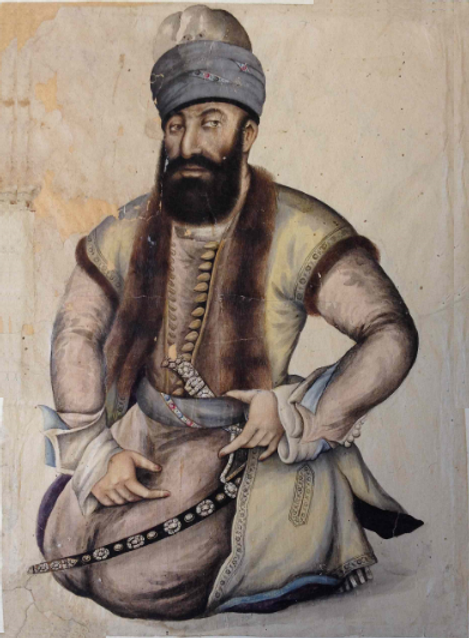
👑 The Advocate of the People: Mohammad Karim Khan Zand and the Restoration of Persia
Mohammad Karim Khan Zand (c. 1705–1779) occupies a unique and revered place in Iranian history. His rule, spanning nearly three decades, represented a desperately needed era of peace, stability, and moderate governance following one of the most chaotic periods in Persia’s history: the collapse of the Safavid Empire, the violence of the Afghan invasions, and the centralizing terror of Nader Shah Afshar.
Born a Lur from the Zand tribe in western Iran, Karim Khan was an unlikely candidate for supreme rule. Yet, through military skill, diplomatic finesse, and, most distinctively, a genuine commitment to the welfare of his subjects, he founded the Zand dynasty (1751–1794). His rejection of the autocratic title of Shah in favor of Vakil e-Ra'aayaa ("Advocate of the People") was a profound political statement that defined his rule, establishing Shiraz as a jewel of culture and commerce, and allowing the Persian nation to momentarily recover its breath before the final rise of the Qajar dynasty.
🌪️ I. The Crucible of Chaos: Early Life and Rise to Power
Karim Khan’s entire worldview was shaped by the turbulent political landscape of 18th-century Persia, a state fractured by anarchy and ambition.
A. The Aftermath of the Safavid Collapse
When the Safavid dynasty fell to the Afghan invasion in 1722, Persia plunged into a forty-year period of civil war and foreign incursions. This chaos was partially contained by the rise of Nader Shah Afshar (r. 1736–1747), who restored Iran’s borders but ruled with brutal militarism and endless taxation, alienating virtually all segments of the population.
Karim Khan first gained prominence as a skilled commander in the military campaigns following Nader Shah's assassination in 1747. The country dissolved into a complex power vacuum, filled by rival warlords, former Nader Shah generals, and tribal chiefs.
B. Consolidating Power: The Tripartite Alliance
Karim Khan, drawing on the disciplined military strength of the Lur tribes, skillfully navigated this political maze. He initially formed a tripartite alliance with two key rivals:
Ali Mardan Khan Bakhtiari: A powerful chieftain.
Abolfath Khan Bakhtiari: A military commander.
This alliance’s goal was to clear the central and southern regions of rival factions. By 1751, following a series of military campaigns and the elimination of key rivals—notably Azad Khan Afghan and the remaining Afsharid claimants—Karim Khan had effectively established control over most of Iran, strategically choosing to leave the restive, northeastern province of Khorasan under the nominal rule of a blind Afsharid prince. This decision avoided a costly, unnecessary war and allowed him to focus on the peaceful restoration of the core Persian territories.
📜 II. The Political Philosophy: "Advocate of the People"
Karim Khan's most enduring political statement was his rejection of the traditional Safavid and Afsharid title of Shah (King or Emperor).
A. The Title of Vakil e-Ra'aayaa
By declaring himself Vakil e-Ra'aayaa ("Advocate of the People" or "Regent of the Subjects"), Karim Khan deliberately positioned himself as a steward rather than a divine autocrat. This choice was loaded with political significance:
Rejection of Absolutism: It was a direct repudiation of the bloody, tyrannical rule of Nader Shah and the perceived divine right of the collapsed Safavid monarchy. It signaled a new social contract focused on pragmatic governance and justice rather than abstract authority.
Lur Legitimacy: As a powerful tribal leader without direct royal lineage (unlike the Qajars, who claimed connection to the Safavids), the title allowed him to bypass traditional legitimizing narratives. His authority rested on popular consent and his military ability to enforce justice and security.
Governance by Consent: The title implied that his ultimate authority derived from his duty to protect the welfare of the governed, a stark contrast to the destructive, exploitative regimes that preceded him.
This self-restraint defined his court and administration, promoting a moderate tone rarely seen in 18th-century Persian courts.
B. Shiraz: The Capital of Peace
Karim Khan established his capital in his heartland of Shiraz, in the province of Fars. Unlike the vast, heavily fortified imperial capitals of Isfahan or Mashhad, Shiraz was chosen as a symbol of the Zand's commitment to provincial prosperity.
He embarked on an ambitious architectural program that aimed to quickly transform the war-torn city into a vibrant hub of culture and commerce:
The Karim Khan Citadel (Arg-e Karim Khan): Serving as his residence and the seat of government, the Citadel was both a powerful fortress and a symbol of his authority.
The Vakil Bazaar and Mosque: The construction of the massive Vakil Bazaar and the adjacent Vakil Mosque was not just decorative; it was a fundamental economic investment. The bazaar centralized trade, making commerce secure and efficient, which boosted local revenues.
Public Infrastructure: He invested in public baths, cisterns, and irrigation works, demonstrating his commitment to practical infrastructure that directly benefited the common citizenry.
📈 III. Restoring the Economic and Diplomatic Lifeline
The peak of Zand rule, roughly 1765–1779, was characterized by robust economic recovery driven by internal stability and revived international trade.
A. Fiscal Responsibility and Internal Security
Karim Khan’s administration focused on a few core fiscal principles:
Low and Consistent Taxation: In a direct reversal of Nader Shah's punitive taxation, Karim Khan kept taxes low and predictable, allowing farmers to invest in agriculture and merchants to plan long-term. This simple policy encouraged economic activity across the empire.
Road and Agricultural Restoration: The long period of peace allowed infrastructure, including crucial irrigation canals and roads, to be restored, leading to significantly improved agricultural output.
Discipline: The Zand military was kept under strict discipline, preventing the pillaging of civilians that had been commonplace under previous warlords. This single factor did more than any other to restore public confidence and security.
B. Re-entry into Global Trade: The British Connection
Karim Khan understood that prosperity required foreign commerce. He strategically renewed diplomatic and trade relations with the British East India Company (EIC).
Trading Posts: He granted the EIC permission to establish a major trading post at Bushehr (Bandar-e Bushehr) on the Persian Gulf coast.
Boosting Commerce: This connection facilitated the exchange of Persian silk, wool, and carpets for Indian cotton goods and European wares, rapidly integrating Persia back into the global trade network after decades of isolation. This trade generated vital customs revenue for the Zand treasury and introduced new ideas and wealth into the country.
The Basra Campaign (1775–1779): Karim Khan’s major external military endeavor was the successful siege and occupation of Basra, the strategic Ottoman port city in present-day Iraq. This campaign was primarily driven by economic motives: Basra was a key rival port to Bushehr and a vital chokepoint on the Gulf trade routes. Its capture briefly secured Zand control over Gulf commerce, greatly enhancing their revenue.
⚔️ IV. Military Consolidation and the Limits of Ambition
Despite his military successes, Karim Khan’s general strategy was characterized by pragmatic restraint—a focus on stability over unending conquest.
A. The Policy of Contentment
Unlike the insatiable military ambition of Nader Shah, Karim Khan was content to rule a stable, prosperous core of Iran. His military campaigns were generally designed to:
Suppress internal rivals (like the Qajar chief, Mohammad Hassan Khan, whom he defeated and executed).
Secure key trade routes (such as the Basra campaign).
Maintain border stability (such as controlling parts of the Caucasus through regional alliances).
He avoided the suicidal campaigns into Central Asia that had bankrupted Nader Shah, preserving the Zand treasury and minimizing casualties, which was key to popular support.
B. Patronage of the Arts and Cultural Revival
The Zand era, despite its short length, fostered a notable cultural revival. Shiraz, a city already known as the home of the great poets Hafez and Sa'di, flourished under Karim Khan's patronage:
Literature and Poetry: Scholars and poets returned to Shiraz, enjoying state patronage and a climate of peace that allowed artistic creation to thrive.
Zand Architecture: The unique Zand architectural style—a blend of late Safavid design with a new, simplified elegance—is evident in the Vakil complex. It featured intricate tiling, grand scale, and innovative use of space, reflecting the era's focus on both majesty and utility.
📉 V. The Failure of Succession and the Qajar Shadow
Karim Khan’s personal authority was the single most powerful stabilizing force in the Zand state.
A. The Fatal Flaw of Dynasty
Karim Khan's greatest achievement—his establishment of peace—was tragically undone by his greatest failure: the lack of a stable line of succession.
Death in 1779: His death triggered an immediate and devastating civil war among his numerous half-brothers, nephews, and sons. The stability he had built was based on his personal prestige, not on a strong institutional framework or a clear, accepted dynastic line.
The Years of Conflict: The ensuing civil war consumed the Zand state, lasting nearly two decades and undoing much of the economic recovery.
B. The Rise of the Qajars
The chaos of the Zand civil war provided the necessary opening for the ascendance of the most formidable rival, Agha Mohammad Khan Qajar. As the ruthless, highly intelligent leader of the Qajar tribe, he was the antithesis of Karim Khan—driven by a relentless, personal ambition to centralize power and eliminate all rivals.
The last Zand ruler, Lotf Ali Khan (r. 1789–1794), fought heroically to save the dynasty, but was ultimately defeated, captured, and executed by Agha Mohammad Khan. This final act in 1794 formally ended the Zand era and ushered in the Qajar dynasty, which moved the capital from Shiraz to Tehran.
🌟 VI. Lasting Impact and Historical Judgment
Despite its brevity, the Zand dynasty secured a permanent place in the Iranian national consciousness due to Karim Khan’s unique character.
Karim Khan’s reign is universally lauded as a golden interlude—a period where leadership was grounded in a concern for the populace rather than purely dynastic or military glory. He demonstrated that peace, low taxation, and the protection of commerce could rapidly heal a shattered state.
His legacy remains essential: the Vakil complex in Shiraz continues to draw pilgrims and tourists, standing as a tangible testament to the rule of the Advocate of the People—a unique and enduring model of enlightened leadership in the annals of Persian history.
References: