The story of Mohamed Pasha Jaff, a Kurdish nobleman born in 1714, is a powerful chapter in the history of the Kurdish people. As the supreme leader of the Jaff tribe, Mohamed Pasha Jaff shaped the destiny of a community that today numbers around three million. His leadership, marked by resilience and vision, left a lasting impact on the Kurdish region between southwest Sanandaj and Javanroud, including areas around Sulaimaniyah. This post explores his legacy, the historical significance of the Jaff tribe, and the enduring influence of Sherwana Castle, which he built.
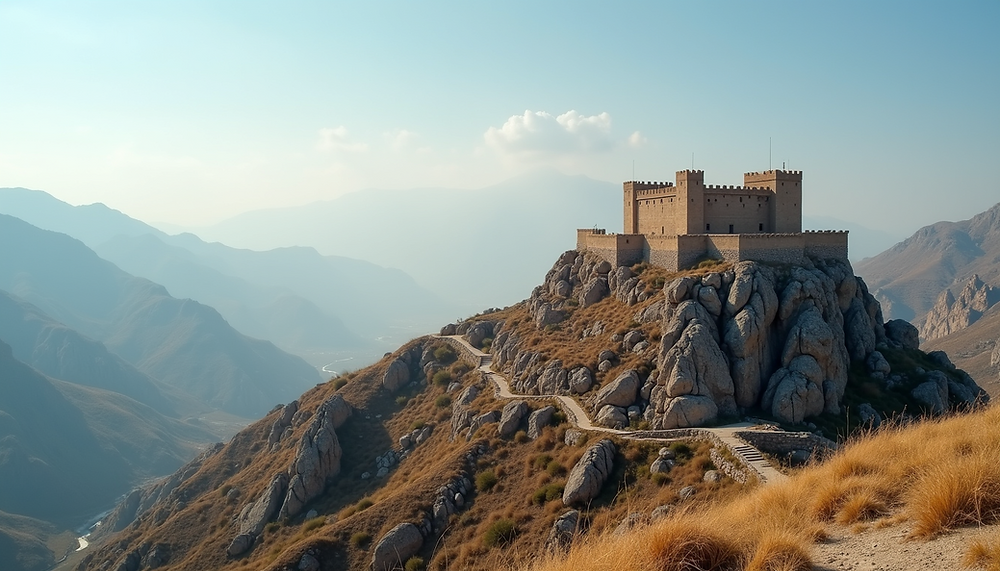
🛡️ The Pasha of Sherwana: Mohamed Pasha Jaff and the Apex of Kurdish Tribal Power
Mohamed Pasha Jaff (fl. mid-19th century) stands as one of the most powerful and strategic leaders in the history of the Jaff tribe, the largest Kurdish tribe in the region spanning modern-day Iraq and Iran. Born into a lineage of tribal leadership, his life was a continuous, high-stakes negotiation for autonomy and survival in a region constantly contested by two imperial giants: the Ottoman Empire to the west and the Qajar Dynasty of Persia to the east.
His ascendance to leadership at the notably young age of 20 was quickly formalized by the Ottomans, who recognized his strength and influence by granting him the noble title of Pasha. However, Mohamed Pasha used this imperial endorsement not for servitude, but to fortify his own power, establishing the imposing Sherwana Castle as the unyielding center of the Jaff Emirate. His legacy is one of military resilience, diplomatic finesse, and an unusual intellectual curiosity that positioned the Jaff tribe as a sophisticated, enduring force on the volatile Kurdish frontier.
🏔️ I. The Geopolitical Crucible: Jaff, Ottomans, and Qajars
Mohamed Pasha Jaff inherited the leadership of a tribe whose destiny was dictated by its central location in the Garmian region (the hot, lowland region of southern Kurdistan), a crucial but dangerous border zone.
A. The Weight of the Pasha Title
The title Pasha was conferred by the Ottoman Sultan upon high-ranking military commanders and provincial governors. Granting this title to a Kurdish tribal leader like Mohamed Jaff was a classic imperial strategy of co-option and decentralization:
Legitimacy and Status: It provided the Jaff leader with official recognition, raising his status above rival tribal chiefs and justifying his rule to the central government.
Military Obligation: In return, Mohamed Pasha was expected to function as a border guardian (serhad) for the Ottomans, mobilizing the formidable Jaff cavalry to defend the frontier against the Qajars and maintain local order.
Mohamed Pasha was skilled enough to accept the title and its benefits (resources and legitimacy) while fiercely resisting the centralizing demands that often accompanied it, successfully carving out a semi-autonomous zone of control.
B. The Policy of Defiance and Diplomacy
The political reality for the Jaff was not stability, but constant, calculated maneuvering. Their strategic importance meant both empires sought their allegiance, providing the Pasha with a degree of leverage:
Strategic Oscillation: When Ottoman pressure became too great, the Jaff leaders would often signal their allegiance to the Qajars (or vice versa), using the rivalry between the two empires as a defensive shield.
Clashes for Autonomy: The Pasha's "fierce commitment" to autonomy led to numerous military clashes—not always to annex territory, but to repudiate attempts at direct administrative control (such as forced tax collection or the permanent stationing of imperial troops in Jaff territory). This military resilience was essential to maintaining the Hükümet (semi-autonomous status).
🏰 II. Sherwana Castle: A Strategic Manifesto
Mohamed Pasha Jaff's decision to establish his base at Sherwana Castle in the Kalar region was the physical manifestation of his strategy of fixed resistance and centralized authority.
A. Location and Military Function
Sherwana Castle was far more than a stately home; it was the nerve center of the Jaff Emirate:
Commanding Terrain: Located on a rise overlooking the Kalar plains, it offered unmatched vantage points for surveillance, allowing the Jaff to spot approaching Ottoman or Qajar armies hours before they arrived.
Military Stronghold: The architecture—featuring thick stone walls, integrated towers, and defensible gatehouses—reflected the necessity of withstanding the artillery bombardments common in the 19th century. It served as a secure refuge for the tribe’s leadership, treasury, and archives during periods of imperial conflict.
Governance Hub: All major tribal councils (Divan), judicial decisions, and revenue administration flowed from Sherwana. The castle physically centralized the political and social structure of the sprawling, often nomadic, Jaff tribe.
B. A Symbol of Resilience and Dynastic Power
The castle’s construction under Mohamed Pasha was a profound statement of permanence. While nomadic tribes often relied on mobile camps, the fixed, robust castle declared that the Jaff intended to remain in this contested region, defining their own space outside of immediate imperial jurisdiction. It became a permanent symbol of the tribe’s presence and resilience—a legacy that continues to define the region today.
🗺️ III. The Extravagance of Curiosity: Expeditions to America
The most extraordinary claim regarding Mohamed Pasha Jaff is his alleged funding and dispatch of expeditions to the American continent. While difficult to verify with primary sources from the period, this claim, if taken even as a strong oral tradition, speaks volumes about his character and the intellectual climate of the Jaff court.
A. Placing the Claim in Context
The 19th century was a period of intense global exploration, driven by new mapping technologies, steam power, and the European obsession with the New World. For a leader in Kurdistan to engage with this global movement is highly unusual but not entirely implausible:
Intellectual Ambition: It demonstrates a staggering forward-thinking approach and a desire to engage with global knowledge, contrasting sharply with the often isolationist policies of other regional powers.
Wealth and Resources: Funding such an expedition—a colossal undertaking involving significant travel costs, security, and diplomatic arrangements—required immense personal wealth and confidence, showcasing the financial stability of the Jaff Emirate under his rule.
Cultural Openness: It suggests that the Jaff court, while focused on local defense, maintained an openness to foreign ideas, technology, and geography—a quality that likely benefited the Pasha in his complex diplomatic dealings with the sophisticated imperial powers.
Regardless of the historical reality of the journey, the tradition of the Pasha sending explorers across the world underscores his reputation as a leader whose curiosity transcended his immediate geopolitical domain, cementing his image as a truly enlightened statesman.
👥 IV. The Jaff Tribe: A History of Scale and Influence
Mohamed Pasha’s success laid the enduring foundation for the Jaff tribe's continued influence and scale.
A. Scale and Diaspora
The Jaff tribe’s growth to an estimated three million people today is a testament to the strong social and political framework established by leaders like Mohamed Pasha. This vast population is geographically dispersed, straddling the modern Iran-Iraq border, primarily inhabiting:
Iraq (Kalar/Garmian): The administrative and cultural center established by the Pasha.
Iran (Kermanshah/Sanandaj): The ancestral and eastern tribal lands.
The sheer size of the Jaff tribe gives it a powerful, lasting cultural and political influence in both the Kurdistan Region of Iraq and the Kurdish provinces of Iran.
B. The Enduring Cultural Identity
The Jaff have maintained a distinct and strong cultural identity rooted in:
Language: Speaking a dialect that bridges the Sorani and Gorani linguistic groups.
Poetry and Art: Having a rich tradition of literature, including contributions from poets like Khana Qubadi (a contemporary, often associated with the wider cultural sphere of this region).
Military History: The collective memory of their historical struggles for autonomy, symbolized by Sherwana Castle, remains a powerful component of their identity and resilience.
Mohamed Pasha’s reign was critical in sustaining these traditions against the backdrop of 19th-century imperial attempts at forced standardization and assimilation.
💡 V. Legacy: The Pasha Who Built and Resisted
Mohamed Pasha Jaff's life provides crucial lessons in leadership for marginalized communities operating within the spheres of powerful empires.
The Necessity of Fixed Power: By building and fortifying Sherwana Castle, he created a physical, immovable anchor for his nomadic tribe, transforming tribal power into territorial control and resistance.
Strategic Use of Imperial Titles: He successfully utilized the Pasha title for legitimacy and resources while simultaneously deploying those resources to protect the tribe from the empire that granted the title. This mastery of cooperative resistance was key to maintaining autonomy.
Enlightened Leadership: His reported intellectual curiosity suggests that effective frontier leaders understood the value of external knowledge and modernity—a trait that allowed the Jaff to remain adaptive, culturally rich, and resilient across successive generations.
Mohamed Pasha Jaff remains a foundational figure, not just for the Jaff tribe, but for the history of autonomous Kurdish governance, proving that courage, strategic vision, and an open mind can effectively resist the immense pressures of empire.
References: