Yitzhak Mordechai’s biography connects Kurdish Jewish origins with Israeli military command and government. Dated records also document his Centre Party role and criminal conviction.
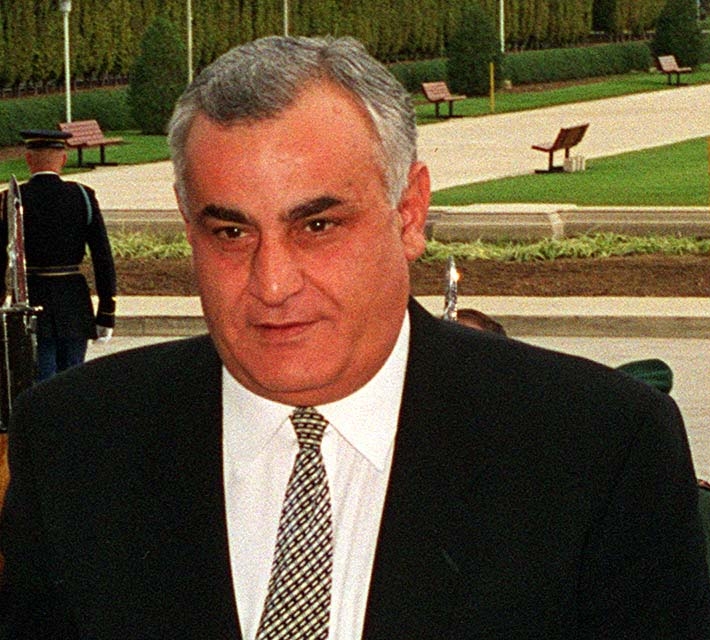
Zakho and Kurdish Jewish connections
Yitzhak, also known as Itzik, Mordechai was born in Iraq in 1944. The Israeli defence archive records immigration in 1950. [1] Lazar Berman’s reporting from the 2013 Saharane celebration in Jerusalem identifies his birthplace as Zakho and describes his appearance on stage at the Kurdish Jewish gathering. [2] This gives a concrete connection to the community beyond a label of origin. It does not establish a ranking of people of Kurdish descent across Israeli institutions, nor make his political choices representative of every Kurdish Jew.
Military service and command
The defence archive dates Mordechai’s military service to 1962–95. It records command of the paratroopers’ 890 Battalion at the Chinese Farm battle during the 1973 Yom Kippur War, the Medal of Courage, promotion to major general in 1986 and successive responsibility for Southern, Central and Northern Commands. It also notes his Northern Command role during the 1993 Lebanon operation known as Accountability. [1] These are specific appointments and operations rather than evidence for an unqualified claim to be the most senior Kurdish-origin figure in Israeli history.
Defence minister and the Centre Party
The Ministry of Defense lists his ministerial term as June 1996 to January 1999. [3] The Israel Democracy Institute traces the Centre Party’s formation in 1999 around Dan Meridor, Roni Milo, Amnon Lipkin-Shahak and then Mordechai. Netanyahu dismissed him as defence minister; the new party chose him as its prime-ministerial candidate. He withdrew shortly before the election, while the party won six Knesset seats. It entered Ehud Barak’s government, where Mordechai held the transport portfolio before resigning following indictment. [4]
The criminal case and sentence
The Jerusalem Magistrates’ Court’s sentencing text, reproduced by Ynet on 30 April 2001, records convictions for indecent acts involving two women and acquittal on a third charge. The majority imposed an eighteen-month suspended sentence; the dissenting judge favoured imprisonment. [5] The finding was a conviction, not merely an allegation or a political controversy. Shmuel Dekalo’s court report of 18 November 2004 records the Supreme Court’s refusal of further leave to appeal following additional proceedings. [6] A biographical account should include the outcome alongside the offices he held.
Reading the record
Official military and ministerial pages document service from an institutional perspective. The court text addresses criminal responsibility, while the Saharane report documents a later community appearance. [1] [2] [3] [5] Read together, they support a biography with identifiable dates, roles and outcomes. Neither public office nor ancestry supplies a basis for omitting the conviction or assigning the actions of one individual to a whole community.
Sources and further reading
- Israel Defense Forces and Defense Establishment Archive, Yitzhak Mordechai: official biographical exhibition, service and command chronology.
- Lazar Berman, Cultural pride, and unlikely guests, at Kurdish Jewish festival, The Times of Israel, 30 September 2013; reporting from Saharane, including Mordechai’s appearance.
- Israel Ministry of Defense, Yitzhak Mordechai: twelfth defence minister, June 1996–January 1999.
- Israel Democracy Institute, Center Party: institutional election record, 1999 formation, six seats, leadership and government portfolios.
- Jerusalem Magistrates’ Court, sentencing judgment, 30 April 2001, reproduced in full by Ynet; majority sentence and dissent.
- Shmuel Dekalo, Supreme Court rejects Mordechai’s request for leave to appeal his indecent-act convictions, Globes, 18 November 2004; contemporaneous court report.
- Helene C. Stikkel, Yitzhak Mordechai, 4 November 1997, US Department of Defense photograph 971104-D-2987S-002, public domain; Wikimedia Commons crop.