Born in Diyarbakır in 1938, Ayşe Şan carried Kurdish songs through broadcasts, commercial records and migration. Her testimony, surviving discography and later archival work explain a career too often reduced to an honorary nickname.
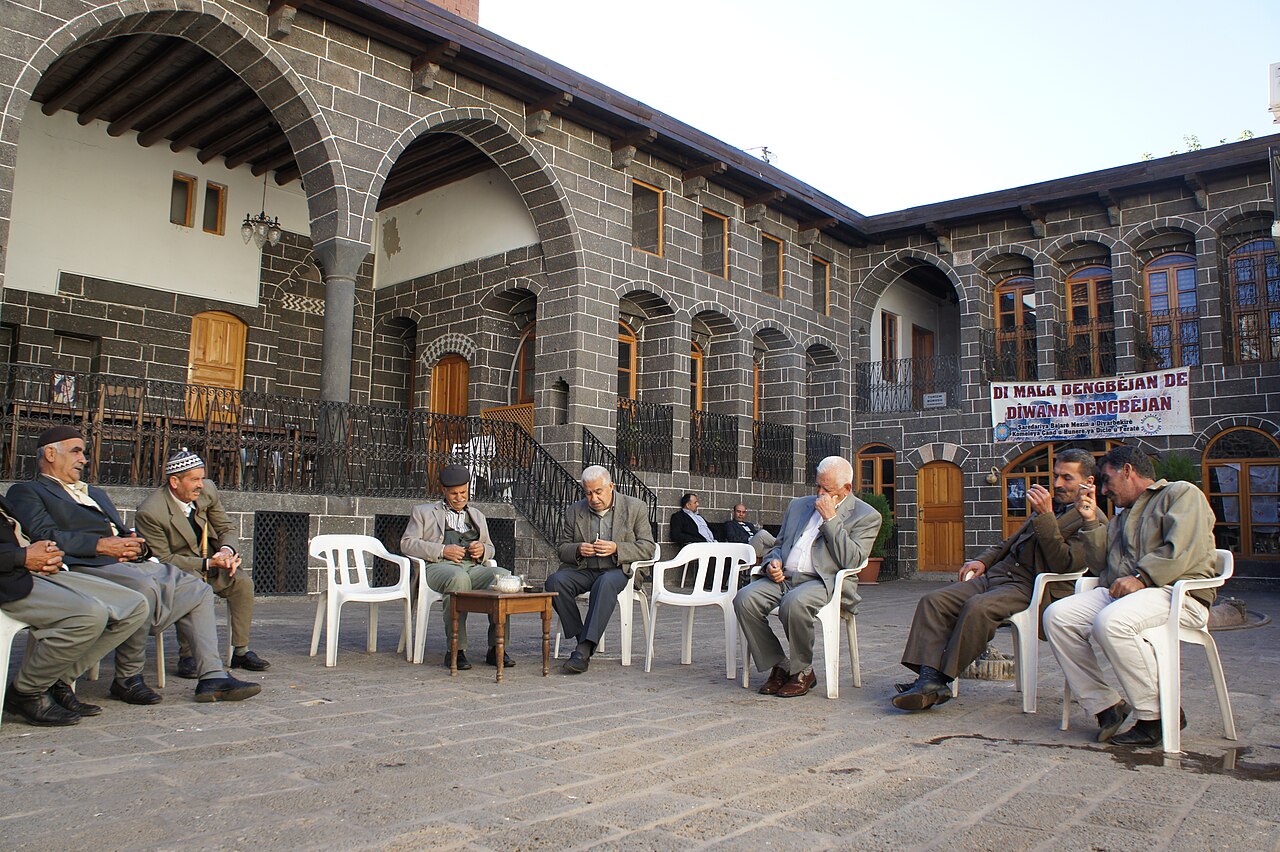

Diyarbakır and the music of a household
Ayşe Şan, also written Eyşe Şan, was born in Diyarbakır in 1938 and died in İzmir on 18 December 1996. A transcript published by PİRHA identifies its testimony with an Iraqi radio appearance in 1979. In it, she gives her birthplace as Diyarbakır, names her father Osman as a dengbêj and recalls listening to singers in the family home. Her early religious recitation and the restrictions on her public singing emerge from her own recollections. The claim that she was born in Dersim is unsupported by this testimony. [1] [5]
Radio work and the first commercial recordings
She recalled earning money through sewing and singing Turkish songs on Antep radio, while wanting to perform the Kurdish repertoire associated with her father. She dates her move to Istanbul and initial record work to 1963, describing recordings that combined Turkish and Kurdish, including Ez Xezalim. These recollections help distinguish a particular recording career from a claim that she invented Kurdish recorded music. [1] Ethnomusicologist Robert F. Reigle’s 2013 study places her among the artists represented on Kurdish 45-rpm discs and also identifies issues by the German company Türkofon. Record format, label and language are concrete evidence for how her voice circulated. [2]
Across borders and through different recording media
The published testimony describes concerts in the Netherlands and Germany and a BBC radio appearance. The article dates her departure to Germany to 1972; the transcript itself recalls spending several years there before returning. It also conveys the loss of her young daughter and the separation from her mother, themes that should be handled as personal testimony rather than embellished scenes. [1] Her recordings moved within a wider, changing musical economy. Reigle distinguishes commercial discs from the cheaper, portable and copyable cassette, and places the wider availability of Kurdish cassettes in Turkey in the mid-1970s. These formats explain different routes of listening and preservation; a later cassette issue is not automatically a new performance or an original release date. [2]
Recovering a scattered musical archive
Folklore researcher Zeynep Yaş has described the confusion and missing documentation she encountered while collecting Şan’s work and life story. In an interview published by Faik Bulut in 2022, her research is connected with the book Ez Eyşe Şan im, prepared with Hilmi Akyol, and a twelve-CD Yadgarî collection. The work required tracing records, photographs, documents and testimony across places rather than relying on a single complete institutional archive. This is a substantial part of Şan’s later reception: the familiar voice still needed identification, documentation and careful reassembly. Yaş’s account also places her project alongside collections of other women and men, including Elmas Muhamed and Meryem Xan. [3]
A woman’s career, rather than an unsupported ranking
Descriptions such as “uncrowned queen” express admiration, but they cannot replace evidence about songs, work and listeners. The published testimony shows Şan negotiating family expectations, broadcasting opportunities and unequal commercial relationships. Yaş’s archival account adds another question: why could an artist be widely remembered yet so poorly documented? Read together, these sources make her agency visible without declaring her the first or greatest woman in every Kurdish musical tradition. They also avoid assigning her a specifically Dersim or Zazaki repertoire merely from an incorrect birthplace. Individual recordings need their own language, label and performance evidence. [1] [3]
The return to Diyarbakır in 2025
Şan was initially buried in İzmir. On 18 June 2025, her remains were brought to Diyarbakır and reinterred at Yeniköy Cemetery. Bağlar Municipality’s account describes her family’s participation, women carrying the coffin and songs at the ceremony. Diyarbakır Metropolitan Municipality reports its support for the transfer and identifies it as fulfilling her wish to be buried in her birthplace. These dated institutional records update an older biography that ended with an unfulfilled burial request. Her musical archive and the public act of return are distinct, documented ways in which her memory has continued. [4] [5]
Sources and further reading
- Özgür Utuş, “Ezber bozan kadın: Ayşe Şan”, PİRHA, 13 December 2018; extended first-person interview transcript introduced as testimony from a 1979 Iraqi radio appearance. Used with explicit attribution, rather than as a verified audio edition.
- Robert F. Reigle, “A Brief History of Kurdish Music Recordings in Turkey”, Hellenic Journal of Music, Education and Culture 4 (2013), article 2; Kurdish 45-rpm records, Türkofon issues by Şan and the later spread of cassettes.
- Faik Bulut, interview and profile of Zeynep Yaş, Independent Türkçe, 23 January 2022; first-person archival research, the Hilmi Akyol collaboration, Ez Eyşe Şan im and Yadgarî collections.
- Bağlar Municipality, “Ayşe Şan’ın naaşı 29 yıl sonra Diyarbakır’a getirildi”, 18 June 2025; primary account of the transfer, women carrying the coffin and burial at Yeniköy.
- Diyarbakır Metropolitan Municipality, “Sanatçı Ayşe Şan’ın cenazesi 29 yıl sonra Diyarbakır’a getirildi”, 18 June 2025; death in İzmir on 18 December 1996, municipal support and fulfilment of the burial request.
- MikaelF, Mala Dengbêjan, Amed, 5 November 2010, Wikimedia Commons; dated contextual photograph under CC BY-SA 3.0.