Chaldean identity brings together church membership, language, family history and national self-identification. Church statements and historical research explain how these meanings overlap and differ among communities.
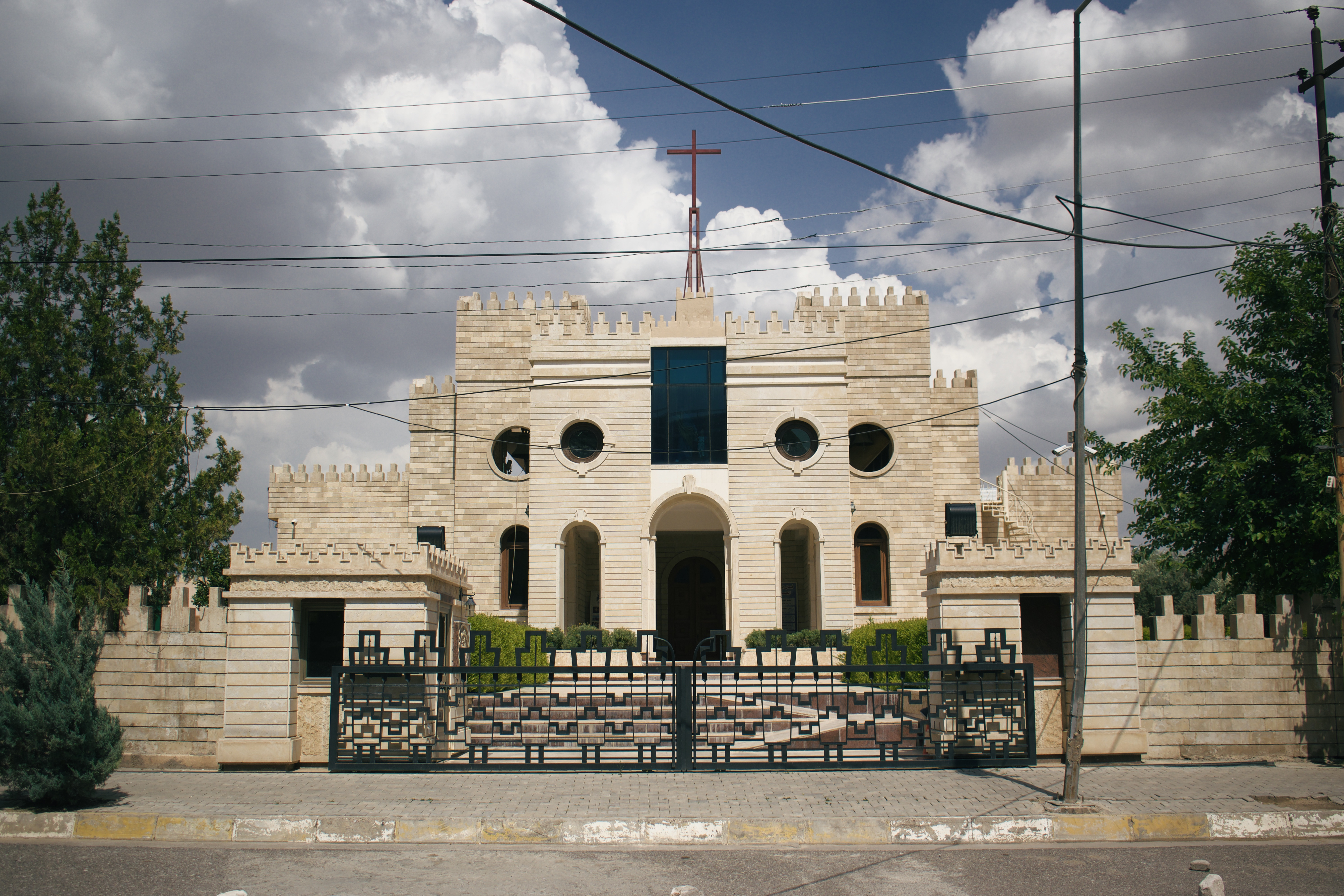
How communities describe themselves
In an essay published by the Chaldean Patriarchate on 9 February 2026, Louis Raphael Sako affirms a Chaldean national identity and asks for recognition of Chaldean, Assyrian and Syriac identities. He also acknowledges that some people who identify as Assyrian belong to the Chaldean Catholic Church. [1] The Assyrian Church of the East’s own account describes an Assyrian community and a Syriac ecclesiastical tradition, while recalling that the historical Church of the East included several peoples. [2] These statements show why a church’s name and an individual’s chosen national identity need to be understood in context.
The development of a Catholic church
Historian Lucy Parker’s study of the sixteenth century examines the emergence of the Chaldean Catholic tradition in the 1550s. Her abstract emphasises the continuing importance of inherited East Syrian beliefs and saints during engagement with Rome. [3] Ronald Roberson’s church history records Yuhannan Sulaqa’s consecration in Rome in 1553, followed by a long period of competing patriarchal lines and changing affiliations. It dates papal confirmation of John Hormizdas as head of the Chaldean Catholics to 5 July 1830, with his see in Mosul. The patriarchate moved to Baghdad in 1950. [4] This chronology involves several stages of institutional formation.
Language and living diversity
The University of Cambridge’s North-Eastern Neo-Aramaic project documents a diverse group of dialects historically spoken by Christian and Jewish communities in northern Iraq, northwestern Iran and southeastern Turkey. It records sureth as a common Christian language name, alongside other local terms; Assyrian Christians also use “Assyrian” in English. Recordings, transcribed texts and grammatical descriptions preserve differences between communities. [5] A shared language family can carry several religious and national identifications. The project also describes displacement and declining transmission among younger speakers, making documentation a practical concern for living communities.
Studying the growth of national identities
Adam H. Becker’s Revival and Awakening examines American evangelical missions in Iran and the development of modern Assyrian nationalism. The publisher’s overview places the missionaries’ arrival in the 1830s and describes the interaction of schooling, religious reform, historical knowledge and local Christian responses. [6] This is a study of a particular nineteenth-century encounter and its consequences. Its focus allows readers to investigate how modern national consciousness developed through institutions, writing and international contact, while keeping the historical argument distinct from judgments about whether a living person’s identity is legitimate.
A documented history of dialogue
On 11 November 1994, Pope John Paul II and Mar Dinkha IV signed a common Christological declaration. It affirmed a shared confession concerning Christ, recognised each church’s liturgical expressions and established a committee for theological dialogue. The declaration also stated that full ecclesial communion had yet to be achieved. [7] The document records cooperation alongside continuing institutional differences. Chaldean and Assyrian histories include both the formation of distinct churches and efforts by their leaders to address common concerns.
Sources and further reading
- Louis Raphael Sako, Chaldean identity, Chaldean Patriarchate, 9 February 2026.
- Assyrian Church of the East, The Church: institutional history and self-description.
- Lucy Parker, The Ambiguities of Belief and Belonging, English Historical Review 133/565 (2018), 1420–1445: published abstract.
- Ronald Roberson, The Chaldean Catholic Church, The Eastern Christian Churches, CNEWA.
- University of Cambridge, North-Eastern Neo-Aramaic Database Project: introduction, recordings and dialect documentation.
- Adam H. Becker, Revival and Awakening, University of Chicago Press, 2015: publisher’s overview and contents on BiblioVault.
- Catholic Church and Assyrian Church of the East, Common Christological Declaration, 11 November 1994.