Diyarbakır, known in Kurdish as Amed and historically as Amida or Amid, stands above the Tigris. Its history connects fortifications and gardens with Kurdish cultural life, Christian communities and displacement in Sur.
Names and a place above the Tigris
Diyarbakır occupies a plateau above the upper Tigris in southeastern Turkey. Amed is its Kurdish name; Amida and Amid occur in older histories. Nejat Göyünç explains that Diyar Bakr originally named a wider region associated with the Bakr ibn Wa’il, before Diyarbekir became a city name; the spelling Diyarbakır was adopted in 1937. [1] City, province, historical region and the walled district of Sur are different geographical units. Population figures for one should not be silently substituted for another.
Amida on the Roman–Sasanian frontier
Ammianus Marcellinus 18.9 describes Constantius fortifying Amida with walls, towers and artillery while still Caesar. He also describes a spring below the citadel and the city’s position beside the Tigris. [2] These are specific observations in a Roman military narrative. Lendering’s historical guide recounts Shapur II’s capture in 359 after a seventy-three-day siege and the city’s return to Roman control in the 363 settlement. [3] This was not a victorious reconquest by Julian. The surviving defences include later rebuilding and cannot all be assigned to one fourth-century operation.
Medieval Amid and Ottoman incorporation
The city’s history includes Marwanid, Seljuk, Artuqid and Ayyubid rule, followed by Aq Qoyunlu and Safavid power. Göyünç discusses Marwanid repairs and the scholars attracted to Amid, Saladin’s capture in 1183, and Ottoman incorporation in September 1515 after the relief of a Safavid siege. [1] Mosques, madrasas, workshops and caravanserais belonged to this changing urban economy. Repeated construction and repair make the city a record of several political eras rather than the unaltered creation of a single ruler.
The walls and Hevsel form one landscape
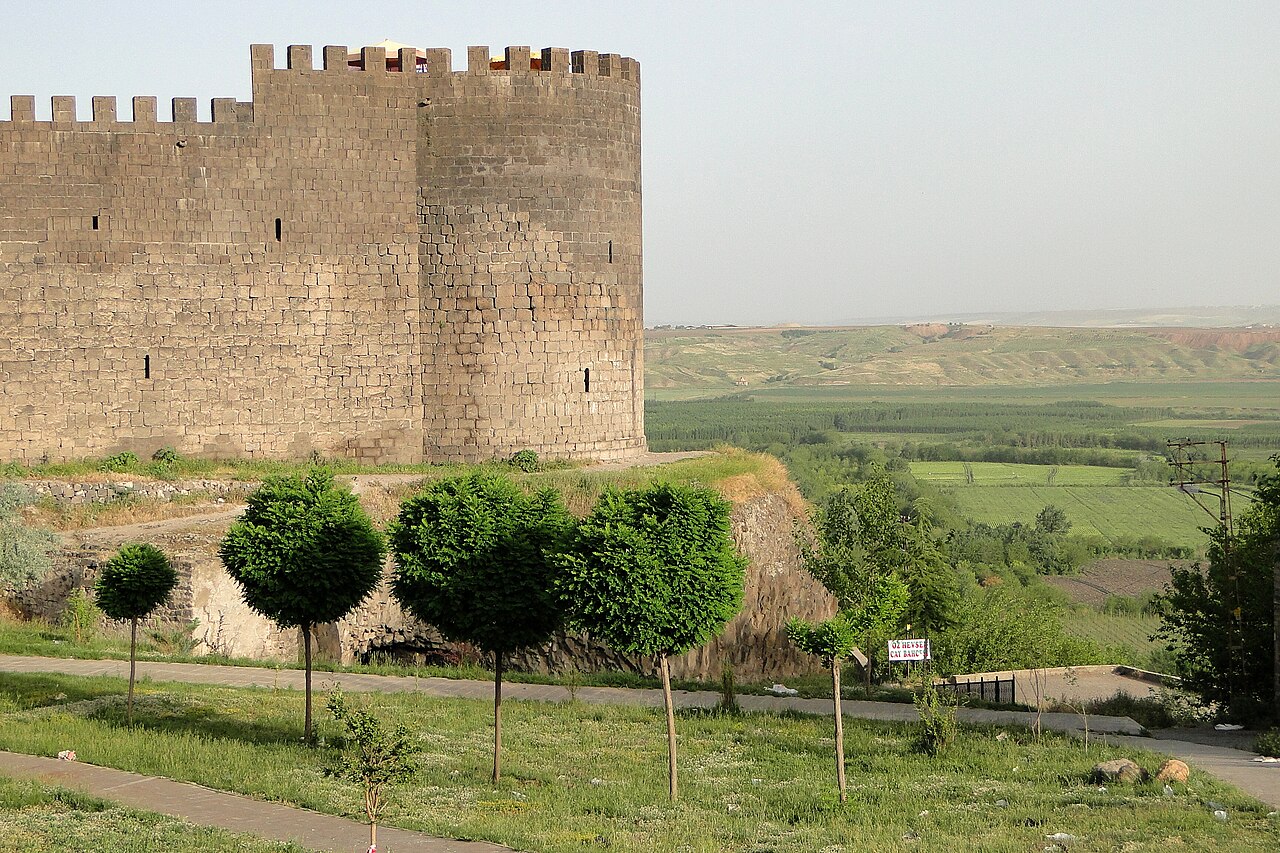
UNESCO inscribed Diyarbakır Fortress and Hevsel Gardens Cultural Landscape in 2015. It includes İçkale, the 5.8-kilometre wall circuit, gates, towers and 63 inscriptions, together with gardens, water resources and the Ten-Eyed Bridge. [4] The gardens connect the city with the Tigris and historically supplied food and water. Conservation therefore involves cultivation, drainage and views as well as stone masonry. The site’s value does not depend on an unsupported claim that the entire wall is the world’s oldest or longest.
Christian history, violence and restoration
Christian communities were part of the city’s social and economic history. Üngör’s archival study documents how Governor Mehmed Reshid’s 1915 committee and local collaborators, including Aziz Feyzi and Bekir Sıdkı, organized the genocidal process against Armenians in the province. [5] That destruction should not be replaced by an unexplained account of a population simply disappearing. A later effort at repair is documented in Europa Nostra’s 2015 award for Surp Giragos: the church foundation, community groups and municipality restored the ruined Armenian church and associated buildings. [6] The award recognized cooperation and reconciliation, not restoration of the lost population.
Amed and living Kurdish oral culture
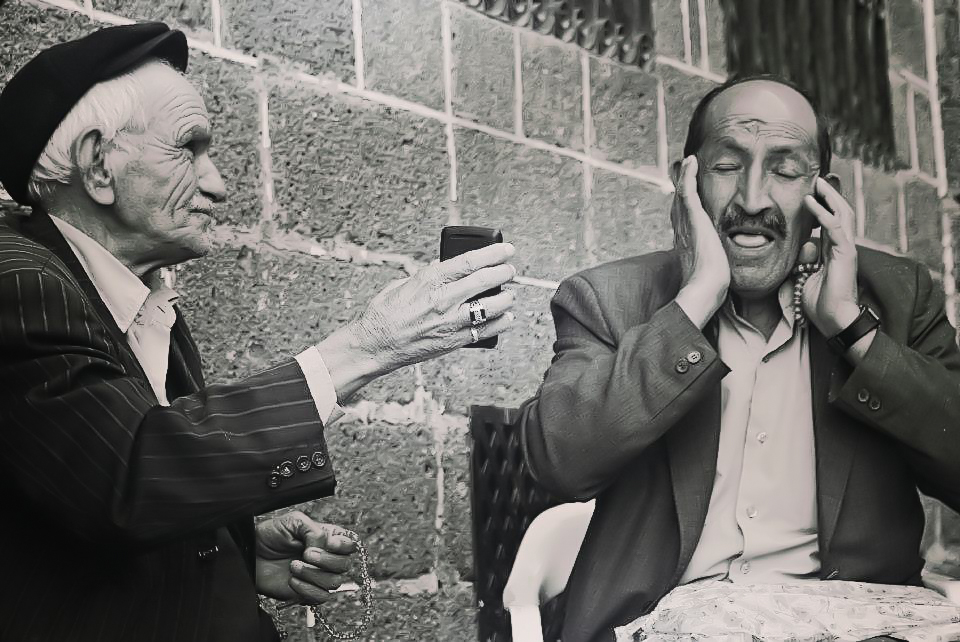
The city’s Kurdish importance is visible in institutions and performances as well as political descriptions. The municipality’s 6 July 2024 account records the Dengbêj House operating in Suriçi since 2007, organizing divans and archiving collected folklore. [7] Dengbêj performance carries stories through voice, memory and an audience. The accompanying 2015 photograph shows singers in Diyarbakır, one listening with a phone raised while another sings with his hands near his ears. [11] It records a particular encounter, rather than identifying every performer or establishing an unchanged, timeless tradition.
Sur’s residents during and after the fighting
Amnesty International’s 6 December 2016 account, based on residents’ experiences, describes curfews, shortages, heavy weapons and forced displacement after fighting resumed in 2015. Although clashes ended in March 2016, it reported around 24,000 people still unable to return at the time of publication. Residents also faced damaged homes, looting, demolition and expropriation. [8] This is a dated finding about displacement and return, not a current population count. Rebuilding streets or monuments does not by itself show that former residents recovered housing, possessions or neighbourhood relationships.
Conservation remained contested after 2023
In its 2025 decision, the World Heritage Committee acknowledged restoration following the 2023 earthquake but continued to express concern about development impacts. It called for improved plans for the gardens, bridge setting and Suriçi, recalled the need to halt further demolition of historic fabric and end expropriation decisions, and requested monitoring and a report by 1 December 2026. [9] Its reference to possible future inscription on the Danger List was a warning and reporting process, not a statement that inscription had already occurred.
Sources and further reading
- Nejat Göyünç, Diyarbakır, TDV İslâm Ansiklopedisi 9 (1994), historical section: names, medieval history and 1515 Ottoman incorporation.
- Ammianus Marcellinus, Roman History 18.9, J.C.Rolfe translation, LacusCurtius: primary account of fortification, water and setting.
- Jona Lendering, Amida (Diyarbakır), Livius (updated 2020): Roman–Sasanian frontier,359 siege and 363 settlement.
- UNESCO World Heritage Centre, Diyarbakır Fortress and Hevsel Gardens Cultural Landscape, property 1488;2015 inscription and Statement of Outstanding Universal Value.
- Uğur Ümit Üngör, Property and Family: Mobilisation for Violence during the Armenian Genocide, TSEG 10/4 (2013), pp.97–120, especially 103–105; archival research.
- European Heritage Awards / Europa Nostra, Armenian Church of St.Giragos,2015 award record: restoration and community participation.
- Diyarbakır Metropolitan Municipality, Dengbêj Evine 3 ayda 70 bin ziyaretçi,6 July 2024; own institutional account, historical figures not current opening hours.
- Amnesty International, Turkey: Displaced and dispossessed,6 December 2016; resident testimony, displacement and barriers to return in Sur.
- World Heritage Committee, Decision 47 COM 7 B.129 (2025), paragraphs 3–10; conservation, demolition, expropriation and monitoring requests.
- Adam Jones, City Wall and Battlements, Diyarbakir,30 May 2011; CC BY-SA 2.0, Wikimedia Commons.
- Kolpakovtour, Dengbesh, singers in Diyarbakır,18 May 2015; CC BY-SA 4.0, Wikimedia Commons.