Erbil, Hewlêr in Kurdish, is a capital shaped by ancient Arbela, medieval patronage, Ottoman neighbourhoods and modern displacement. Its history extends from the citadel to the surrounding plain.
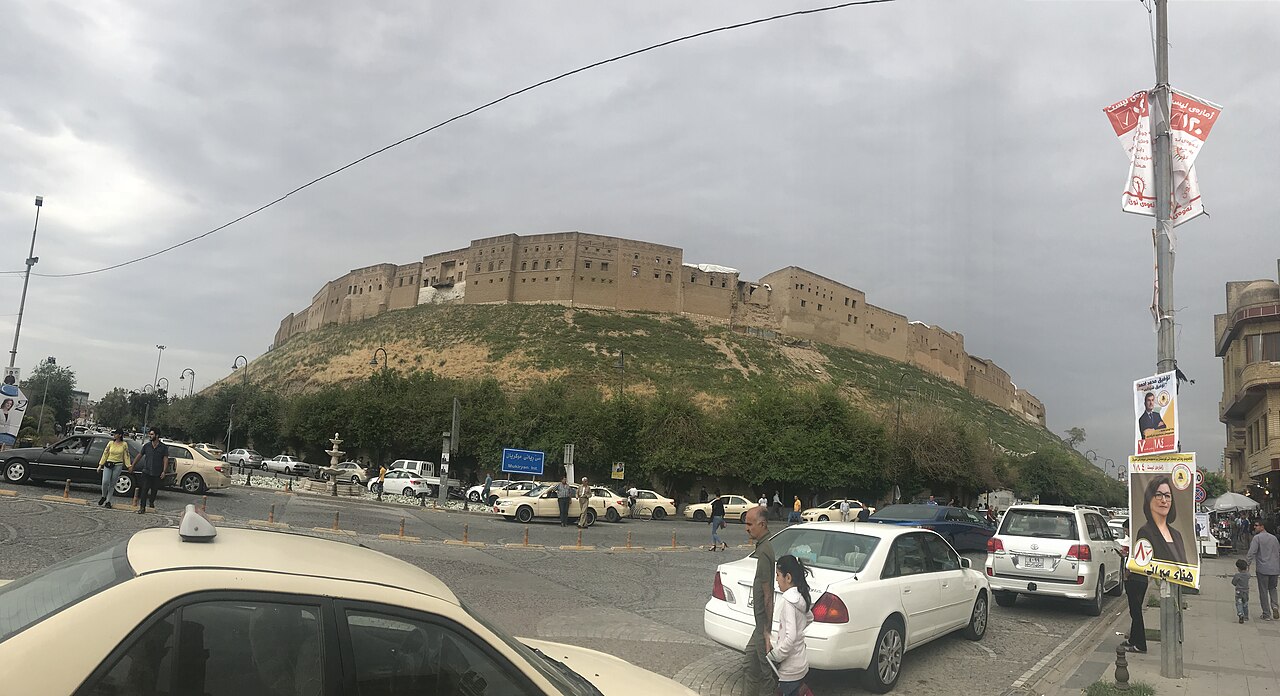

Hewlêr and the surrounding plain
Erbil, also written Arbil or Irbil, is known in Kurdish as Hewlêr. It is the capital of the Kurdistan Region of Iraq; the regional Council of Ministers is based here. [1] The Erbil Plain Archaeological Survey studies the wider landscape between the Upper and Lower Zab rivers. [2] The city, governorate and archaeological survey area are different geographical units and require different population and area figures.
Ancient Arbela and Ishtar
John F. Hansman’s account identifies Arbela with Assyrian Arbailu and describes a city at the meeting of important east–west and north–south routes. Assyrian royal inscriptions associate it with Ishtar, the “Lady of Arbel,” making the city a major religious centre. [3] The persistence of forms of the name helps connect written accounts across periods. Ancient texts, buried deposits and today’s standing buildings offer different kinds of evidence for the city’s long history.
An archaeological landscape beyond the mound
The survey team’s 2021 report records 728 sites across seven field seasons. It combines surface collection with historical aerial and satellite photographs, mobile mapping and drone photogrammetry. Its findings include numerous fourth-millennium BCE settlements with Uruk material, varied Early Bronze Age town forms, and large, low-density settlements around the late Sasanian or early Islamic period. [2] The report also describes urban growth and road construction as threats to the archaeological landscape. These regional findings help reconstruct settlement, farming and water management; they do not establish an exact foundation date or uninterrupted residence for every layer of the citadel. [2]
Gökböri’s medieval city
Gülay Öğün Bezer dates Gökböri’s final rule at Erbil to 1190–1233. His career connected Erbil to Saladin’s military world and to competing regional dynasties. Her account describes repairs to fortifications and streets, new markets, a hospital, a madrasa and institutions supporting vulnerable people. [4] Gökböri’s large Mawlid celebrations drew scholars and visitors and made Erbil renowned. They were a major development in the festival’s history, following earlier Fatimid celebrations in Cairo. On his death in 1233, the absence of a male successor and his bequest brought his territories under the Abbasid caliph. [4]
Reading the Ottoman citadel
UNESCO inscribed Erbil Citadel in 2014. Its heritage assessment highlights the tell’s accumulated archaeological deposits and the surviving Ottoman urban form: lanes and cul-de-sacs radiating from the main gate. The imposing outer edge is formed by tall nineteenth-century house façades that replaced earlier fortifications. [5] The assessment also acknowledges disruption to the citadel’s residential life. Preserving houses, streets and archaeological layers involves the relationship between former residents, the mound and the surrounding city. Its antiquity should be described through this evidence, with care over absolute claims to be the world’s oldest city. [5]
Ankawa and displacement after 2014
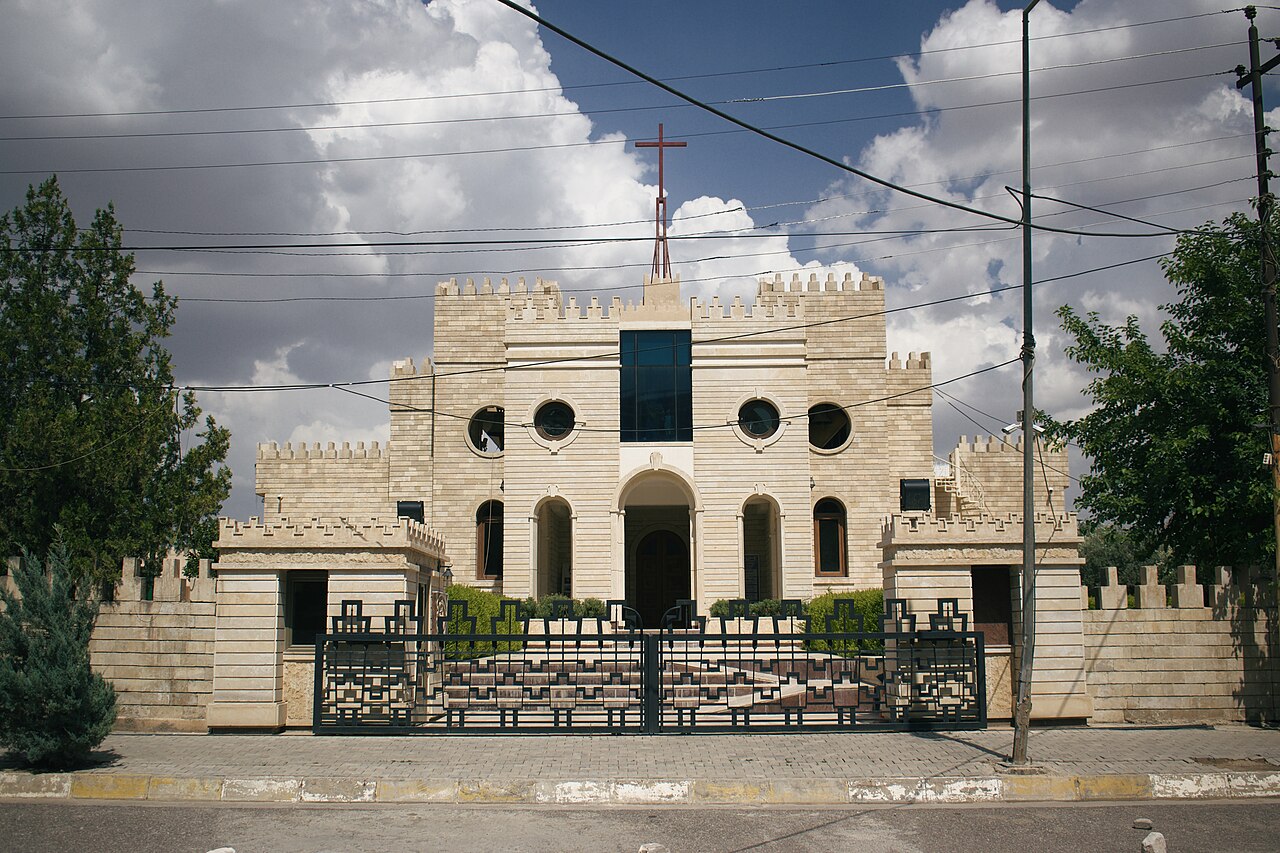
Ankawa’s community institutions became important to people fleeing Mosul and the Nineveh Plain during the ISIS assault in 2014. In its account of relief work during 2014–2020, the Chaldean Archdiocese of Erbil describes opening church buildings for shelter, distributing food and mattresses, and organising volunteer medical care. [6] The same account follows rental support, schools for displaced children and temporary facilities for Hamdaniya University. These are the providing organisation’s records of its own activities. They show how displacement affected housing, education and work as well as emergency shelter; they are not a current census of Erbil or Ankawa. [6]
The 2017 referendum and its aftermath
In his 22 November 2017 Security Council briefing, UN envoy Ján Kubiš described the independence referendum of 25 September in the Kurdistan Region and disputed territories. He reported the subsequent federal operations beginning in Kirkuk on 16 October and new displacement. [7] The briefing records the Federal Supreme Court’s 20 November decision finding the referendum unconstitutional and cancelling its results and effects. It also describes negotiations and disputes over airports, salaries, budgets and oil exports. This is a dated account of the crisis and diplomatic response; it does not describe every later development in relations between Erbil and Baghdad. [7]
Conservation as continuing city history
UNESCO announced a new Erbil Citadel initiative in October 2025 with US$10 million from KAR New Ventures Limited. The announcement described planned conservation, rehabilitation, improved accessibility and cultural engagement. [8] These were programme aims, not evidence that every building had been restored. Heritage work belongs to the living city’s history because it concerns buildings, public use and the connections residents maintain with the citadel.
Sources and further reading
- Kurdistan Regional Government, official government site and Council of Ministers address in Erbil; consulted 23 October 2026.
- Jason Ur et al., “The Erbil Plain Archaeological Survey: Preliminary Results, 2012–2020,” Iraq 83 (2021), pp. 205–243; author’s published abstract and p. 238 on threats to the landscape.
- John F. Hansman, “Arbela,” Encyclopaedia Iranica II/3 (1986), pp. 277–278; opening paragraphs on names, routes and Ishtar.
- Gülay Öğün Bezer, “Kökböri,” TDV İslâm Ansiklopedisi (2002): rule at Erbil, institutions, Mawlid and succession.
- UNESCO World Heritage Centre, Erbil Citadel: 2014 inscription and statement of Outstanding Universal Value, urban form and residential discontinuity.
- Ankawa Humanitarian Committee, “The Chaldean Archdiocese of Erbil: A Journey of Faith and Service Since 2014,” account of relief programmes, 2014–2020.
- Ján Kubiš, UN Security Council briefing, 22 November 2017: referendum, federal operations, court decisions and negotiations.
- UNESCO, “UNESCO launches new initiative to revitalize Erbil Citadel World Heritage Site,” October 2025; announcement of funding and programme aims.