After the 1991 uprising and refugee crisis, Kurdish parties negotiated with Baghdad over autonomy and wider democratic reform. The talks, international relief operations and the creation of regional institutions followed related but distinct paths.
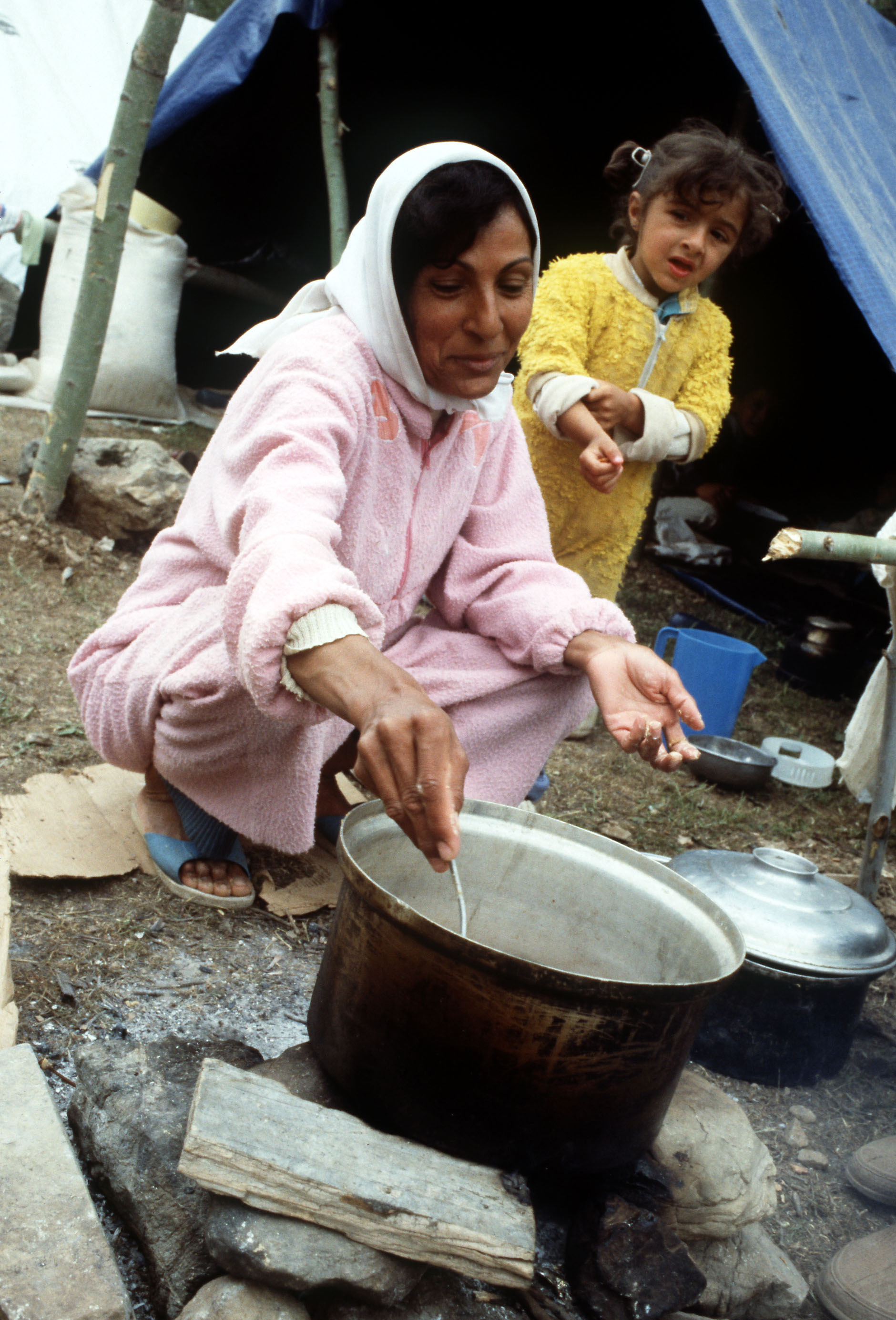
The uprising and the refugee emergency
In March 1991, after Iraq’s defeat in Kuwait, uprisings spread through southern Iraq and the predominantly Kurdish north. Government forces regained cities with extensive violence against civilians. Human Rights Watch also documented summary executions by rebels and warned that reliable overall casualty figures were unavailable. [1] The resulting flight created an urgent need for food, shelter and protection. This emergency formed the setting for talks with Baghdad; an assured political settlement did not precede them.
Relief, a ground haven and an air exclusion zone
Resolution 688 of 5 April demanded an end to repression and humanitarian access. Middle East Watch separately describes a coalition ground haven around towns including Zakho and Duhok, and a larger no-fly area north of the 36th parallel. [2] In oral histories, US diplomats David Ransom and David Mack recall improvised decisions over relief and security. Mack says Washington warned Kurdish leaders that humanitarian involvement was not a promise to strengthen their political position or fight battles on their behalf. [3] These accounts distinguish protection for relief work from a negotiated autonomy agreement.
What the Kurdish parties asked for
The Iraqi Kurdistan Front opened talks in April 1991. Its leading figures included Jalal Talabani of the PUK and Masoud Barzani of the KDP. Alongside autonomy, the Front proposed human-rights guarantees, political pluralism, press freedom and elections. Its plan included an interim coalition administration and a constituent assembly. In September, Talabani identified disagreements over territorial boundaries, Arabisation in disputed towns, democratic change and the right to maintain contacts outside Iraq. [1] The negotiating agenda therefore extended beyond the borders of an autonomous region to the political system governing Iraq.
Why accounts give different dates for the breakdown
A single collapse date hides several stages. Amnesty International’s 1995 account places the last formal Baghdad round in August 1991, followed by contacts for several months. It dates the Front’s announcement suspending talks and calling for parliamentary elections to mid-January 1992. [4] The International Commission of Jurists’ 1994 study describes suspension in October 1991. [5] Formal meetings, subsequent contacts and a public announcement are not necessarily the same event. These sources support a gradual breakdown, with the administrative crisis becoming decisive during the autumn.
Withdrawal, blockade and the administrative gap
Middle East Watch reports that Baghdad withdrew central administration and ordered civil servants to move to government-held areas in October 1991. Restrictions on food, fuel and funds compounded the region’s economic crisis. Education, health care and reconstruction lacked financing; international agencies only partly filled the gap. [2] The vacuum concerned salaries, institutions and services as well as military control. Creating a regional administration meant trying to govern under these material constraints.
From elections to a council of ministers
Elections took place on 19 May 1992. The International Commission of Jurists records the new parliament’s first meeting in Erbil on 4 June and the formation of a council of ministers in July, headed by Fuad Masum. The KDP and PUK agreed to share principal parliamentary and executive offices, with participation by smaller parties. [5] Voting, the first parliamentary sitting and the formation of government were separate milestones. The regional institutions emerged through these decisions in the absence of an agreed autonomy settlement with Baghdad.
Self-government under continuing pressure
Return did not automatically restore civilian security. Middle East Watch’s fieldwork found destroyed villages and mines in farmland, pasture and routes used by returning families. [2] The outcome combined Kurdish political organisation, international protection and emergency administration. Establishing elected institutions was an important change, while displacement, damaged livelihoods and unresolved relations with Baghdad continued to shape the lives of residents.
Sources and further reading
- Human Rights Watch, World Report 1992: Iraq and Occupied Kuwait, 1 January 1992; uprising and negotiations sections, reproduced by Refworld.
- Middle East Watch, Hidden Death: Land Mines and Civilian Casualties in Iraqi Kurdistan (October 1992), background section; fieldwork by Rae McGrath, background by Jemera Rone.
- Association for Diplomatic Studies and Training, Iraqi Kurds, Operation Provide Comfort, and the Birth of Iraq’s Opposition (2016); oral histories of David Ransom and David Mack.
- Amnesty International, Human Rights Abuses in Iraqi Kurdistan (1995), MDE 14/01/95, printed p. 13; chronology of negotiations and suspension announcement.
- International Commission of Jurists, Iraq and the Rule of Law (February 1994), printed pp. 147–148; negotiations, parliament and council of ministers.
- PHAN April Hatton / US Department of Defense, mother and daughter near Zakho, 25 April 1991; National Archives 6469323, public domain, Wikimedia Commons.