Leyla Bedir Khan’s career connected Egypt, Vienna, Stockholm, Paris and Milan. Explore her family background, varied repertoire, 1932 role in Belkis and the changing meaning of her public image as a Kurdish princess.

A dancer with several names and backgrounds
Leyla Bedir Khan, also billed as Leila Bederkhan or Bedirxan, lived from 1903 to 1986. Her father was the Kurdish political figure Abdürrezzak Bedirhan; her mother, Henriette Hornik, was an Austrian-Jewish dentist. A University of Virginia presentation abstract for Bilal Akar’s October 2026 research talk places solo recitals, collaborative productions and La Scala in her career. [1] She belongs to the history of performance across borders, as well as to Kurdish cultural history. The familiar princess title should lead readers to investigate her work, rather than replace it with a story about lineage alone.
From Egypt to Vienna and Paris
Barbara Henning traces her childhood in Egypt, education in Montreux, dance training in Vienna and move to Paris in 1926. Henning cites a Viennese population record giving 31 July 1903 as her birth date, while noting her later claim of 1908. [2] Celadet, Kamuran and Süreyya Bedirhan were her cousins, not her brothers. Her appearance on a Hawar subscribers’ list establishes a connection with the family’s publishing world; it does not establish authorship of linguistic research. [2] That distinction restores her own profession to the centre of the biography.
Stockholm: a repertoire and a critical audience
Rohat Alakom’s account of her 1925 Stockholm visit draws on Swedish newspapers. It identifies the Royal Academy of Music venue, pianist Marcel Lorber and programmes presented as Kurdish, Iranian, Caucasian, Egyptian, Spanish and Turkish dances. [3] This was a varied theatrical repertoire rather than a single unchanged village-dance tradition. Alakom also records disagreement among reviewers: some admired particular numbers and costumes, while others found repetition or a lack of vitality. [3] Applause and criticism both belong in the account. His article contains inconsistent timing details, so it supports the year and reception more securely than an exact performance date reconstructed from that article alone.
Belkis at La Scala in 1932
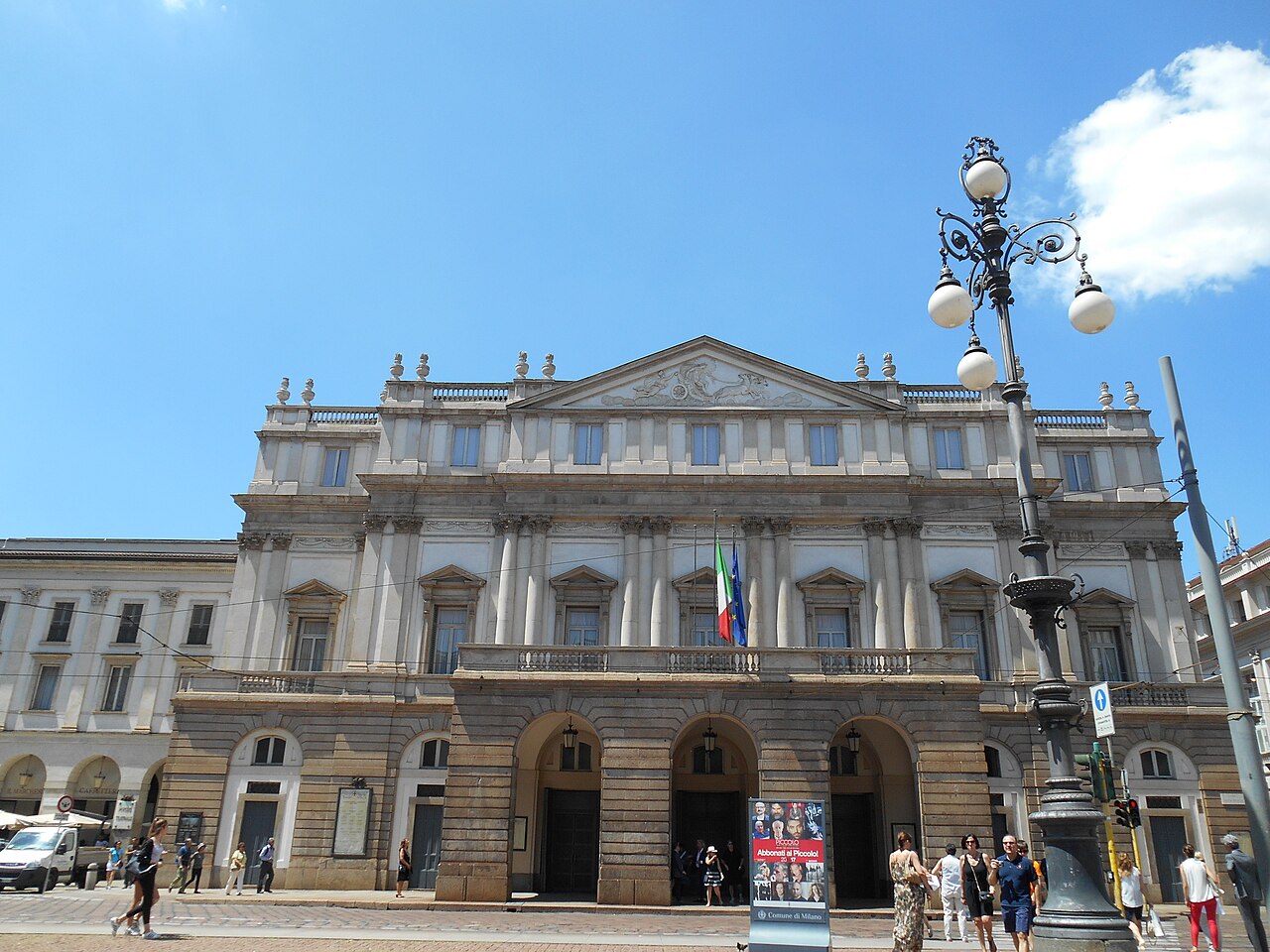
The contemporary printed libretto for Belkis, regina di Saba lists the first performance at Milan’s Teatro alla Scala on 23 January 1932. Its principal cast names Leila Bederkhan as Belkis and David Lichtenstein as Solomon, with music by Ottorino Respighi and choreography credited to Leonida Massine. [4] This gives a specific production, role and date, correcting accounts that drift to 1934. A named appearance in a major ballet production is also different from proof that she was a permanent member of a particular company. The libretto’s credits do not establish every detail of the creative collaboration.
How she described her dancing
The akaKURDISTAN archive reproduces passages attributed to Paris interviews of 1930 and 1932. In them, she identifies herself as Kurdish and describes developing stylised dances instinctively while investigating Persian, Egyptian, Indian and sacred-dance themes. [5] Read as an artist’s account of her practice, these passages illuminate how she explained her work to audiences. They should not be treated as independent confirmation that every stage number preserved an ancient ritual unchanged. Her research interests and creative interpretations help explain why a biography limited to Kurdish folk-dance representation misses much of the repertoire.
Teaching, public image and later research
Henning records her 1930 marriage to Henri Touache, teaching after the Second World War and continued life in Paris until her death in 1986. [2] Akar’s 2026 abstract examines the princess persona as something negotiated among the dancer, publicity, institutions and audiences. It also asks why her maternal Jewish background was less visible in much publicity; it presents strategic concealment as a research question, not an established explanation for every silence. [1] Studying her as an artist therefore means following performances, programmes, interviews and reception alongside family history. It allows Kurdish heritage and a wider, mobile artistic life to remain visible together.
Sources and further reading
- University of Virginia Jewish Studies, Bilal Akar research talk, 21 October 2026; presentation abstract, not a transcript or full dissertation.
- Barbara Henning, Narratives of the History of the Ottoman-Kurdish Bedirhani Family (2018), pp. 590 and 599–604; family relationships, education, career and later life.
- Rohat Alakom, A century after Leyla Bedir Khan’s performance in Stockholm, Rudaw, 17 February 2025; Swedish press reception.
- Belkis, regina di Saba, contemporary printed libretto, first-performance and cast page; UC Berkeley Music Library digitisation, previously consulted public indexed text.
- akaKURDISTAN, Leila Bedirkhan story map; excerpts attributed to Comœdia, 9 December 1930, and Paris Midi, 16 December 1932.
- Reem Al-Kashif, Teatro Alla Scala Milan Italy, 27 June 2016; Wikimedia Commons, CC BY-SA 4.0.