Meme Alan: The Oral Legend Behind Mem u Zin
- Dala Sarkis

- 1 day ago
- 7 min read

Introduction
Meme Alan ('Mem of the Alan clan') is the ancient oral epic that lies behind the famous Kurdish love story Mem u Zin. For centuries before it was ever written down, this tale of two star-crossed lovers was sung and recited by the dengbej, the travelling bards of Kurdistan, in countless versions across the Kurdish lands.
When the poet Ehmede Xani composed his literary masterpiece Mem u Zin in 1692, he was reshaping this older folk romance. Meme Alan is the living, oral root of that tree: richer in magic and adventure, freer in its telling, and essential to understanding how Kurdish epic truly worked.
Contents
What Is Meme Alan?
Meme Alan is a Kurdish oral folk epic, performed by dengbej in a mixture of spoken prose and sung poetry. At its heart is the doomed love of Mem, heir to the 'City of the West', and Zin, daughter of the governor of Jazira Botan. Around that core the performers wove miracles, journeys and feats of bravery, so that no two tellings were ever quite the same. It is the popular tradition that the written Mem u Zin grew out of.
Key Takeaways
Meme Alan is the oral Kurdish epic behind the written Mem u Zin.
It was performed for centuries by dengbej, the bards of Kurdistan, in prose mixed with sung poetry.
In this version, fairies (peri) magically bring Mem and Zin together while they sleep.
Mem is a miraculous child with a wonder-horse, Boze Rewan, and Bako is the scheming villain.
Ehmede Xani reshaped this folk romance into his 1692 literary epic Mem u Zin.
Quick Facts
Name: Meme Alan (Mem of the Alan clan)
Type: Oral folk epic / romance (conte-fable: prose and sung poetry)
Tradition: Kurdish oral literature, especially Kurmanji; performed by dengbej
Origin: Likely 14th-15th century; tied to Jazira Botan (Cizre)
Main characters: Mem (heir of the City of the West), Zin (daughter of the governor of Botan), Qeretajdin, Ceko, Bako (the villain)
Magical elements: Mem's miraculous birth through the Prophet Khidr; his wonder-horse Bor / Boze Rewan; fairies (peri) who unite the lovers
Relationship to Mem u Zin: The oral source reworked by Ehmede Xani in 1692 into the literary Mem u Zin
Notable recording: Documented in the 1930s by the French Orientalist Roger Lescot with Syrian dengbej
Other versions: Many regional variants, plus Neo-Aramaic and Armenian versions
Attestation: Oral, later transcribed and textualised (Oral to Written)
The Story of Meme Alan
In the oral tradition, Mem is the long-awaited heir to the City of the West, born only after the Prophet Khidr grants a child to one of three childless brothers. As a boy he is given a horse of miraculous powers, known as Bor or Boze Rewan. Far away, in Jazira Botan, lives Zin, the beautiful daughter of the local governor.
The two have never met, and by all reason never could, for their homes lie a world apart. But one night the fairies (peri), marvelling that the two most beautiful beings on earth should be kept apart, use their magic to carry the sleeping Zin to Mem's bedside, so that the lovers wake beside one another. By the time the fairies return Zin to Botan, the two are bound by a love that will not let them rest.
Mem sets out on his wonder-horse for distant Botan to find Zin. When he arrives, custom obliges him to accept the hospitality of Ceko, the man to whom Zin is promised, and his brothers, among them the brave and noble Qeretajdin, who becomes Mem's loyal protector.
Their love is opposed by Bako, a malicious figure sometimes described as a sorcerer, who plots with the prince against them. Through his scheming Mem is cast into prison, where he wastes away. When he dies, Zin's grief is so great that she dies upon his grave.
Qeretajdin avenges the lovers by killing Bako. In the oral tellings, as in the written epic, the lovers who could not be joined in life are buried together, and their tragedy becomes the most beloved story in all of Kurdish folklore.
Origins and History
The Dengbej and the Oral Tradition
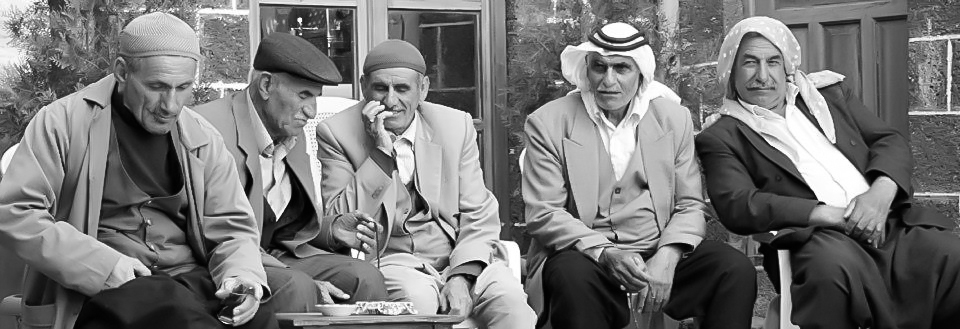
Meme Alan belongs to the world of the dengbej, the Kurdish singer-storytellers who carried history, genealogy and epic in their memories. They performed the romance as a conte-fable, alternating spoken narration with sung verse, often over many hours and shaped to each audience. Because every performer added and adapted, the epic survives in many regional versions rather than one fixed text.
From Meme Alan to Mem u Zin
It was this oral romance that the scholar-poet Ehmede Xani transformed, around 1692, into the written epic Mem u Zin. Xani kept the core tragedy but gave it literary form, a mystical dimension and the polish of classical poetry, and his version became the most famous work in Kurdish literature. Meme Alan is the older, popular tradition from which that masterpiece grew.
Recording the Oral Epic
European scholars began collecting versions of the tale from the mid-19th century onward. The best-known oral text was recorded in the 1930s by the French Orientalist Roger Lescot, working with Kurdish dengbej from Syria. Versions exist not only in Kurmanji Kurdish but also in Neo-Aramaic and Armenian, a sign of how widely the story travelled across the peoples of the region.
How Meme Alan Differs from Mem u Zin
The oral Meme Alan and Xani's written Mem u Zin tell the same tragedy, but differ in important ways:
How the lovers meet: in Meme Alan, fairies bring them together in their sleep; in Mem u Zin, they meet disguised at a Newroz festival.
Form: Meme Alan is sung and spoken by dengbej and changes with every performance; Mem u Zin is a fixed literary poem of around 2,655 couplets.
Magic and adventure: the oral version is full of miracles, the wonder-horse Boze Rewan and heroic episodes; Xani's version is more focused and mystical.
Names: the loyal protector is Qeretajdin (Tacdin in Xani's poem); the rival host is Ceko; the villain is Bako (Beko).
Meaning: Mem u Zin became a national and literary symbol, while Meme Alan remains the living folk tradition behind it.
Symbolism
Like the written epic, Meme Alan is about love, fate and the cruelty of separation. But its oral form carries its own meanings: the fairies and the wonder-horse place the lovers in a world where destiny and the supernatural shape human lives, and the long code of hospitality and honour that Mem must navigate reflects the values of the society that sang the tale.
Above all, Meme Alan is a monument to oral memory. That such a long and intricate story could live for centuries in the minds of the dengbej, without a book, shows how Kurdish culture preserved its heritage through performance rather than print.
Meme Alan in the Dengbej Tradition Today
Although Mem u Zin became the famous written classic, the oral Meme Alan tradition never died. Dengbej still perform versions of the story, recordings have been preserved on cassette and in print, and theatre companies continue to stage it, often drawing directly on the dengbej narration rather than only on Xani's text.
In this way the oldest and newest forms of the story live side by side, the ancient sung romance and its modern adaptations, keeping Meme Alan alive for new generations.
Debates and Misconceptions
Are Meme Alan and Mem u Zin the same story? Yes and no. They share the same core tragedy, but Meme Alan is the older oral folk epic with many variants, while Mem u Zin is Ehmede Xani's single literary reworking of it. People often use the title Mem u Zin for both, which blurs the distinction.
Is the story historical? It is traditionally tied to events in Jazira Botan around the 14th or 15th century, but the epic is folklore, not documented history. Its truth is cultural and emotional rather than factual.
Related Myths and Topics
Mem u Zin: Ehmede Xani's literary epic based on Meme Alan
Newroz: the festival where the lovers meet in Xani's version
Siyabend u Xece: another tragic Kurdish love legend of the dengbej
Feqiye Teyran: the classical Kurdish poet of the same tradition
The dengbej: the bards who preserved Kurdish oral epic
Peri: the fairies and spirits of Kurdish folklore
Frequently Asked Questions
What is Meme Alan?
Meme Alan is the oral Kurdish folk epic behind the written Mem u Zin. It tells the tragic love story of Mem and Zin and was performed for centuries by dengbej, the bards of Kurdistan.
What is the difference between Meme Alan and Mem u Zin?
Meme Alan is the older oral version, sung in many variants by dengbej; Mem u Zin is the fixed literary poem that Ehmede Xani composed from it in 1692. They share the same core story.
How do Mem and Zin meet in Meme Alan?
In the oral version, fairies marvel that the two most beautiful people on earth are kept apart and use magic to bring the sleeping Zin to Mem, so the lovers wake side by side. In Xani's version they meet disguised at Newroz instead.
Who preserved the Meme Alan epic?
The dengbej, Kurdish singer-storytellers, kept it alive in performance. The best-known recorded version was collected in the 1930s by the French Orientalist Roger Lescot with Kurdish singers from Syria.
Is Meme Alan still performed today?
Yes. Dengbej still recite versions of it, recordings survive, and theatre companies continue to adapt it for the stage, keeping the oral tradition alive alongside the written epic.
References and Further Reading
Comments