top of page

The Republic of Ararat (1927–1930): The Kurdish State on the Mountain

What Was the Republic of Ararat?


The Republic of Ararat (Kurdish: Komara Agiriyê) was a self-proclaimed Kurdish state declared around 1927 in the region of Mount Ararat (Ağrı) in eastern Turkey, during one of the great Kurdish rebellions of the interwar years. Organised by the Xoybûn nationalist league and led in the field by the former Ottoman officer Ihsan Nuri Pasha, it held out on the slopes of Turkey's highest mountain until it was crushed by a massive Turkish military offensive in 1930. It stands as one of the three major attempts at modern Kurdish statehood.

Key Takeaways


• The Republic of Ararat was a Kurdish state proclaimed around 1927 in the Mount Ararat region of eastern Turkey.

• It was organised by the Xoybûn (Khoyboun) league, founded in 1927 by exiled Kurdish nationalists, including the Bedirxan family.

• Its military commander was Ihsan Nuri Pasha, a Kurdish former Ottoman army officer.

• It arose after the failure of the 1925 Sheikh Said revolt, amid the Turkish Republic's suppression of Kurdish identity.

• Turkey crushed the rebellion in a large offensive in 1930; the republic is remembered as a key symbol of Kurdish statehood.

Quick Facts


Name: The Republic of Ararat (Komara Agiriyê)

Type: Self-proclaimed, unrecognised Kurdish state

Region: Mount Ararat (Ağrı), eastern Turkey, near the Iranian frontier

Organised By: The Xoybûn (Khoyboun) league (founded 1927)

Military Leader: Ihsan Nuri Pasha

Period: c. 1927–1930

Adversary: The Republic of Turkey

Outcome: Crushed by a major Turkish offensive in 1930

Significance: One of the three major attempts at modern Kurdish statehood

Table of Contents


After Sheikh Said: Kurdish Resistance in the Late 1920s


The Republic of Ararat arose from the wave of Kurdish resistance that swept eastern Turkey in the years after the failure of the great Sheikh Said revolt of 1925. The new Turkish Republic, founded by Mustafa Kemal Atatürk in 1923, pursued a policy of centralisation and Turkish nationalism that left no room for Kurdish identity or autonomy, suppressing the Kurdish language, names and institutions.

In response, Kurdish nationalists — many of them exiles and former officers — sought to organise a more coordinated struggle. Their efforts converged on the rugged region around Mount Ararat (Ağrı), the great volcanic peak in the far east of Turkey near the Iranian and Soviet frontiers, which became the heart of a new Kurdish uprising.

The Xoybûn League


The driving force behind the new movement was Xoybûn (Khoyboun), a Kurdish nationalist league founded in 1927 by exiled Kurdish nationalists. Xoybûn — the name means roughly 'being oneself', or independence — drew together Kurdish intellectuals, former officers and tribal leaders, and aimed to unify the Kurdish national struggle under a single organisation.

Among its leading figures were members of the Bedirxan (Bedir Khan) family — descendants of the emirs of Bohtan — including the brothers Celadet and Kamuran Bedirxan. Xoybûn took on the political direction of the revolt centred on Mount Ararat, seeking to turn scattered resistance into a national bid for an independent Kurdistan.

The Proclamation of the Republic (1927)


It was in this context that the Republic of Ararat — in Kurdish, Komara Agiriyê — was proclaimed around 1927, with its base in the mountainous Ararat region of eastern Turkey. For the first time since the Kingdom of Kurdistan, a Kurdish state was declared on the soil of one of the countries among which Kurdistan had been divided.

The republic established a rudimentary government and administration in the territory it controlled around Ararat, complete with national symbols, and appealed — largely in vain — for international recognition and support. Its very existence was a direct challenge to the authority of the Turkish state over its Kurdish provinces.

Ihsan Nuri and the Army of Ararat


The military leadership of the Republic of Ararat fell to Ihsan Nuri Pasha, a Kurdish former Ottoman army officer who took command of the rebel forces on the mountain. A trained professional soldier, he organised the Kurdish fighters into a more disciplined force and directed the defence of the Ararat stronghold.

Under Ihsan Nuri's command, the fighters of Ararat held out against repeated Turkish efforts to dislodge them, using the formidable terrain of the mountain to their advantage. For several years the Kurdish forces maintained their position, making Ararat a symbol of defiance.

The Ararat Rebellion


The revolt drew in Kurdish tribes and chieftains of the region, among them figures such as Halis Öztürk, who joined the fight around the mountain. From 1927 the rebellion flared across the Ararat region, with the Kurdish forces resisting successive Turkish military operations.

The Turkish state responded with growing force, mounting large military campaigns against the rebels and bringing aircraft to bear against the mountain strongholds. The fighting was hard, and the stakes — for both the young Turkish Republic and the Kurdish national cause — were high.

The Fall of Ararat (1930)


The decisive blow came in 1930. That summer and autumn, Turkey launched a massive military offensive against Mount Ararat, deploying tens of thousands of troops with artillery and air support to crush the rebellion once and for all. Despite fierce resistance, the Kurdish forces were overwhelmed, and by September 1930 the Republic of Ararat had been destroyed.

In the aftermath, Turkey moved to ensure the region could never again serve as a base for revolt — including, in 1932, a border adjustment with Iran that brought the Ararat area more firmly under Turkish control and denied the rebels a cross-border refuge. Ihsan Nuri and other survivors went into exile, and harsh reprisals followed against the Kurdish population of the region.

Timeline


1923 — The Turkish Republic is founded; a policy of centralisation and Turkish nationalism follows. 1925 — The Sheikh Said revolt is crushed. 1927 — The Xoybûn league is founded; the Republic of Ararat is proclaimed in the Ararat region, with Ihsan Nuri as military commander. 1927–1930 — Kurdish forces hold out on Mount Ararat against repeated Turkish campaigns. 1930 — Turkey launches a massive offensive; by September the rebellion is crushed and the republic destroyed. 1932 — A Turkey–Iran border adjustment further secures the Ararat region; survivors go into exile.

Key Figures


The Republic of Ararat is associated above all with Ihsan Nuri Pasha, its military commander, and with the Xoybûn leadership — notably the Bedirxan brothers — who provided its political direction. Local Kurdish chieftains such as Halis Öztürk took part in the fighting. As a short-lived rebel state under siege, the republic had no long line of rulers; its identity was bound up with the leaders of the revolt and the cause they championed.

Debates and Uncertainties


Precise details of the Republic of Ararat — the exact extent of its administration, its borders, and the chronology of its proclamation and battles — are reported with some variation, reflecting both the confused conditions of a wartime rebel state and the politically charged nature of the subject. Dates of around 1927 for its proclamation and 1930 for its fall are the most commonly cited. What is clear is its significance as an organised, Xoybûn-led bid for Kurdish independence.

Place in Kurdish History


The Republic of Ararat stands as one of the three great attempts at modern Kurdish statehood, alongside the Kingdom of Kurdistan of the early 1920s and the later Republic of Mahabad of 1946. Together they mark the recurring Kurdish drive for self-determination in the decades after the Kurdish lands were partitioned among Turkey, Iraq, Iran and Syria.

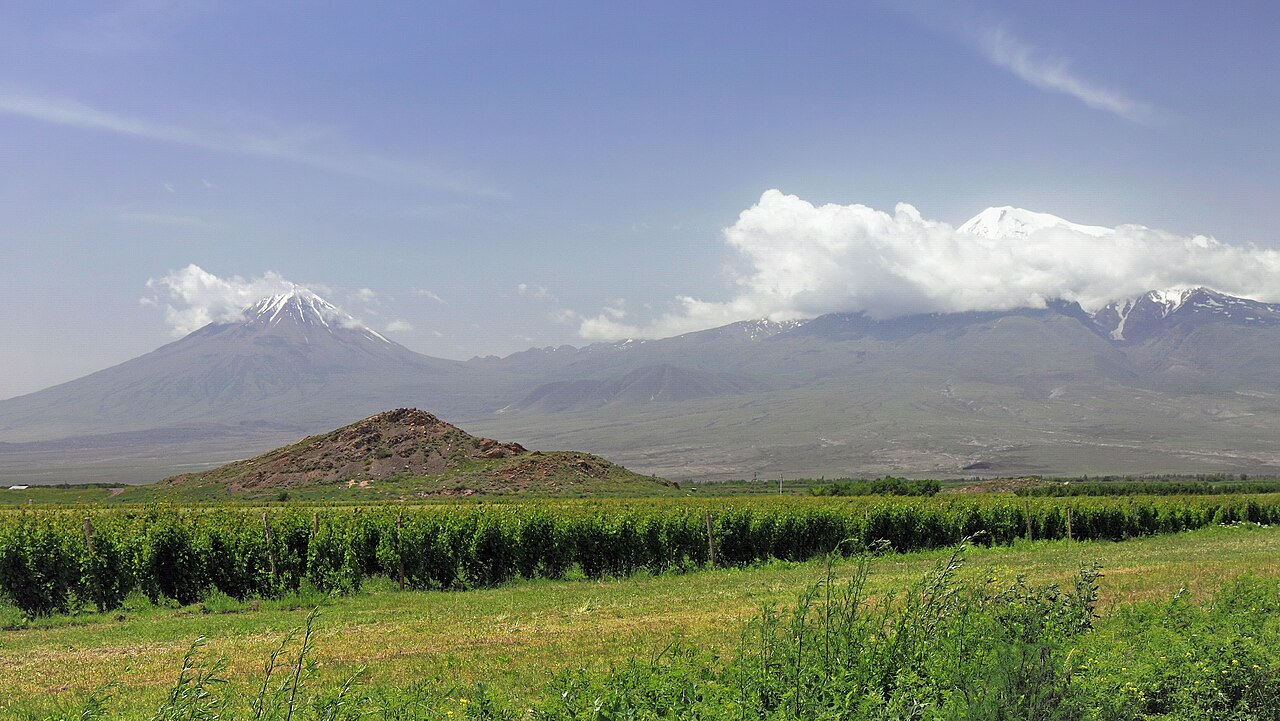
Though it lasted only a few years and won no recognition, Ararat became a powerful and enduring symbol. Mount Ararat itself, and the flag and memory of the republic, remain potent emblems of the Kurdish national struggle — a reminder of a moment when a Kurdish state was declared on the slopes of one of the world's most famous mountains.


Frequently Asked Questions


What was the Republic of Ararat?


It was a self-proclaimed Kurdish state declared around 1927 in the Mount Ararat region of eastern Turkey, during a major Kurdish rebellion organised by the Xoybûn league. It was crushed by Turkey in 1930.

Who led the Republic of Ararat?


Its military leader was Ihsan Nuri Pasha, a Kurdish former Ottoman officer, while its political direction came from the Xoybûn league, including members of the Bedirxan family.

What was Xoybûn?


Xoybûn (Khoyboun) was a Kurdish nationalist league founded in 1927 by exiled Kurdish nationalists to coordinate the struggle for Kurdish independence; it organised the Ararat revolt.

When did the Republic of Ararat exist?


It was proclaimed around 1927 and held out on Mount Ararat until 1930, when a massive Turkish military offensive crushed the rebellion.

How was the Republic of Ararat defeated?


Turkey launched a large-scale military offensive in 1930, with tens of thousands of troops and air support, overwhelming the Kurdish forces by September of that year. A 1932 border adjustment with Iran further secured the region.

Why does the Republic of Ararat matter?


It was one of the three major attempts at modern Kurdish statehood — with the Kingdom of Kurdistan and the Republic of Mahabad — and remains an enduring symbol of the Kurdish struggle for self-determination.

References and Further Reading


Studies of the Ararat (Ağrı) rebellion and the Xoybûn league.

Histories of the Kurds in the early Turkish Republic and the interwar Kurdish revolts.

Accounts of Ihsan Nuri Pasha and the 1930 Turkish offensive on Mount Ararat.

Kurdish-History.com — related reading on Ihsan Nuri, Halis Öztürk, and the Sheikh Said, Ararat and Dersim rebellions.

Recent Posts

See All
The Emirate of Soran: Rawanduz and the Mir Kor

What Was the Emirate of Soran? The Emirate of Soran was a Kurdish principality centred on the mountain town of Rawanduz, in what is now the Erbil Governorate of Iraqi Kurdistan. One of the old Kurdi


Comments


bottom of page