top of page

The Emirate of Soran: Rawanduz and the Mir Kor

What Was the Emirate of Soran?


The Emirate of Soran was a Kurdish principality centred on the mountain town of Rawanduz, in what is now the Erbil Governorate of Iraqi Kurdistan. One of the old Kurdish emirates, it is remembered above all for two extraordinary rulers: Mir Xanzad, the warrior-queen of the early seventeenth century, and Mir Muhammad of Rawanduz — the famous 'Mir Kor', or Blind Mir — who in the early nineteenth century forged Soran into one of the most powerful and very nearly independent Kurdish states before the modern era, until its suppression by the Ottomans around 1836.

Key Takeaways


• Soran was a Kurdish emirate centred on Rawanduz, north-east of Erbil, in modern Iraqi Kurdistan.

• It was recorded among the Kurdish dynasties of the Sharafnama (1597).

• Its early-17th-century ruler Mir Xanzad was a celebrated Kurdish warrior-queen.

• Under Mir Muhammad, the 'Mir Kor', in the early 19th century, Soran became a powerful near-independent state with its own army, cannon foundry and coinage.

• Mir Muhammad's violent expansion included massacres of the Yazidis; the emirate was suppressed by the Ottomans around 1836.

Quick Facts


Name: The Emirate of Soran

Type: Kurdish emirate

Centre: Rawanduz (Rewandiz), north-east of Erbil, modern Iraqi Kurdistan

Era: Medieval origins; height in the early 19th century

Famous Queen: Mir Xanzad (Khanzad), early 17th century

Greatest Ruler: Mir Muhammad of Rawanduz, the 'Mir Kor' (early 19th c.)

Overlords: Nominally Ottoman; effectively near-independent under Mir Muhammad

End: Ottoman suppression, c. 1836

Primary Source: Sharafnama of Sharaf Khan Bidlisi (1597)

Table of Contents


Soran and the Town of Rawanduz


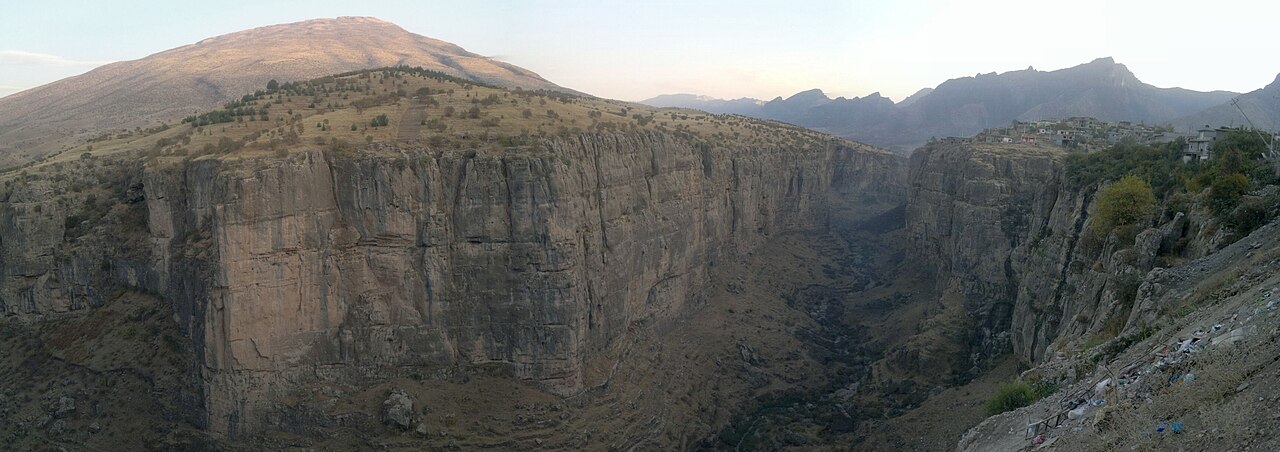
The Emirate of Soran was a Kurdish principality in the mountainous country north-east of Erbil, in what is now the Erbil Governorate of Iraqi Kurdistan. Its centre was the town of Rawanduz (Rewandiz), set among dramatic gorges and high peaks — a natural fortress of a region whose terrain shaped the emirate's fierce independence.

The Soran region remains a recognised district of Iraqi Kurdistan today, and Rawanduz, perched above its famous gorge, is still emblematic of the rugged Kurdish heartland. It was from this stronghold that the Soran emirs ruled, and from which, in the nineteenth century, one of them would build one of the most formidable Kurdish states of the age.

The Soran Dynasty


Soran was one of the old Kurdish emirates, its ruling dynasty long established over the tribes of the region and recorded among the Kurdish houses of the sixteenth-century Sharafnama of Sharaf Khan Bidlisi. Like its neighbours, it governed as a hereditary principality, balancing between the great empires while guarding its mountain autonomy.

As with the other emirates, the dynasty's early origins and the full sequence of its rulers are documented only partially, and many details rest on tradition and the chronicle record. But across the centuries Soran remained one of the principal Kurdish powers of the region that is now north-eastern Iraqi Kurdistan.

Mir Xanzad: The Kurdish Queen


One of the most remarkable figures in Soran's history was Mir Xanzad (Khanzad), a woman who ruled the emirate in the early seventeenth century — a rare and celebrated example of a female Kurdish sovereign. Remembered in tradition as a fearless warrior-queen, she is associated with fortresses and works that still bear her name in the Soran country.

Mir Xanzad's reign has made her an enduring symbol in Kurdish history, and her legend — part documented history, part folk memory — speaks to the prominence Soran held among the Kurdish emirates. Her story is one of the most distinctive in the whole record of Kurdish rule.

Mir Muhammad of Rawanduz: The Mir Kor


Soran reached its zenith under Mir Muhammad of Rawanduz, famous in Kurdish history as the 'Mir Kor' — the Blind Mir, so called for the loss of sight in one eye. Coming to power in the early nineteenth century, he transformed the emirate from a mountain principality into an aggressive, expanding state.

A ruler of fearsome energy and discipline, Mir Muhammad imposed strict order on his domain and set about extending Soran's power across the surrounding Kurdish lands. For a brief, dramatic period he made Rawanduz the centre of one of the strongest Kurdish powers the region had seen in centuries.

Building a Kurdish State


Mir Muhammad's ambitions went far beyond ordinary tribal rule. He built a disciplined standing army, established a foundry at Rawanduz to cast his own cannon, and is said to have minted his own coinage — the trappings of a would-be independent state. With these tools he expanded aggressively in every direction.

He pushed into the territory of neighbouring emirates, attacking Bahdinan and extending Soran's reach toward Mosul, the Yazidi districts, and the lands of the surrounding peoples. At its height, Mir Muhammad's Soran was very nearly an independent Kurdish kingdom, and a serious challenge to Ottoman authority in the region.

Conquest and Controversy: The Yazidi Massacres


Mir Muhammad's relentless expansion had a dark side. His campaigns were marked by great violence against the populations he subdued, and he is held responsible for massacres of the Yazidis — the ancient Kurdish-speaking religious community — as well as harsh treatment of Christian and other communities in his path.

These atrocities are an important and painful part of the Soran story, and an honest account of Mir Muhammad must acknowledge them alongside his achievements as a state-builder. They form part of the troubled record of how his expanding power was imposed on the diverse peoples of the region.

The Ottoman Suppression (c. 1836)


Mir Muhammad's near-independent state could not be tolerated by the Ottoman Empire, which was then beginning the great campaign to dismantle the autonomous Kurdish emirates. Around 1836 the Ottomans moved against Soran in force.

Mir Muhammad's resistance ultimately collapsed; he submitted to the Ottomans and, according to tradition, set out for Istanbul, never to return — disappearing, and presumed killed, around 1836–1838. With his fall, the Emirate of Soran was brought to an end and absorbed into direct Ottoman administration, its brief moment as a great Kurdish power over.

Timeline


Medieval period — The Soran dynasty establishes itself over the Rawanduz region; exact origins uncertain. 16th c. — Soran is recorded among the Kurdish emirates of the Sharafnama (1597). Early 17th c. — Mir Xanzad, the warrior-queen, rules the emirate. Early 19th c. — Mir Muhammad, the 'Mir Kor', builds Soran into a powerful, near-independent state from Rawanduz. 1820s–1830s — Mir Muhammad expands aggressively, attacking Bahdinan and the Yazidi districts; massacres mark his campaigns. c. 1836 — The Ottomans move against Soran. c. 1836–1838 — Mir Muhammad submits and disappears; the Emirate of Soran is abolished.

Rulers and Key Figures


Two rulers dominate the memory of Soran: Mir Xanzad, the celebrated warrior-queen of the early seventeenth century, and Mir Muhammad of Rawanduz, the 'Mir Kor', who in the early nineteenth century made Soran into one of the most powerful Kurdish states of the age. The fuller succession of the Soran dynasty is recorded only partially, and the dates of many earlier rulers should be treated with caution — but in these two figures the emirate produced two of the most famous names in all of Kurdish history.

Debates and Uncertainties


Several aspects of Soran's history blend documented fact with tradition. The reign of Mir Xanzad in particular has acquired a strong legendary colouring, and the details of her rule are not all securely recorded. The career of Mir Muhammad is better documented, but the scale of his conquests and the massacres attributed to him are assessed differently across Kurdish, Yazidi, Christian and Ottoman sources; the violence is presented here as the grave reality it was, while recognising that its precise extent and circumstances continue to be studied.

Place in Kurdish History


The Emirate of Soran ranks among the most storied of the Kurdish principalities. In Mir Xanzad it gave Kurdish history one of its few women rulers and an enduring national symbol; in Mir Muhammad, the 'Mir Kor', it produced one of the boldest attempts to forge an independent Kurdish power before the modern era. Its fall around 1836 was part of the same Ottoman centralisation that soon swept away Bahdinan and Bohtan.

Soran thus stands as both a high point and a cautionary tale of the age of the emirates: a demonstration of how far a determined Kurdish ruler could push toward statehood, and of the limits the great empires were prepared to enforce. Rawanduz and its rulers remain vivid presences in the Kurdish historical imagination.


Explore related history on Kurdish-History.com: Mir Muhammad of Rawanduz, the warrior-queen Mir Xanzad, the Emirate of Bahdinan, the Emirate of Bohtan, and the fall of the Kurdish emirates.

Frequently Asked Questions


Where was the Emirate of Soran?


Soran was centred on the town of Rawanduz in the mountains north-east of Erbil, in what is now Iraqi Kurdistan. The Soran region remains a recognised district there today.

Who was Mir Xanzad?


Mir Xanzad (Khanzad) was a female ruler of the Soran emirate in the early seventeenth century, remembered in Kurdish tradition as a fearless warrior-queen — a rare example of a woman sovereign in Kurdish history.

Who was the Mir Kor?


The 'Mir Kor' (the Blind Mir) was Mir Muhammad of Rawanduz, the early-nineteenth-century ruler who built Soran into a powerful, near-independent Kurdish state, complete with its own army, cannon foundry and coinage.

How did Mir Muhammad build Soran into a power?


He created a disciplined army, cast his own cannon at a foundry in Rawanduz, minted coins, and expanded aggressively into neighbouring lands — turning Soran into one of the strongest Kurdish states of its time.

What ended the Emirate of Soran?


The Ottomans moved against Soran around 1836. Mir Muhammad submitted and disappeared on his way to Istanbul, and the emirate was abolished and brought under direct Ottoman rule.

Is Mir Muhammad a controversial figure?


Yes. While celebrated as a state-builder, he is also held responsible for massacres of Yazidis and violence against Christian and other communities during his conquests, which form a dark and important part of his record.

References and Further Reading


Sharaf Khan Bidlisi, Sharafnama (1597) — records the Soran emirate among the Kurdish dynasties.

Studies of Mir Muhammad of Rawanduz, the Soran emirate, and the Ottoman suppression of the Kurdish emirates.

Historical literature on the Yazidis and the nineteenth-century Kurdish emirates.

Kurdish-History.com — related reading on Mir Xanzad, Mir Muhammad of Rawanduz, and the fall of the Kurdish emirates.

Recent Posts

See All

Comments


bottom of page