The Emirate of Bahdinan: The Kurdish Princes of Amadiya
- Rezan Babakir

- 2 hours ago
- 7 min read
What Was the Emirate of Bahdinan?
The Emirate of Bahdinan (also Behdinan or Badinan) was one of the greatest and most enduring Kurdish principalities, ruling the mountainous country of what is now Duhok Province in Iraqi Kurdistan from its fortress-capital of Amadiya (Amêdî). Founded in the late fourteenth century and lasting until 1843, the emirate dominated the region for nearly five centuries, gave its name to the Bahdini (Badini) dialect of Kurdish, and remains a byword for the Kurdish heartland of northern Iraq.
Key Takeaways
• Bahdinan was a major Kurdish emirate centred on Amadiya (Amêdî) in the mountains of modern Duhok Province, Iraqi Kurdistan.
• It was founded in the late fourteenth century (traditionally around 1376) and lasted until 1843.
• Its ruling house claimed descent from the Abbasid caliphs — a prestigious lineage.
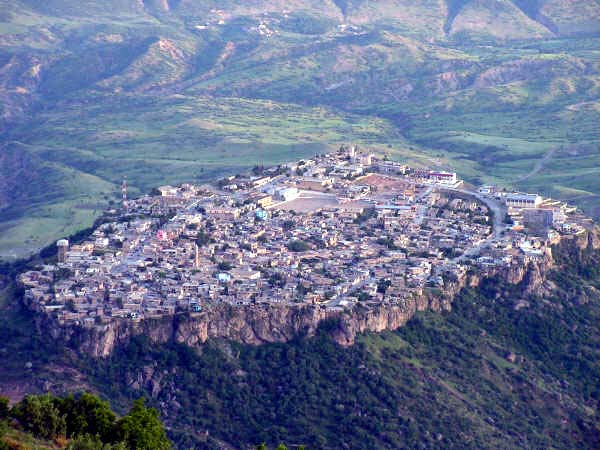
• Its capital, Amadiya, is a dramatic fortress-town set atop a flat-topped mountain.
• Bahdinan gives its name to both a region of Iraqi Kurdistan and the Bahdini (Badini) dialect of Kurmanji Kurdish.
Quick Facts
Name: The Emirate of Bahdinan (Behdinan / Badinan)
Type: Kurdish emirate
Capital: Amadiya (Amêdî), modern Duhok Province, Iraqi Kurdistan
Founded: Late 14th century (traditionally c. 1376)
Dissolved: 1843
Eponym: Said to derive from a founder named Baha al-Din
Claimed Descent: The Abbasid caliphs
Overlords: Aq Qoyunlu, Safavid, then Ottoman suzerainty
Legacy: The Bahdini (Badini) dialect; the Bahdinan region of Iraqi Kurdistan
Table of Contents
Bahdinan: The Land and the Name
Bahdinan — also written Behdinan or Badinan — is both a historic Kurdish emirate and the name of a region in the far north of modern Iraq, covering much of today's Duhok Province and taking in Amadiya, Zakho, Aqra and the surrounding mountains. For Kurds it remains one of the great heartlands of Kurdistan, distinct in dialect and history from the Soran country to the south-east.
The name is traditionally said to derive from a founding ruler called Baha al-Din: 'Bahdinan' means, in effect, 'those of Baha al-Din'. The same name attaches to the Bahdini (Badini) dialect of Kurmanji Kurdish that is spoken across the region to this day.
Amadiya: The Mountain Capital
The capital and symbol of the emirate was Amadiya (Kurdish: Amêdî), one of the most dramatic towns in all of Kurdistan. It sits atop a flat-topped mountain — a natural rock plateau rising sheer above the surrounding valleys — reached historically through gates cut into the cliff. Few capitals anywhere were so naturally defensible.
Amadiya is also extremely old, with a history reaching back long before the Kurdish emirate; its commanding position made it a prize across many eras. Under the Bahdinan emirs it became the political and cultural centre of a powerful mountain principality, famous for its fortifications, its great gate, and its place in Kurdish memory.
Founding and the Abbasid Claim
The emirate was founded in the late fourteenth century — a date traditionally given as around 1376 — by the family that would rule it for nearly five centuries. The dynasty took its name, Bahdinan, from a founding figure named Baha al-Din.
Like several prestigious Muslim dynasties, the ruling house of Bahdinan claimed a distinguished descent — in their case, from the Abbasid caliphs of Baghdad. Such a genealogy lent the emirs great religious and political prestige, though, as with many medieval dynastic claims, it is best understood as a statement of status whose literal accuracy cannot be verified. What is certain is that the Bahdinan emirs ranked among the most respected of all Kurdish ruling houses.
Between the Empires
For most of its history Bahdinan lay within the contested zone between the great empires of the region. Its emirs navigated the suzerainty of the Aq Qoyunlu Turkmen, then the Safavids of Iran, and finally the Ottomans — to whom the Kurdish emirates of the area largely attached themselves after the Ottoman victory at Chaldiran in 1514, in the settlement brokered by Idris Bitlisi.
Under Ottoman suzerainty Bahdinan, like the other leading Kurdish dynasties, retained extensive autonomy, governing itself under its hereditary emirs in exchange for loyalty along the turbulent frontier of the Ottoman–Safavid wars. For more than three centuries the princes of Amadiya ruled their mountains with little interference from Istanbul.
The Height of Bahdinan
At its height Bahdinan was one of the strongest and most prestigious Kurdish emirates, its authority extending across the mountains and valleys of what is now northern Iraq. The emirs commanded the loyalty of numerous Kurdish tribes and controlled key routes between the Mosul plains and the high country toward the Iranian and Anatolian frontiers.
The emirate was also a centre of learning and culture. Amadiya in particular was renowned for its religious schools — most famously the Qubahan madrasa, remembered as one of the great seats of Kurdish scholarship — which drew students from across Kurdistan. In this the Bahdinan court resembled the other major emirates, which saw the patronage of learning as a mark of princely legitimacy.
Rivalries and the Soran Challenge
Like all the Kurdish emirates, Bahdinan was drawn into rivalries with its neighbours. The most dangerous came in the early nineteenth century from the south-east, where the energetic Mir Muhammad of Soran — the 'Mir Kor', or Blind Mir, of Rawanduz — built a powerful state and expanded aggressively into the surrounding Kurdish lands, Bahdinan among them.
Soran's expansion shook the older emirate, but it also alarmed the Ottoman state, which would soon move to crush the over-mighty Kurdish princes one by one. The suppression of Soran in the 1830s was a sign of what was coming for Bahdinan as well.
The Fall of Bahdinan (1843)
Bahdinan's long independence ended in the great wave of Ottoman centralisation that destroyed the Kurdish emirates in the first half of the nineteenth century. As the Tanzimat reforms pressed the empire to govern its provinces directly, the autonomy of the hereditary emirs was no longer tolerable, and the Kurdish emirates were dismantled in succession.
The Emirate of Bahdinan was abolished around 1843, its last emirs deposed and its territory brought under direct Ottoman administration. Its fall came in the same era that saw the suppression of Soran and, soon after, the crushing of Bedir Khan Beg of Bohtan — the end, within a single generation, of the centuries-old order of autonomous Kurdish principalities.
The Bahdini Dialect and Legacy
Though the emirate itself ended in 1843, its name lives on. The Bahdinan region remains a distinct cultural and linguistic zone of Iraqi Kurdistan, centred on Duhok, and the Bahdini (Badini) dialect of Kurmanji Kurdish — distinct from the Sorani spoken further south — carries the emirate's name into everyday life.
Amadiya, too, endures as a celebrated historic town, its mountaintop silhouette one of the iconic images of Kurdistan. In dialect, in regional identity and in memory, Bahdinan remains a living presence in the Kurdish world.
Timeline
Late 14th c. (traditionally c. 1376) — The Emirate of Bahdinan is founded, named after a ruler called Baha al-Din. 1514 — After Chaldiran, Bahdinan and the other Kurdish emirates align with the Ottomans; Bahdinan retains its autonomy. 16th–18th c. — The emirs of Amadiya rule a powerful, largely self-governing principality; Amadiya flourishes as a centre of learning. Early 19th c. — Mir Muhammad of Soran (Rawanduz) expands aggressively into Bahdinan's lands. 1830s — The Ottomans suppress the Soran emirate. c. 1843 — The Emirate of Bahdinan is abolished and absorbed into direct Ottoman administration. Later 19th c. — The wider order of autonomous Kurdish emirates comes to an end.
Rulers and Key Figures
The Bahdinan emirate was ruled by a single hereditary dynasty across nearly five centuries, from its founding in the late fourteenth century until its abolition in 1843. The princes bore the title of emir or pasha and governed from Amadiya. The full succession of the line is recorded only partially in the available sources, and the names and dates of individual emirs — particularly in the earlier centuries — should be treated with caution. What is clear is the dynasty's exceptional longevity and prestige, which placed it among the foremost ruling houses of Kurdistan.
Debates and Uncertainties
A few points warrant caution. The exact founding date of the emirate is uncertain, with around 1376 the most commonly cited; the dynasty's claimed descent from the Abbasid caliphs is a prestige genealogy that cannot be independently verified; and the spelling of the name varies (Bahdinan, Behdinan, Badinan). The detailed internal history and ruler list of the emirate, as with most of the Kurdish principalities, is less fully documented than its broad outline and lasting cultural importance.
Place in Kurdish History
The Emirate of Bahdinan ranks among the most important Kurdish principalities of all. For nearly five centuries it preserved Kurdish self-rule in the mountains of what is now northern Iraq, and from its capital at Amadiya it nurtured a flourishing tradition of Kurdish learning and culture.
Its legacy is unusually tangible. Where many emirates left only their place in the chronicles, Bahdinan bequeathed a living region and a living dialect to the Kurds of Iraq. To speak of 'Bahdinan' today is to invoke both a vanished medieval principality and a present-day heartland of Kurdish life.
Related People, Places, and Topics
Explore related history on Kurdish-History.com: the Ottoman–Safavid frontier wars, Idris Bitlisi, Bedir Khan Beg of Bohtan, the Ardalan dynasty, and the fall of the Kurdish emirates.
Frequently Asked Questions
Where was the Emirate of Bahdinan?
Bahdinan was centred on Amadiya (Amêdî) in the mountains of what is now Duhok Province in Iraqi Kurdistan. The name also denotes the wider region of northern Iraq around Duhok, Zakho and Aqra.
When did the Emirate of Bahdinan exist?
It was founded in the late fourteenth century — traditionally around 1376 — and lasted until about 1843, when it was abolished by the Ottomans, giving it a lifespan of nearly five centuries.
Why is the emirate called Bahdinan?
The name is traditionally said to derive from a founding ruler called Baha al-Din; 'Bahdinan' means 'those of Baha al-Din'. The same name attaches to the region and to the Bahdini dialect of Kurdish.
What is Amadiya?
Amadiya (Amêdî) was the capital of the emirate: a dramatic fortress-town built atop a flat-topped mountain in Duhok Province. It remains one of the most iconic historic towns of Kurdistan.
What ended the Emirate of Bahdinan?
Ottoman centralisation. During the nineteenth-century reforms that dismantled the autonomous Kurdish emirates, Bahdinan was abolished around 1843 and brought under direct Ottoman rule — in the same era that ended the Soran and Bohtan emirates.
What is the Bahdini dialect?
Bahdini (Badini) is the variety of Kurmanji Kurdish spoken across the Bahdinan region of Iraqi Kurdistan, around Duhok and Amadiya. It carries the old emirate's name into the present day.
References and Further Reading
Sharaf Khan Bidlisi, Sharafnama (1597) — records the Bahdinan emirate among the Kurdish dynasties.
Studies of the Kurdish emirates and the nineteenth-century Ottoman centralisation.
Histories of Amadiya and the Bahdinan (Duhok) region of Iraqi Kurdistan.
Kurdish-History.com — related reading on the fall of the Kurdish emirates and Bedir Khan Beg of Bohtan.
Comments