7 April 2026 marked 35 years since the opening relief flights of Operation Provide Comfort. Dated statements also document concerns about Syrian citizenship applications, a KRG protest to Iran and the Easter holiday for Christian public employees.
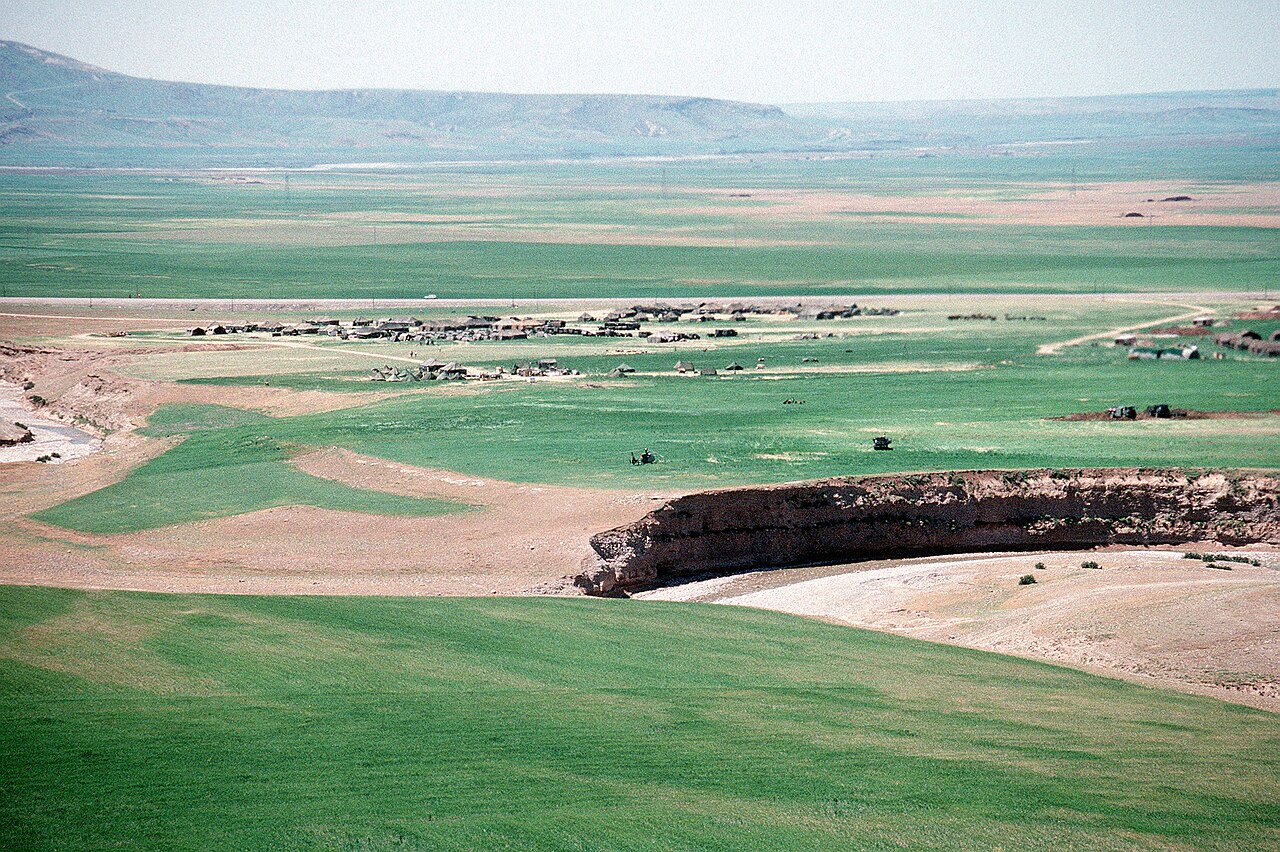

7 April 1991: relief flights begin
The U.S. Navy’s historical chronology dates the inauguration of Operation Provide Comfort to 7 April 1991. [1] The Air Force historical account describes C-130 aircraft flying from Incirlik to drop relief supplies for Kurdish refugees following the suppression of the uprising in northern Iraq. It also records the limits of airdrops: delivering supplies did not by itself provide secure living conditions or enable families to return. On 17 April the mission expanded with ground forces, temporary camps and a protected zone. [2] The anniversary therefore concerns the beginning of an operation that developed in stages, rather than the creation of every later protective arrangement on one day.
The UN resolution two days earlier
Security Council Resolution 688 was adopted on 5 April 1991. It condemned repression of Iraq’s civilian population, including Kurdish-populated areas, demanded an end to that repression and insisted on immediate humanitarian access. It also requested efforts to address the needs of refugees and displaced people. [3] These are specific demands recorded by the United Nations. The resolution and the coalition’s subsequent military measures belong to the same crisis, but their dates, institutional authors and provisions should remain distinct.
7 April 2026: concerns at citizenship centres
The Network of Statelessness Victims in al-Hasakah published a statement on 7 April about its field monitoring of nationality-application centres. It reported recurring cases in which Kurdish applicants were recorded as Syrian Arab, including at centres in Qamishli, Hasakah, Dêrik, Darbasiyah and Çil Axa. The network argued that imposed classifications undermined the aims of Decree No. 13 of 2026 and called for corrected forms, clear staff instructions, independent complaints procedures and oversight. [4] These are the monitoring organisation’s findings and demands. They show why an application process must be assessed through its administrative practice as well as the announcement of a reform.
A diplomatic protest in Erbil
The KRG Department of Foreign Relations announced that it delivered a protest letter to Iran’s Consulate General in Erbil on 7 April 2026. The department said it was responding to statements and threats by Iran’s consul general in Sulaymaniyah against the Region’s people and constitutional entity. [5] The notice establishes the diplomatic action and the KRG’s stated reason.
The Easter holiday notice
A separate KRG notice issued on 4 April designated 5, 6 and 7 April 2026 as official Easter holidays for Christians working in government institutions across the Kurdistan Region. [6] Its scope matters: this was a published administrative holiday arrangement for a defined group of employees. The dates ran from Sunday through Tuesday, making 7 April the final day covered by that Easter notice.
Sources and further reading
- Naval History and Heritage Command, “April 7,” entry for 1991: inauguration of Operation Provide Comfort.
- Gregory Ball, Air Force Historical Support Division, “1991 – Operation Provide Comfort and Northern Watch”; relief flights and the later ground-force expansion.
- UN Security Council, Resolution 688 (1991), adopted 5 April 1991; UN Digital Library record and summary.
- Network of Statelessness Victims in al-Hasakah, statement of 7 April 2026 on registration practices, published by Hevdesti.
- KRG Department of Foreign Relations, notice on the protest letter delivered to the Iranian Consulate in Erbil, 7 April 2026.
- KRG Department of Media and Information, official Easter holiday notice, issued 4 April 2026.