top of page

Sitiya Zin: The Noble Lady of Yazidism

Illustrated banner of Kurdish culture and Yazidi faith evoking Sitiya Zin, the noble lady and female saint of Yazidism, alongside Kawa the Blacksmith, the Newroz fire, the Simurgh and the tanbur


Introduction


At the very heart of the great holy family of Yazidism stands a woman: Sitiya Zin, the noble lady whose name has been honoured for centuries. The daughter of the supreme saint Sheikh Adi, the wife of the prince Ezdina Mir, and the mother of the holy brothers of the Sun and the Moon, she is one of the most important female saints of the faith, and the matriarch through whom its two greatest lineages were joined.


In a sacred history often told through its fathers and sons, Sitiya Zin is a reminder of the central place that holy women hold in the Yazidi tradition. She is the bridge between the line of the faith's great refounder and the line of its ancient princes, and from her womb came the saints in whom the Sun and the Moon are personified. To trace the family of the Yazidi saints to its source is to arrive, again and again, at this noble lady.


Yet, as with so many of the women of the old sacred traditions, the written record of her life is sparse, and much about her must be approached with humility and honesty about how little is set down. What remains is the outline of her place in the holy genealogy, the reverence in which she is held, and the gentle light of a lamp kept burning in her honour in the holiest sanctuary of her faith. From these we may draw the portrait of a woman who stands quietly at the foundation of a whole religious world.


Contents


Who Was Sitiya Zin?


Sitiya Zin, in Kurdish Sitiya Zin, meaning the noble lady Zin, was a revered female saint of the Yazidis who lived in the twelfth century. She was the daughter of the great saint Sheikh Adi, the wife of the prince Ezdina Mir, and the mother of two of the four Shemsani saints, Sheikh Shems and Sheikh Fakhradin, the personifications of the Sun and the Moon. Through her, the holy line of Sheikh Adi and the princely line of Ezdina Mir were united, and she is honoured among the most important female figures of the Yazidi faith, with a sacred lamp dedicated to her at Lalish.


The Noble Lady Zin


Her very name speaks of her honoured status. In Kurdish, the title Siti, sometimes rendered Sit, is an honorific meaning lady or noble woman, while Zin is a Kurdish woman's name long cherished in the culture. Together, Sitiya Zin means the noble lady Zin, a name of grace and dignity that has been spoken with reverence among the Yazidis for some eight centuries.


She is described as a very important female saint of the Yazidis, and she lived in the twelfth century, the formative age of the faith, when the religion was taking the shape it would carry through the centuries. Though the details of her life are few, her standing is clear: she belongs to the innermost circle of the sacred family, a woman whose place in the holy genealogy made her one of the pivotal figures of the entire tradition. To understand her is to understand how closely woven, and how dependent on its women, the family of the Yazidi saints truly was.


Key Takeaways


  • Sitiya Zin was a revered female saint of the Yazidis in the 12th century.

  • Her name means the noble lady Zin, from the honorific Siti and the name Zin.

  • She was the daughter of the supreme saint Sheikh Adi.

  • She was the wife of Ezdina Mir, the prince of the Yazidis.

  • She was the mother of Sheikh Shems, the Sun, and Sheikh Fakhradin, the Moon.

  • A sacred lamp is dedicated to her in the sanctuary of Lalish.


Quick Facts


  • Name: Sitiya Zin (Kurdish: Sitiya Zin); the noble lady Zin

  • Name meaning: Siti means lady or noble woman; Zin is a Kurdish woman's name

  • Lived: The 12th century, the late Abbasid era

  • Type: A revered female saint of the Yazidis

  • Father: Sheikh Adi ibn Musafir, the supreme Yazidi saint

  • Husband: Ezdina Mir, the prince of the Yazidis

  • Children: Sheikh Shems, the Sun, and Sheikh Fakhradin, the Moon

  • Significance: Matriarch joining the line of Sheikh Adi to the princely line

  • Veneration: A sacred lamp is dedicated to her at Lalish

  • Tradition: One of several venerated female saints of Yazidism


Daughter of Sheikh Adi


Sitiya Zin was born into the very holiest line of the Yazidi faith, for she was the daughter of Sheikh Adi ibn Musafir, the great mystic and saint around whom the religion took its classical form. Sheikh Adi is the supreme figure of Yazidi sanctity, his tomb at Lalish the focal point of all pilgrimage, and to be his daughter was to stand at the source of the faith's holiness. Sitiya Zin carried that sacred descent in her person.


This descent gives her a special importance, for it means that the holiness of Sheikh Adi was carried forward not only through the male line but through his daughter. The blood of the faith's great refounder flowed through Sitiya Zin to her children, and so to the lineages that descended from them. In a tradition where sanctity is understood to run in sacred families, she is one of the vital channels through which the holiness of Sheikh Adi passed into the generations that followed, a daughter who became a mother of saints.


Wife of the Prince


Sitiya Zin became the wife of Ezdina Mir, the prince who ruled the Yazidis in the age around the coming of Sheikh Adi, and who is honoured as the forefather of the Shemsani sheikhs. She was his first wife; he later also married a second, Sitiya Ereb. In marrying the prince, the daughter of the great saint joined her sacred descent to the ancient princely line of the Yazidis.


The significance of this marriage can hardly be overstated, for it was through Sitiya Zin that two of the great currents of Yazidi sacred history were brought together: the holy line of Sheikh Adi, the faith's refounder, and the princely line of Ezdina Mir, the ruler of the ancient community. In her person and her marriage, the new sanctity and the old royalty were wed, and from that union flowed much of the structure of the faith as it would endure. She was the meeting-point, the woman in whom two sacred lineages became one family.


Mother of the Sun and the Moon


The crowning glory of Sitiya Zin's place in the tradition is her motherhood, for she was the mother of two of the most beloved saints of the entire faith. Her sons were Sheikh Shems, the personification of the Sun, and Sheikh Fakhradin, the personification of the Moon and the poet of the sacred hymns. From this one noble lady came the holy brothers who embody the two great lights of the heavens.


There is a profound beauty in this image: that the Sun and the Moon, the rulers of day and night, the two luminous brother-saints of Yazidism, should both be the children of a single mother. It places Sitiya Zin at the source of the faith's most radiant symbolism, the woman from whom the two great lights were born. Her two sons would become patriarchs of the Shemsani lineages and figures of the first rank among the saints, and in giving them life she gave the tradition some of its most cherished holiness. To honour the saints of the Sun and the Moon is, inevitably, to honour the mother who bore them.


The Matriarch of the Holy Line


Taken together, the threads of Sitiya Zin's life reveal her as a true matriarch of the Yazidi sacred order. Daughter of the supreme saint, wife of the princely forefather, and mother of the saints of the Sun and the Moon, she stands at the junction of the holiest lineages of the faith. The whole Shemsani sheikh lineage, descended from her sons and their brothers, has in her one of its essential roots, and through her grandchildren the holy family spread its influence across the Yazidi world, among them figures honoured among the Seven Divine Beings of the faith.


In a sacred history often recounted as a succession of holy men, Sitiya Zin is a reminder that the lineages of the saints depended equally on their women, and that a matriarch such as she could be the pivot on which the whole structure turned. She is less celebrated in story than her famous father and sons, yet without her their connection would not exist, for it is through her that they are joined. Hers is the quiet, foundational importance of the mother at the centre of the family tree, the still point around which the generations of saints are arranged.


The Lamp at Lalish


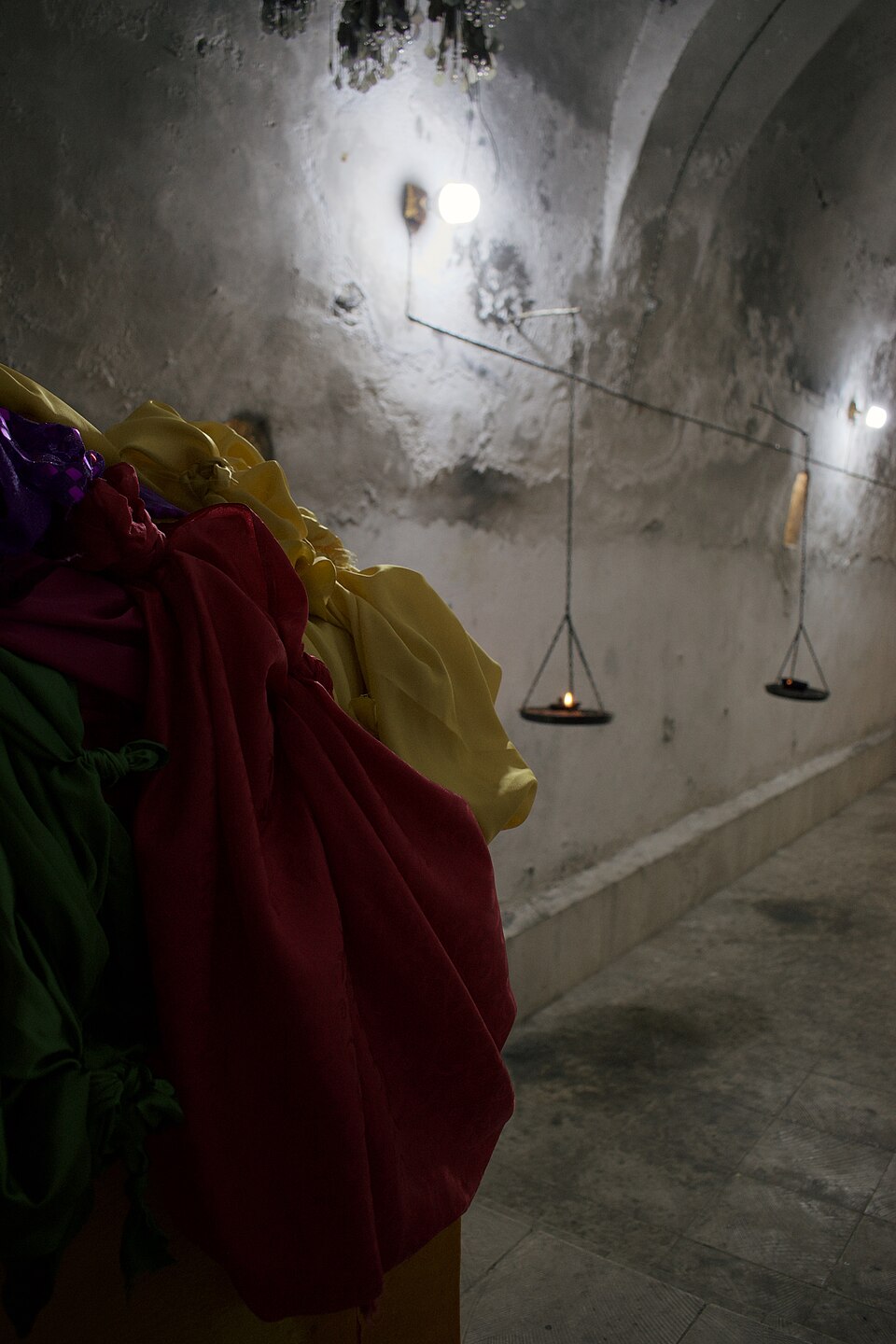
The reverence for Sitiya Zin is expressed in a beautiful and living form in the holy valley of Lalish, the spiritual centre of the Yazidi world. Within the sanctuary, a sacred lamp, known as a Cira, is dedicated to her and kept burning in her honour at a particular place. The lighting of such lamps and wicks for the saints is one of the most central and cherished devotions of Yazidism, and the gentle flames that illuminate the holy places are among the faith's most evocative images.


That a lamp should be kept for Sitiya Zin is a fitting honour for the mother of the saint of the Sun, the lady from whom the lights were born remembered with a light of her own. In this small flame, her memory is kept alive not in books or grand monuments but in the daily devotion of her people, in the warm glow that pilgrims see when they come to the holy valley. It is a quiet and tender form of veneration, and a sign that, however little of her life is written, Sitiya Zin remains present and honoured in the living practice of the faith.


The Holy Women of Yazidism


Sitiya Zin is not alone among the venerated women of the Yazidi faith, and she stands at the head of a notable company of female saints. Among them is her own granddaughter, Khatuna Fexra, the daughter of Sheikh Fakhradin, revered as the guardian of childbirth and of women and children; there is Sitiya Ereb, the second wife of Ezdina Mir; and there are the holy daughters of Sheikh Shems. The Yazidi sacred world has its mothers, daughters and ladies as well as its fathers and sons.


This honouring of holy women is a significant and attractive feature of the Yazidi tradition. In a faith that watches over every sphere of life through its saints, women hold real and cherished places in the sacred order, as matriarchs, as guardians of birth and of the vulnerable, and as figures of veneration in their own right. Sitiya Zin, as the great matriarch at the root of the holy family, may be seen as the foremost of these holy women, the noble lady from whom so much of the sacred lineage descends, and her honoured memory affirms the dignity of women within the spiritual life of her people.


A Life Little Recorded


Honesty requires acknowledging how little of Sitiya Zin's life is actually recorded. As is so often the case with the saints of the Yazidis, and especially with the women among them, there are few written traditions about her, and the sources tell us more of her place in the sacred genealogy than of her deeds, her words or the events of her life. We know whose daughter she was, whose wife, and whose mother, and we know that she is venerated; of the texture of her life, the record is largely silent.


This silence is itself part of her story, and it should be respected rather than filled with invention. It reflects the nature of a tradition that for most of its history preserved its memory orally, and that suffered great losses through centuries of persecution, so that much of what was once known has not come down to us. Rather than embroider her life with details that cannot be verified, it is more faithful to honour what is genuinely remembered: her sacred descent, her pivotal place in the holy family, and the reverence that keeps a lamp burning in her name. In the gaps of the record, we may simply acknowledge the limits of what can be known.


Symbolism and Meaning


The figure of Sitiya Zin gathers a quiet but profound symbolism. She embodies the sacred feminine at the heart of the Yazidi tradition, the matriarch in whom holy lineages meet and from whom they flow. As the mother of the saints of the Sun and the Moon, she is associated with the source of the faith's most radiant symbols, the lady from whom the great lights were born; and as the daughter of Sheikh Adi joined to the prince Ezdina Mir, she embodies the union of sanctity and royalty, of the new and the ancient, in a single person.


Her sacred lamp at Lalish gives her a fitting emblem: a gentle, enduring light, kept faithfully alive, quiet but never extinguished. In this she symbolises the way that the foundational figures of a tradition may be less celebrated than the famous saints they produced, yet remain essential and cherished, their memory tended like a flame. To contemplate Sitiya Zin is to honour the mothers at the root of every sacred history, and the dignity of the women without whom the lineages of the holy could not exist.


Sitiya Zin and the Kurds


Sitiya Zin holds an honoured place in the heritage of the Kurds, and above all among the Yazidis, the followers of one of the most ancient faiths of the Kurdish world. As the daughter of Sheikh Adi, the wife of Ezdina Mir, and the mother of the saints of the Sun and the Moon, she stands at the very foundation of the Yazidi sacred order, and her veneration affirms the place of holy women within it.


For a people who have preserved their faith and identity through long centuries of hardship, the matriarchs of the holy families are figures of dignity and continuity, anchoring the community in a noble and sacred past. Sitiya Zin reminds the Yazidis, and the wider Kurdish world, that their heritage was carried by its women as well as its men, and that at the root of the great lineages of saints stands a noble lady honoured with a quiet, enduring light. To remember her is to honour the sacred feminine at the heart of the Yazidi tradition.


Debates and Misconceptions


How much do we really know about Sitiya Zin? Honestly, rather little of her life is recorded. She is known chiefly through her place in the sacred genealogy, as daughter, wife and mother, and through her veneration, rather than through any detailed account of her life or deeds. It is most faithful to present her in these terms and to resist the temptation to invent a fuller biography than the sources support. Her importance is real and her veneration genuine, but the record of her life is sparse, and honesty requires saying so.


Is Sitiya Zin the Zin of the famous love story? No. The name Zin is a cherished Kurdish woman's name, and it is shared by the heroine of the great romance of Mem u Zin and by this Yazidi saint, but they are entirely different figures from different worlds. Sitiya Zin is a holy figure of the Yazidi sacred family; the Zin of the love story is the tragic heroine of a Kurdish literary epic. The shared name should not lead anyone to confuse them.


What does her veneration tell us about women in Yazidism? It affirms that the faith honours holy women alongside holy men, with several venerated female saints, among them Sitiya Zin and her granddaughter the guardian of childbirth. This should be understood within the faith on its own terms: Yazidism is a monotheistic religion in which the one God entrusted the care of the world to the Seven Holy Beings led by the Peacock Angel, and within its sacred order women such as Sitiya Zin hold cherished and dignified places as matriarchs and saints.


  • Sheikh Adi: the supreme Yazidi saint and the father of Sitiya Zin

  • Ezdina Mir: the Yazidi prince and husband of Sitiya Zin

  • Sheikh Shems: the saint of the Sun, son of Sitiya Zin

  • Sheikh Fakhradin: the saint of the Moon and poet of the qewls, son of Sitiya Zin

  • Lalish: the holy valley where a sacred lamp is dedicated to Sitiya Zin

  • Khatuna Fexra: the female saint and guardian of childbirth, granddaughter of Sitiya Zin


Frequently Asked Questions


Who was Sitiya Zin?


Sitiya Zin, meaning the noble lady Zin, was a revered female saint of the Yazidis who lived in the twelfth century. She was the daughter of the great saint Sheikh Adi, the wife of the prince Ezdina Mir, and the mother of two of the four Shemsani saints, Sheikh Shems and Sheikh Fakhradin, the personifications of the Sun and the Moon. She is honoured among the most important female figures of the faith.


What does the name Sitiya Zin mean?


The name combines an honorific and a personal name. Siti, sometimes rendered Sit, is a Kurdish honorific meaning lady or noble woman, while Zin is a cherished Kurdish woman's name. Together, Sitiya Zin means the noble lady Zin, a name of grace and dignity that has been honoured among the Yazidis for centuries.


Who were Sitiya Zin's children?


Sitiya Zin was the mother of two of the most beloved saints of Yazidism: Sheikh Shems, the personification of the Sun, and Sheikh Fakhradin, the personification of the Moon and the poet of the sacred hymns. These two were among the four sons who became the patriarchs of the Shemsani sheikh lineages, so that from this one noble lady came the saints of the two great lights.


Why is Sitiya Zin important?


She is important as a great matriarch of the Yazidi sacred family. As the daughter of Sheikh Adi and the wife of Ezdina Mir, she united the holy line of the faith's refounder with the ancient princely line, and as the mother of the saints of the Sun and the Moon she stands at the source of much of the faith's holiness. Through her, the lineages of the great saints are joined.


How is Sitiya Zin venerated?


In the holy valley of Lalish, the spiritual centre of Yazidism, a sacred lamp known as a Cira is dedicated to Sitiya Zin and kept burning in her honour. The lighting of lamps for the saints is one of the central devotions of the faith, and her dedicated lamp keeps her memory alive in the daily practice of her people, a gentle and enduring honour for the mother of the saint of the Sun.


Is Sitiya Zin the same as the Zin of Mem u Zin?


No. The name Zin is a common and cherished Kurdish woman's name, shared by the heroine of the famous love epic Mem u Zin and by this Yazidi saint, but they are entirely different figures. Sitiya Zin is a holy figure of the Yazidi sacred family, while the Zin of the epic is the tragic heroine of a Kurdish literary romance. The shared name should not cause them to be confused.


References and Further Reading


Comments


bottom of page