Mirza Ali Beg Zanganeh stands as a remarkable figure in the history of the Safavid dynasty, representing the influence and service of Kurdish nobility within one of Persia’s most powerful empires. His career, spanning the reigns of Shah Abbas I and Shah Safi, highlights the important roles Kurdish leaders played in the Safavid administration and military. This post explores Ali Beg’s life, his rise through various offices, and the legacy he left through his family and service.
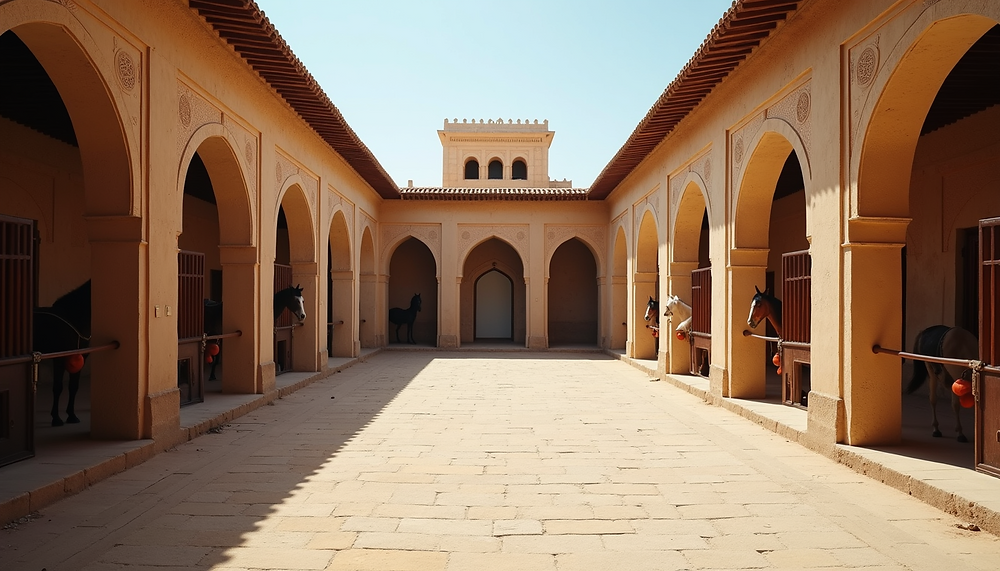
🐴 The First Rider: Mirza Ali Beg Zanganeh and the Consolidation of Kurdish Power in Safavid Iran
The history of the Safavid Empire (1501–1736) is a tapestry woven from diverse threads, where the strategic integration of ethnic and tribal groups was essential to maintaining imperial stability. Among the most successful of these groups were the Kurdish nobles, and no individual better exemplifies their rise from tribal loyalty to central administrative power than Mirza Ali Beg Zanganeh (d. c. 1630s).
Mirza Ali Beg was the foundational figure of a dynasty that would produce two Grand Viziers and shape the destiny of the western Persian frontier for over a century. His career, spanning the reigns of the dynamic Shah Abbas I and the paranoid Shah Safi, was a masterclass in political survival and the elevation of his tribal kin. By successfully navigating the treacherous corridors of the Safavid court, Mirza Ali Beg transformed the Zanganeh from a powerful regional tribe into an indispensable pillar of the imperial military and administrative machinery.
🏔️ I. The Zanganeh Tribe: Guardians of the Zagros
Mirza Ali Beg's story begins in the Kermanshah Province, the heartland of the Zanganeh tribe. Understanding the tribe's unique position is key to appreciating Ali Beg's success.
A. The Kurdish-Qizilbash Synthesis
The Safavid state was originally built upon the Qizilbash (Red Heads), a confederation of Turkoman tribes whose militant Shi'ism gave the dynasty its religious and military impetus. However, under the reign of Shah Abbas I (r. 1588–1629), a deliberate effort was made to dilute Qizilbash dominance by incorporating non-Qizilbash elements—Georgians, Armenians, Circassians, and powerful Kurdish tribes—into the highest echelons of power.
The Zanganeh, a prominent Sunni Kurdish tribe, benefited immensely from this pragmatic policy. They were granted significant toyūl (land assignments) in the Kermanshah region, recognizing their vital role as:
Military Reservoirs: Providing highly skilled cavalry and foot soldiers for the Safavid army.
Border Vanguards: Acting as a crucial buffer against the constant threat posed by the neighboring Ottoman Empire on the fiercely contested western frontier.
Mirza Ali Beg’s lineage provided the tribal legitimacy needed to command his people, while his early court training provided the administrative skill necessary to earn the Shah's trust.
B. The Ambiguity of Kurdish Loyalty
For a Sunni Kurdish nobleman like Ali Beg, success required a delicate, ceaseless act of balancing loyalties. He was bound by tribal customs and regional interests, yet his power derived entirely from the Safavid Shah. His career, therefore, was a masterclass in demonstrating unambiguous loyalty to the central authority, essential given the frequent revolts and shifting alliances among other Kurdish principalities (like the Ardalan Emirate).
🐴 II. Shah Abbas I: The Era of Centralization and Meritocracy
Mirza Ali Beg's rise occurred during the zenith of Safavid power under Shah Abbas I, an era defined by military reorganization and the creation of a merit-based bureaucracy.
A. The Office of the Amirakhor-bashi (Master of the King's Stables)
Ali Beg’s most influential office was his promotion in 1618 to amirakhor-bashi. In a cavalry-centric empire, this was far more than an administrative role; it was a critical military-logistical position that placed him in the Shah’s inner circle.
The amirakhor-bashi was responsible for:
Military Readiness: Overseeing the royal stables, which were the nucleus of the entire Safavid cavalry. This included the procurement, training, feeding, and maintenance of thousands of elite horses, ensuring the rapid mobilization of the army.
Logistical Expertise: Managing a complex financial and personnel network, ensuring feed was procured, saddlers were paid, and grooms were disciplined. This demanded high-level administrative competence and financial probity.
Proximity to Power: The holder of this office was in constant, direct contact with the Shah, attending to his personal mounts and advising on military maneuvers. It was a position of intimate trust that demonstrated the Shah's confidence in Ali Beg's loyalty and administrative genius.
B. The Jelawdar and the Ladder of Trust
His earlier office as jelawdar (holder of the rein, or master equerry) was a necessary precursor. The jelawdar was essentially the Shah's personal attendant for equestrian matters. This role, gained earlier in his career, was the first step on the ladder of trust: a successful jelawdar proved his discretion, skill, and loyalty, paving the way for the vastly more significant amirakhor-bashi position.
Mirza Ali Beg's promotions under the pragmatic Shah Abbas I underscore a key lesson of Safavid administration: talent and loyalty were rewarded, often overriding tribal or religious origin. Ali Beg’s success meant that he was a key figure in the Shah's efforts to integrate Kurdish elements into the central administration for permanent service, moving them away from purely regional roles.
🛡️ III. Serving the Successor: Loyalty Under Shah Safi
The transition of power following Shah Abbas I’s death in 1629 was tumultuous, marked by the accession of his grandson, Shah Safi (r. 1629–1642), whose rule was characterized by suspicion, paranoia, and brutal purges of the old guard.
A. The Qurchi: A Position of Ultimate Trust
Mirza Ali Beg's survival, and continued service, under Shah Safi is a testament to his deeply established reputation for reliability. His appointment to the qurchi (Royal Guard) corps under the new Shah was not simply a change of roles; it was an act of continued affirmation of his loyalty.
The Elite Bodyguard: The qurchis were the oldest, most prestigious, and most heavily armed corps in the Safavid Empire, drawn exclusively from the most trusted military families. They were the dynasty's personal protectors.
Transition of Trust: Moving from the amirakhor-bashi to the qurchi meant Ali Beg transitioned from managing the logistics of the royal stable to managing the personal security of the Shah. In the atmosphere of intense suspicion and frequent assassination that permeated Shah Safi's court, a qurchi appointment was the highest form of endorsement. It indicated that the paranoid young Shah saw Ali Beg as one of the few officials he could absolutely trust to protect him.
B. The Crucial Contrast
Mirza Ali Beg's ability to maintain his status is thrown into sharp relief by the tragic story of Ali Mardan Khan (the subject of the previous biography), another powerful Kurdish noble from the same era. Ali Mardan Khan, governor of Qandahar, was so terrified of Shah Safi's purges that he defected to the Mughal Empire in 1638.
The fact that Mirza Ali Beg and his sons remained in service, maintaining their status and life, while Ali Mardan Khan fled, suggests a few possibilities:
Ali Beg's Proximity: Having served in a central, highly personalized role (Master of Stables, Royal Guard), Ali Beg had cultivated a direct, unassailable personal loyalty with both Abbas I and Shah Safi.
Lack of Frontier Autonomy: Ali Beg was not a semi-autonomous border governor with vast armies (like the Governor of Qandahar), but a central administrator. His power was purely derived from the Shah's favor, making him less of a perceived threat than a powerful frontier viceroy.
👨👦👦 IV. The Genesis of a Dynasty: The Zanganeh Sons
The most enduring aspect of Mirza Ali Beg's career is the dynastic platform he built for his sons, cementing the Zanganeh family as a fixture of Safavid governance.
A. The Three Pillars of Continuity
Mirza Ali Beg successfully used his immense court influence to transition his sons into critical imperial roles, ensuring that the family's power survived his death (which occurred sometime in the early 1630s):
Shahrokh Sultan Zanganeh: The eldest son and immediate successor, who first inherited the role of tribal chieftain and, significantly, the office of amirakhor-bashi from his father. This smooth transition, though short-lived due to his early death in 1639, was essential; it ensured the family's grip on both the tribal base (Kermanshah) and the central court office was unbroken.
Shaykh Ali Khan Zanganeh (d. 1689): The most famous son, whose career climaxed with his appointment as Grand Vizier (Etemad-al-Dawla) in 1669. Shaykh Ali Khan utilized the wealth, administrative knowledge, and network established by his father to rise through the ranks of the bureaucracy and military.
Najaf Qoli Beg Zanganeh: Also served in important administrative capacities, completing the trio of brothers who collectively ensured the Zanganeh family's political capital was diversified and protected.
B. The Kurdish Strategy of Success
The Zanganeh family’s multi-generational success illustrates the most effective way for an integrated tribal family to thrive in the Safavid system:
Simultaneous Command: The Zanganeh maintained simultaneous control over the tribal base (Kermanshah) through one branch of the family (e.g., Shahrokh Sultan) and the central administration (Isfahan) through another (e.g., Shaykh Ali Khan).
Diversification of Office: By holding both military offices (amirakhor-bashi, qurchi) and later, high civil/bureaucratic offices (Grand Vizier), they became essential to every facet of the state, making them too important to purge or dismiss.
Mirza Ali Beg was the initial architect of this strategy. By successfully passing on the amirakhor-bashi office—a high-status, central position—to his son, he ensured the Zanganeh family's enduring presence at the very heart of the empire.
🏛️ V. The Political Significance of the Court Offices
Ali Beg’s offices were not just technical roles; they were deeply political and symbolic, reflecting the nature of power in early modern Persia.
A. The Importance of the Ghulam System
The offices held by Mirza Ali Beg were part of the ghulām (military-slave) system, the elite, salaried core of the army that Shah Abbas I created to counterbalance the tribal Qizilbash. While the Zanganeh were not strictly ghulāms (as they were not captured or purchased slaves), their positions were often integrated into this system's structure, reflecting the Shah's desire for:
Direct, Personal Loyalty: These officials owed their status directly and only to the Shah, unlike tribal leaders who owed power to their own kin.
Meritocratic Advancement: The ghulām system promoted officials based on skill, which facilitated the rise of capable administrators like Ali Beg.
By holding these offices, Mirza Ali Beg effectively merged the ancient Kurdish tribal loyalty with the new meritocratic imperial system, creating a powerful model for Kurdish integration.
B. Architectural and Cultural Patronage
While not as famous as his son, Mirza Ali Beg's influence, stemming from his control over the royal stables and his vast wealth (derived from his high rank and toyūl income), would have included patronage of architecture and public works, particularly in his native Kermanshah region. Such patronage was expected of high-ranking nobles, serving to solidify local support and demonstrate imperial benevolence.
🔑 VI. Conclusion: The Foundation Builder
Mirza Ali Beg Zanganeh is perhaps the most significant foundation builder in the history of Kurdish integration into the Safavid state. His career was characterized by:
Impeccable Loyalty: His ability to transition successfully from the demanding, effective rule of Shah Abbas I to the fearful, paranoid court of Shah Safi without loss of life or status demonstrates an unparalleled capacity for political management and unwavering personal fealty.
Administrative Mastery: His success as the amirakhor-bashi ensured the logistical readiness of the Safavid military, a non-negotiable requirement for imperial power.
Dynastic Vision: Most importantly, he successfully parlayed his personal influence into a hereditary platform for his sons, transforming the Zanganeh tribe's regional strength into lasting central authority, culminating in the Vizierate of Shaykh Ali Khan.
Mirza Ali Beg Zanganeh's life remains a crucial testament to the fact that during the Safavid era, the path to power for capable Kurdish leaders lay not in isolation or constant revolt, but in the strategic, pragmatic integration into the central military and administrative life of the empire. His legacy is the decades of Kurdish influence that he secured at the very apex of Persian power.
References: