Arash the Archer: The Hero of the Sacrificial Arrow
- Dala Sarkis

- 10 hours ago
- 11 min read

Introduction
Arash the Archer, in Persian Arash-e Kamangir, is one of the most beloved heroes of the entire Iranic world: the noble bowman who gave his life to save his people. His story is simple and unforgettable. To end a long and ruinous war, it was agreed that the border between two great kingdoms would be set by a single arrow, and Arash, the finest archer of his age, climbed a great mountain and poured not only his strength but his very life into the shot.
The arrow flew an impossible distance, from dawn until noon, and where it fell the border was drawn and peace returned. But Arash himself, having given everything, collapsed and died in the moment of the shot, his body spent utterly. His is a tale not of conquest but of sacrifice, of one man's life freely given for the freedom and dignity of his nation. It is among the oldest of all Iranic legends, with its first trace in the ancient hymn to the rain-star Tishtrya.
Across thousands of years, Arash has remained a living symbol. His name is among the most popular in the Iranic world, his deed is remembered at the midsummer festival, and poets and artists still retell his sacrifice. To know Arash is to know the Iranic ideal of the hero who asks nothing for himself and gives all for others.
Contents
Who Is Arash the Archer?
Arash the Archer (Persian Arash-e Kamangir, meaning Arash the bow-expert) is a heroic archer-figure of Iranic mythology. In the legend, to end the long war between Iran and Turan, the border between the two lands was to be fixed by a single bow-shot. Arash, the foremost archer, climbed Mount Damavand and shot an arrow that flew a vast distance to the Oxus River, putting all his life-force into the effort and dying as a result. He is remembered as the supreme Iranic symbol of selfless sacrifice for one's people.
Key Takeaways
Arash is the heroic archer of Iranic legend, famed for his self-sacrifice.
His shot set the border between Iran and Turan to end a long war.
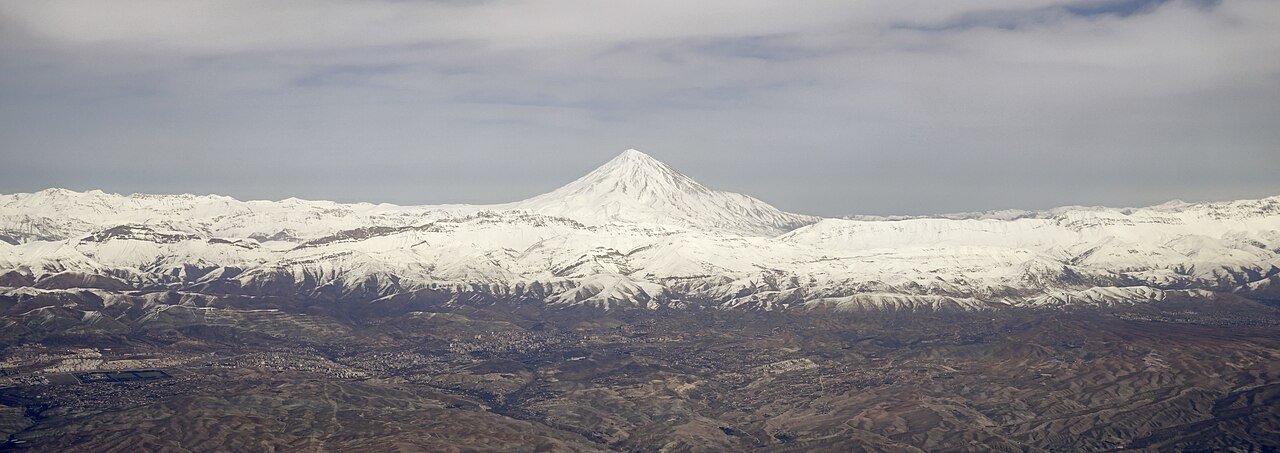
He fired the arrow from Mount Damavand, the great peak of the Alborz.
He poured his entire life-force into the shot and died as it flew.
His story is first hinted at in the Avesta, in the hymn to Tishtrya.
He remains a beloved symbol of patriotism and sacrifice across the Iranic world.
Quick Facts
Name: Arash the Archer (Persian Arash-e Kamangir, 'Arash the bow-expert'); Avestan Erexsha
Type: Heroic archer of Iranic myth and legend
Epithet: 'Of the swift arrow'
Oldest source: The Avesta, in the hymn to Tishtrya (Yasht 8)
Setting: The long war between Iran and Turan, under King Manuchehr
Deed: Shot a single arrow from Mount Damavand to fix the border
Where it fell: The bank of the Oxus (Amu Darya), far to the east
Fate: Died from the effort, his body spent and never found
Festival: His deed is linked to Tiregan, the midsummer feast
Attestation: The Avesta and the Islamic-era histories; later epic poetry
The Name and the Oldest Trace
The hero's full name, Arash-e Kamangir, means Arash the bow-expert, and his most ancient form, in the Avestan language, is Erexsha, carrying the proud epithet of the swift arrow. The tale is very old indeed. Its earliest trace is found in the Avesta itself, in the hymn to the rain-star Tishtrya, where the star's swift flight toward the cosmic sea is compared to the arrow shot by Erexsha, the best of the archers of the Iranians, from one mountain to another. That a poet could use the shot as a measure of speed shows how famous the story already was.
That ancient hymn gives only the comparison, not the full tale. The complete story, with its war and its sacrifice, comes to us mainly through the great histories and chronicles written in the Islamic centuries, by scholars such as al-Tabari and the polymath al-Biruni, who preserved the old Iranic legends. From these we have the version told and retold ever since, a story stretching unbroken from the dawn of Iranic religion to the present day.
The War of Iran and Turan
The legend is set in the age of the long and bitter war between Iran and Turan, the two great powers of the Iranic legendary world, fought over the royal glory, the divine farr that legitimised kingship. On the Iranian side reigned the righteous king Manuchehr, of the ancient Pishdadian line, a descendant of Faridun, the hero-king who had overthrown the tyrant Zahhak. Against him stood the formidable Turanian commander Afrasiab.
After years of war, Afrasiab gained the upper hand and besieged Manuchehr's forces in the northern lands by the Caspian. Worn down, the two sides at last agreed to make peace, and to settle the matter that had cost so much blood: the border between their realms. The method they chose was extraordinary. An arrow would be shot from the Iranian side toward the east, and wherever it came to earth, there the boundary would be drawn. All the land within the arrow's flight would be Iran's; the rest would belong to Turan.
The Making of the Bow
Such a shot was no ordinary feat, and the legend gives it a sacred character. In the fuller versions, a divine messenger, identified as the holy being Spenta Armaiti, one of the Amesha Spentas who watches over the earth, instructs King Manuchehr in how to fashion a special bow and a special arrow, prepared and blessed for the task ahead. The fate of the whole kingdom would rest upon them.
Then came the question of who could draw such a bow. The arrow had to carry not merely far but impossibly far, for upon its flight depended how much of the homeland would be saved. The archer would need more than skill; he would need to give the shot everything he had. The choice fell upon Arash, the greatest bowman of the Iranian army, who in some tellings came forward after a divine dream, knowing what the task would ask of him and accepting it without flinching.
The Shot from Mount Damavand
On an appointed morning in the season of summer, Arash climbed to the heights of Mount Damavand, the towering peak of the Alborz range that crowns the northern skyline of Iran. There, before a watching multitude, he made ready. In some versions he strips to show that he conceals no trick or device, that the shot will come from his own body alone. Then, facing east toward the lands of Turan, he draws the great bow with all his might, and Ahura Mazda, the Wise Lord, commands the wind to take up the arrow and bear it safely on its way.
What Arash pours into that draw is not only the strength of his arms but the whole force of his life. The legend is vivid and terrible on this point: he gathers his entire being, body and soul, into the single pull of the string, holding nothing back. It is the supreme exertion of a hero who has decided that his own life is a fair price for his country's freedom, and who pays it gladly. In that instant of release, everything he is goes into the flight of the arrow.
The Flight and the Sacrifice
The arrow leaves the bow and flies as no arrow ever flew. Borne by the divine wind, it speeds eastward the whole morning long and comes to earth only at noon, an immense distance away, on the far bank of the Oxus, the river the Persians call the Amu Darya, in the heart of what is now Central Asia. There it lodges, by most accounts, in the trunk of a walnut tree. The mighty river became the border between Iran and Turan, and held that place for centuries. The war was ended, and a just peace secured. The day was afterwards linked to the midsummer festival of Tiregan, the feast of Tishtrya and the rains.
But the hero paid the price he had foreseen. In the moment the arrow flew, Arash, drained of his life-force, collapsed upon the mountain and died; in the most haunting versions his body was shattered by the effort and was never found, scattered upon the heights he had given his life to defend. A gentler telling, found in some chronicles, lets him survive, honoured ever after as chief of the archers. But the version that the Iranic peoples have loved best is the one of total sacrifice, and a folk belief held that travellers lost in those mountains might still hear the voice of Arash, guiding them safely home.
Arash and the Shahnameh
It is a curious fact that Arash, for all his fame, does not appear in the Shahnameh, the great Book of Kings of Ferdowsi, even though he belongs entirely to its legendary world: the age of the Pishdadian kings, of Manuchehr and Afrasiab and the endless wars of Iran and Turan. For whatever reason, Ferdowsi did not include the tale, and we owe its survival instead to the Avesta, to the Islamic-era histories, and to later poets.
Yet the war that Arash's arrow paused did not end with him. The long struggle between Iran and Turan runs on through the whole epic cycle, generation after generation, and reaches its great climax only much later, in the reign of the just king Kay Khosrow, who finally brings the Turanian Afrasiab to justice. Arash's sacrifice is one early, shining moment in that vast and tragic history.
Symbolism
Arash is, above all, the Iranic image of selfless sacrifice. Where other heroes win glory by conquest, Arash wins it by giving himself away, spending his entire life in a single act not for power or fame but for the freedom and integrity of his homeland and for peace. His arrow does not kill an enemy; it ends a war and draws a just border. In modern times he has fittingly become a symbol of peace, his golden arrow an emblem not of aggression but of devotion.
There is something deeply moving, too, in the manner of his end. He does not fall in battle but is consumed by his own willing effort, poured out completely like water into dry ground. And yet the legend insists he is not truly gone: his voice still echoes in the mountains, guiding the lost. The hero who gives everything, the tradition seems to say, is never wholly lost, but lives on in the freedom he secured and in the memory of his people.
A Living Symbol
Few legendary figures are as alive today as Arash. His name is among the most popular given names across the Iranic world, carried by countless people who may not know every detail of his tale but feel the pride attached to it. His deed is recalled each year at the midsummer festival, and his image as the selfless archer recurs throughout Iranic art and culture.
In modern times he has inspired some of the most celebrated works of Persian literature, most famously a renowned epic poem of the late 1950s that retold his sacrifice for a new age and brought its author great fame, and later a celebrated stage work that reimagined the legend once more. Through such retellings, the ancient archer became a twentieth-century icon of courage and hope, his arrow flying on through the imagination of each new generation.
Arash and the Kurds
As one of the great heroes of the ancient Iranic world, Arash belongs to the shared heritage of all the Iranic peoples, the Kurds among them. The name Arash and the ideal it carries, the hero who gives all for his people's freedom, run through the whole Iranic world, and the midsummer festival tied to his deed is part of the same ancient cycle of feasts that gave the Kurds their cherished Newroz. In a culture that has so often had to fight for its freedom, the image of such a hero carries a special power.
As always with this heritage, it would be wrong to claim Arash as uniquely Kurdish. He is the common inheritance of a whole family of Iranic nations, Persians, Kurds and others alike. But the Kurds may rightly count this beloved archer among the legends of their wider world, and recognise in his selfless courage an ideal that speaks as clearly in Kurdistan as anywhere in the Iranic lands.
Debates and Misconceptions
Is Arash in the Shahnameh? Surprisingly, no. Although he belongs to the same legendary age, his story is not told in Ferdowsi's epic. It survives instead in the Avesta, in the Islamic-era histories, and in later poetry, which is why he is sometimes wrongly assumed to be a Shahnameh hero.
Did Arash live or die? The sources differ. Most versions, and the ones best loved, have him die in the moment of the shot, his body spent or shattered and never found, the very image of total sacrifice. But a gentler tradition, found in some chronicles, has him survive and live out his days honoured as the chief of the archers. The tragic version is the one that has shaped his legend.
Is Arash Persian or Kurdish? Like the rest of this heritage, he belongs to all the Iranic peoples in common. His tale is preserved chiefly in the Persian and Zoroastrian tradition, yet it is the shared inheritance of Persians, Kurds and their neighbours alike. He is best understood not as the property of one nation but as part of a treasure held by a whole family of peoples.
Related Topics
Tishtrya: the rain-star whose hymn holds the oldest trace of Arash's arrow
Faridun: the hero-king and ancestor of Arash's sovereign Manuchehr
Kay Khosrow: the just king who finally ended the war with Turan
The Shahnameh: the Book of Kings, whose world Arash belongs to
Newroz: the great Iranic festival, kin to the midsummer feast of Arash
Ahura Mazda: the Wise Lord, who sent the wind to bear Arash's arrow
Frequently Asked Questions
Who is Arash the Archer?
Arash, or Arash-e Kamangir, is a heroic archer of Iranic legend. To end the war between Iran and Turan, he shot a single arrow from Mount Damavand to fix the border, pouring all his life-force into the shot and dying as a result. He is the great Iranic symbol of self-sacrifice.
Why did Arash die?
Because he put his entire life-force into the shot. The arrow had to fly an impossible distance to save as much land as possible, so Arash gathered his whole being into the draw of the bow, and in releasing it he was utterly spent and collapsed, his body in many versions shattered and never found.
Where did Arash's arrow land?
On the far bank of the Oxus, the river known as the Amu Darya, in what is now Central Asia, an immense distance from Mount Damavand. That river became the border between Iran and Turan and remained so for centuries.
Is the Arash story in the Shahnameh?
No. Although Arash belongs to the legendary age of the Shahnameh, his tale is not included in Ferdowsi's epic. It survives instead in the Avesta, where it is first hinted at, and in the Islamic-era histories and later poetry.
What is Arash's connection to Tiregan?
The day of Arash's great shot came to be linked with Tiregan, the ancient Iranic midsummer festival of the rain-star Tishtrya. The two strands, the rain-myth and the archer-legend, are celebrated together, joined by the word Tir, which means arrow.
Is Arash a Kurdish hero?
He belongs to the shared Iranic heritage of which the Kurds are part, not to any single nation. His name and his ideal of selfless sacrifice are honoured across the Iranic world, the Kurds among them, as part of a common treasure of legend.
References and Further Reading
Comments