Hasakah, called Hesîçe in Kurdish, is a city in northeastern Syria and the administrative centre of the governorate bearing its name. Its history connects the Khabur basin, twentieth-century urban growth and the experiences of Kurdish, Arab and Christian communities. Recent accounts also need to distinguish the city from its much larger province and to date changes in political control.
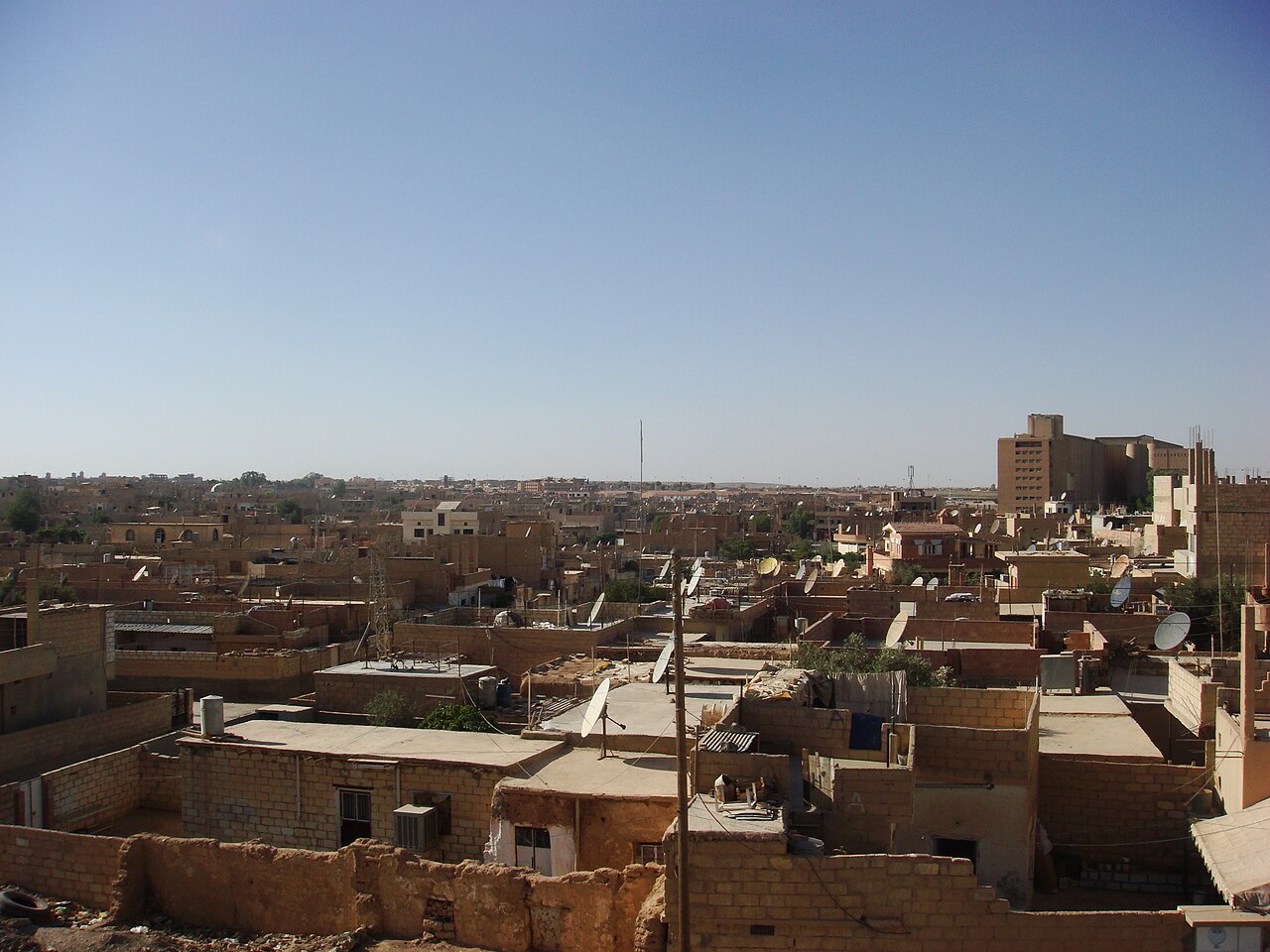
A city within the Jazira
Hasakah lies in the upper Khabur drainage system, where the Jaghjagh joins the Khabur. The name Jazira can describe different geographical areas: in their 1953 field study, André Gibert and Maurice Févret explained that Syrian usage referred to the northeastern administrative region, rather than the entire territory between the Tigris and Euphrates. [1] [2] The distinction matters when reading population, displacement or water-supply figures. A number for Hasakah governorate, or for a water station’s service area, cannot automatically be treated as the population of Hasakah city.
The growth of a modern regional centre
The ancient settlements of the Khabur basin provide a regional archaeological setting, but they are not interchangeable with the history of the modern city. Orešić and Bahnan’s geographical study describes the growth of regional towns around French administrative and military posts during 1920–1945, followed by agricultural commerce and state-supported development. [1] Wheat and cotton linked urban markets with surrounding farmland. Hasakah’s importance developed through these connections between administration, cultivation and exchange; a claim that it is the Jazira’s largest city requires a dated and consistently defined comparison with other cities.
Water pressures before and during the war
Water scarcity has a history longer than the recent conflict. Using records extending to 2001, Orešić and Bahnan linked changes in upper Khabur runoff to the expansion of surface-water and groundwater use for agriculture, particularly from the 1970s. [1] Later disruption added another layer. MSF reported in November 2025 that repeated interruptions at Alouk water station since 2019 had forced families to depend on less regulated supplies. [3] River flows, pumping, infrastructure and household access describe related but different problems; a river passing through a city does not guarantee reliable drinking water.
The January 2022 prison attack and civilians
The attack on the Ghweiran detention centre on 20 January 2022 brought fighting into Hasakah and displaced families. UNICEF’s January report recorded nearly 700 boys held in the centre, most from Syria and Iraq, with some as young as twelve. It described assistance to displaced families, including 2,600 people in collective shelters, covering water, hygiene, nutrition, child protection and non-formal education. [4] This record adds a civilian and child-protection dimension to accounts centred on the battle. The presence of children in detention should not be obscured by describing every person held there as an adult combatant.
Political changes in 2026
A description of separate government enclaves inside an otherwise SDF-administered city no longer adequately explains the 2026 transition. EUAA’s security report records government forces entering Hasakah city on 2 February and describes subsequent integration of institutions, checkpoints and detention facilities across the governorate. [5] A House of Commons Library briefing reports that, in August, SDF commander Mazloum Abdi described military, security and administrative integration as completed. [6] That is his reported assessment. It should not be expanded into a claim that every constitutional question or negotiation over Kurdish rights had been settled.
Recovery measured through everyday services
MSF’s June 2025 assessment interviewed more than 150 local and displaced families in Hassakeh governorate. Among respondents, 90 per cent had postponed or avoided healthcare, while only 37 per cent of surveyed households consistently obtained enough water for basic domestic and hygiene needs. These are findings from the interviewed households, not a census of the city. MSF also reported rehabilitation of twelve boreholes and work on Al-Aziziah and Al-Hamma water stations. [3] Access to water, functioning services, housing and livelihoods therefore belongs alongside political history when explaining what recovery means for Hasakah’s residents.
Sources and further reading
- Danijel Orešić and Georgos Bahnan, River Regime Changes in the Upper Part of Khabour Catchment Area in North-Eastern Syria in the Second Half of the XXth Century, Part I: Annual Runoff, Hrvatski geografski glasnik 67/1 (2005), pp. 45–62; geographical setting, urban development and historical runoff.
- André Gibert and Maurice Févret, La Djezireh syrienne et son réveil économique, Revue de géographie de Lyon 28/1 (1953), pp. 1–15; opening geographical definition and March 1952 field visit.
- Médecins Sans Frontières, People in northeast Syria continue to struggle to access basic needs, 6 November 2025; own June 2025 household assessment and water-infrastructure work.
- UNICEF, Whole of Syria Humanitarian Situation Report, January 2022; Ghweiran detention-centre attack, children and assistance to displaced families.
- European Union Agency for Asylum, Syria: Security Situation (2026), section 2.7.2, Territorial control and main armed actors; dated changes in Hasaka governorate and city.
- House of Commons Library, Syria in 2026: Interim government and Kurdish integration; reported August 2026 assessment by Mazloum Abdi, consulted October 2026.
- haitham alfalah, Tal hajar Quarter in AL-Hasakah, 14 August 2009; credited photograph, CC BY-SA 3.0, Wikimedia Commons.