Garshasp: The Dragon-Slayer Who Sleeps Until the End of Time
- Dala Sarkis

- 3 hours ago
- 11 min read

Introduction
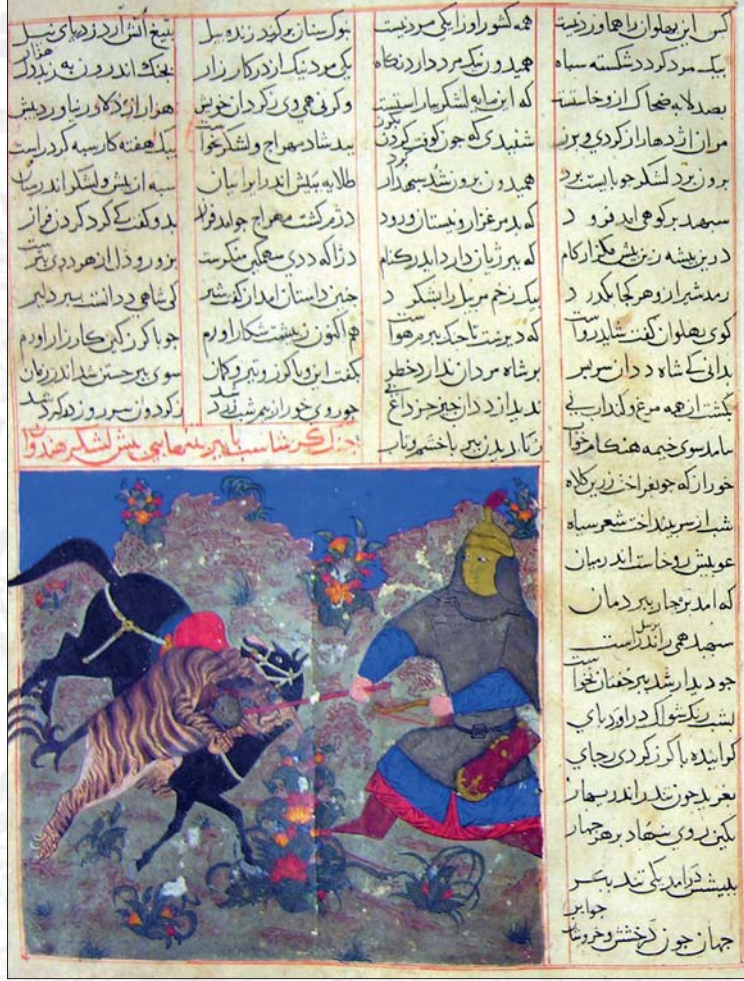
Before Rostam, before all the famous champions of the epic age, there was Garshasp, the mightiest dragon-slayer of the most ancient Iranic tradition. He was the hero of heroes of the old world, a warrior of such overwhelming strength that he slew the monsters that no one else could face: the horned dragon, the devouring sea-beast, the demons and the giants. With his great club in his hand he stood as the champion of order against the forces of chaos, the Hercules of the Iranic imagination.
Yet his story is far stranger and deeper than that of a simple strongman. For Garshasp is not only the greatest of the early heroes; he is also the ancestor of the greatest hero of all, Rostam, whose mighty house of Sistan descends from him. And he is the hero who does not truly die: barred from paradise for a single grave fault, his undying body lies in an enchanted sleep through all the ages of the world, awaiting one final and tremendous task.
That task lies at the very end of time. When the chained dragon-tyrant Zahhak bursts free in the last days to ravage the world, it is Garshasp, woken from his long sleep, who will rise to strike him down and clear the way for the renewal of all things. He is the sleeping hero, the once and future champion, whose greatest deed is reserved for the world's darkest hour.
Contents
Who Is Garshasp?
Garshasp (in the Avestan language Keresaspa, in Middle Persian Kirsasp) is the greatest dragon-slaying hero of the ancient Iranic tradition. A club-bearing warrior of immense strength, son of Thrita and of the House of Sam, he slew the horned dragon Aži Sruvara, the sea-monster Gandarewa, and many other beasts and demons. He is the distant ancestor of the epic hero Rostam, and in Zoroastrian eschatology he lies in an enchanted, undying sleep until the end of time, when he will rise to slay the freed dragon-tyrant Zahhak at the renewal of the world.
Key Takeaways
Garshasp is the greatest dragon-slayer of the old Iranic tradition.
He slew the horned dragon Aži Sruvara and the sea-monster Gandarewa.
His weapon was the mighty club or mace, and he is the Hercules of Iran.
He is the ancestor of the epic hero Rostam, through the House of Sam.
A sin against the sacred fire barred his soul from paradise.
He sleeps until the end of time, to wake and slay the freed Zahhak.
Quick Facts
Name: Garshasp (Avestan Keresaspa; Middle Persian Kirsasp)
Epithets: The club-bearer, the long-haired; the Hercules of Iran
Type: The greatest dragon-slayer and monster-slayer of the old tradition
Lineage: Son of Thrita, of the House of Sam; ancestor of Rostam
Great deeds: Slew the horned dragon and the sea-monster Gandarewa
His weapon: The mighty mace or club
His flaw: An offense against the sacred fire barred his soul
His fate: Lies in an enchanted sleep, guarded until the end of time
His final role: To wake and slay the freed Zahhak at the world's renewal
Attestation: The Avesta, the Shahnameh, and the Garshaspnama
The Greatest of the Old Heroes
In the most ancient layer of the tradition, the hymns of the Avesta, Garshasp stands as the supreme hero, the unmatched slayer of monsters whose strength was the bulwark of the world against chaos. He is remembered with proud epithets, the club-bearer and the long-haired, and later ages called him the Hercules of Iran, for like the Greek hero he was a wanderer and a labourer against beasts, a man of overwhelming physical might who took on the terrors that no other could.
He was the son of Thrita, of the great family of Sam, a line of mighty warriors, and his weapon was the heavy mace or club, the emblem of the hero's raw strength. The tradition heaps upon him a long list of monstrous foes brought low by his hand: dragons and demons, a great bird, a stone-hurling giant, the very wind itself. But two of his victories stand above the rest, and they are among the most vivid monster-fights in all of Iranic legend.
The Dragon on the Hill
The first and most famous is the slaying of the horned dragon, the Aži Sruvara. The tale is told with a wonderful and almost comic touch. One day, on a journey, Garshasp stopped to rest and cook his midday meal, setting his cauldron over a fire upon what seemed to be a long, low hill. But the hill was no hill at all: it was the back of an enormous dragon, sleeping stretched out upon the ground. As the hero's fire grew hot and crackled, the heat woke the beast, which heaved and overturned the cauldron, sending the startled Garshasp leaping back in alarm.
Recovering his nerve, the hero turned and faced the monster. The Aži Sruvara was a thing of horror, armed with horns, with huge eyes and ears, and with the half-eaten men it had devoured still impaled upon its teeth; so vast was its body that, the tradition says, the hero walked along its length for half a day before he reached its head. There, with a single mighty blow of his mace, Garshasp slew the dragon that had spoilt his lunch, and won undying fame as the greatest dragon-slayer of the age.
The Battle in the Cosmic Sea
His second great victory was harder won. The monster Gandarewa was a colossal beast of the cosmic ocean, so enormous that while half of him stood in the deep, the other half reared into the sky and his head could brush against the sun. A devourer of men, with the bodies of his victims caught in his teeth, he was also a servant and a spy of the great dragon-tyrant, set to guard and to ravage. To face him, Garshasp waded out into the cosmic sea itself.
The battle that followed was titanic, raging, the tradition tells, for nine days and nine nights without pause. The monster seized the hero by the beard, and the struggle surged back and forth through the waters. At last Garshasp gained the mastery: he flayed the great beast, bound it hand and foot, freed the captives it had taken, and dragged it from the depths to shatter its head with his club. With the fall of Gandarewa, one of the most fearsome servants of evil was destroyed, and the hero's legend was sealed.
The House of Sam: Ancestor of Rostam
In the great epic, the Shahnameh, Garshasp appears only in passing, named as a distant ancestor of the hero Rostam, living far back in the time of the hero-king Faridun. The line runs from Garshasp through his descendants down the generations: from Garshasp to Nariman, to the great paladin Sam, to Zal the white-haired, and at last to Rostam himself. The mightiest hero of the old world is thus the forefather of the mightiest hero of the epic, the founder of the great house of Sistan.
There is a reason Garshasp himself fades into the background of the Shahnameh, and it is a revealing one. As the Iranic epic tradition grew and changed over the centuries, the heroic deeds that had once belonged to Garshasp were gradually transferred to his descendants, above all to Sam and to Rostam. With the towering rise of Rostam as the one great national hero, the older Garshasp was eclipsed, his exploits absorbed into the legend of his descendant. Only later was he given his due again, in a great epic poem of his own, the Garshaspnama, which gathered up his ancient deeds and celebrated the forgotten first hero in his own right.
The Sin Against the Fire
For all his might and all his services to the world, Garshasp's story takes a sombre and surprising turn, one that lifts it from a tale of strength into something far deeper. Despite his greatness, the hero committed a grave fault: an offense against the sacred fire, which the tradition held in the deepest reverence. And so, when the great dragon-slayer at last died, his soul was halted at the Chinvat Bridge, the bridge of judgement that every soul must cross, and barred from entering paradise. The strength of his arm, which had saved the world from so many monsters, could not save him there; before the scales of justice, his single sin against the holy stood against all his mighty deeds.
It is a striking and humbling moment in the tradition, that even the greatest of all heroes should be found wanting at the bridge, and that one fault against the sacred should weigh so heavily. The fire, after all, was no small thing in the Iranic faith but the very emblem of the divine glory and the good creation, and to dishonour it was to wound the order of the world. Garshasp the unconquerable, who had never been bested by any beast, was stopped at the threshold of heaven by his own deed.
The Sleeping Hero
Yet the story does not end in condemnation. The tradition tells that the divine powers, and the fire itself, and the holy voices of the faith interceded for the great hero, pleading that one so mighty and so needful to the world should not be lost forever. A remarkable mercy was granted. Garshasp's soul was not destroyed, and his body was not allowed to perish; instead, the hero was laid to rest in a deep and undying enchanted sleep, his body preserved whole and unaging upon the earth.
There he lies, the tradition holds, through all the long ages of the world, watched over and protected by a great host of guardian spirits, the fravashis, who keep their vigil over the sleeping champion. He is not dead and he is not in paradise; he waits, suspended between, his enormous strength held in reserve. For the powers of heaven foresaw that a day would come when the world would have desperate need of the greatest hero who ever lived, and on that day, and not before, Garshasp would be roused from his sleep.
The Last Battle
That day lies at the very end of time. The tradition tells that in the last age of the world, the dragon-tyrant Zahhak, who was long ago chained beneath the great mountain by the hero-king Faridun, will at last burst his bonds and break free. Loosed upon the world in its final crisis, he will rage and devour and spread terror and ruin, a last and terrible flood of evil before the end. No ordinary champion will be able to stand against the freed and ancient monster.
Then, at the world's darkest hour, Garshasp will be woken from his long sleep. The greatest dragon-slayer of all the ages will rise once more, take up his mighty mace, and go out to meet the dragon-tyrant in the final battle, striking him down at last and delivering the world from the freed evil. His blow clears the way for the great renewal of all things, the Frashokereti, when the dead are raised and the world is made perfect and deathless forever. The hero's long wait is redeemed in a single, decisive deed at the end of time.
Symbolism
Garshasp is the archetypal dragon-slayer, the champion of cosmic order who stands with his club against the monstrous powers of chaos, and his legend gives the Iranic tradition its purest image of the hero as the world's defender. The dragons and monsters he slays are not merely beasts but embodiments of disorder and the devouring evil that threatens the good creation, and his strength is the strength of order itself, pushing back the dark.
But his deepest meaning lies in the motif of the sleeping hero, the once and future champion who does not truly die but waits, hidden and preserved, to return at the hour of greatest need. It is one of the most haunting and widespread of all human dreams, echoed in the sleeping kings and returning heroes of many lands, and the Iranic tradition gives it a profound moral depth. Garshasp's story tells that even the mightiest are flawed, that a single sin against the sacred can outweigh a lifetime of glory, and yet that strength rightly used may still find its redemption, kept in reserve for the one task that only the greatest hero can perform, at the end of the world.
Garshasp and the Kurds
As one of the great heroes of the Iranic tradition, Garshasp belongs to the shared heritage of all the Iranic peoples, the Kurds among them. The whole heroic cycle of the House of Sam, with its dragon-slayers and its mighty champions culminating in Rostam, is part of the common Iranic inheritance that the Kurds carry alongside their own beloved legends, and the image of the mace-wielding mountain hero who slays monsters and defends the world resonates deeply with the heroic traditions of a mountain people.
As always with this heritage, it would be wrong to claim Garshasp as a uniquely Kurdish figure. He is the common inheritance of a whole family of peoples, with roots reaching back into the most ancient shared Indo-Iranian past, and his fullest forms are in the Avesta, the Shahnameh and the Persian Garshaspnama. But the Kurds may rightly count this greatest of the old heroes among the legends of their wider world, the dragon-slayer who waits, sleeping, to save the world at its end.
Debates and Misconceptions
Was Garshasp or Rostam the greater hero? In the oldest tradition, Garshasp was the supreme hero, but as the epic developed his deeds were largely transferred to his descendant Rostam, who came to overshadow him entirely. In a sense Rostam is Garshasp's heir not only in blood but in legend, inheriting the role of the one great champion. The Garshaspnama was later written to restore the forgotten hero to his own glory.
Was Garshasp a hero or a king? Chiefly he is the great hero, the dragon-slayer. There is also, confusingly, a king named Garshasp listed among the last of the early Pishdadian rulers in the king-lists, and the two figures are sometimes blended in the tradition. But the towering Garshasp of legend is the monster-slaying champion, not the minor king who shares his name.
Was Garshasp a historical figure? No, he is a legendary hero, one of the most ancient in the whole tradition, with roots reaching back into the shared Indo-Iranian past; his father's name, Thrita, has a cousin in the old Indian tradition. He belongs to the world of myth and epic, the archetype of the dragon-slayer and the sleeping champion, rather than to any recorded history.
Related Topics
Rostam: the great epic hero descended from Garshasp, who inherited his deeds
Zal: the white-haired hero of the House of Sam, father of Rostam
Zahhak: the dragon-tyrant whom Garshasp will slay at the end of time
Faridun: the hero-king who chained Zahhak beneath the mountain
Frashokereti: the final renewal of the world that Garshasp's last deed makes way for
The Shahnameh: the Book of Kings, where Garshasp is named as Rostam's ancestor
Frequently Asked Questions
Who is Garshasp?
Garshasp is the greatest dragon-slaying hero of the ancient Iranic tradition, known in the Avesta as Keresaspa. A club-bearing warrior of immense strength, he slew the horned dragon and the sea-monster Gandarewa, is the ancestor of the epic hero Rostam, and is destined to wake from an enchanted sleep at the end of time to slay the freed Zahhak.
What monsters did Garshasp slay?
His most famous victories were over the horned dragon Aži Sruvara, which he discovered by accident when he lit a fire on its back, and the colossal sea-monster Gandarewa, whom he fought for nine days and nights in the cosmic ocean. He also slew a great bird, a stone-hurling giant, and other beasts and demons.
How is Garshasp connected to Rostam?
Garshasp is the distant ancestor of Rostam. The line of the House of Sam runs from Garshasp through Nariman, Sam and Zal down to Rostam. As the epic developed, Garshasp's heroic deeds were largely transferred to Rostam, who came to overshadow his ancient forefather as the one great hero.
Why was Garshasp's soul barred from paradise?
Despite his mighty deeds, Garshasp committed a grave offense against the sacred fire, which the Iranic faith held in deep reverence. For this sin his soul was halted at the Chinvat Bridge and barred from paradise, showing that even the greatest hero could be found wanting before divine justice.
What is Garshasp's role at the end of the world?
After divine intercession, Garshasp's body was preserved in an undying enchanted sleep, guarded by spirits until the end of time. When the chained dragon-tyrant Zahhak breaks free in the last days, Garshasp will wake, rise with his mace, and slay him, clearing the way for the renewal of the world.
Was Garshasp a real person?
No, he is a legendary hero, one of the most ancient figures in the whole tradition, with roots in the shared Indo-Iranian past. He is the archetype of the dragon-slayer and the sleeping champion who returns at the world's need, belonging to the realm of myth and epic rather than to history.
References and Further Reading
Comments