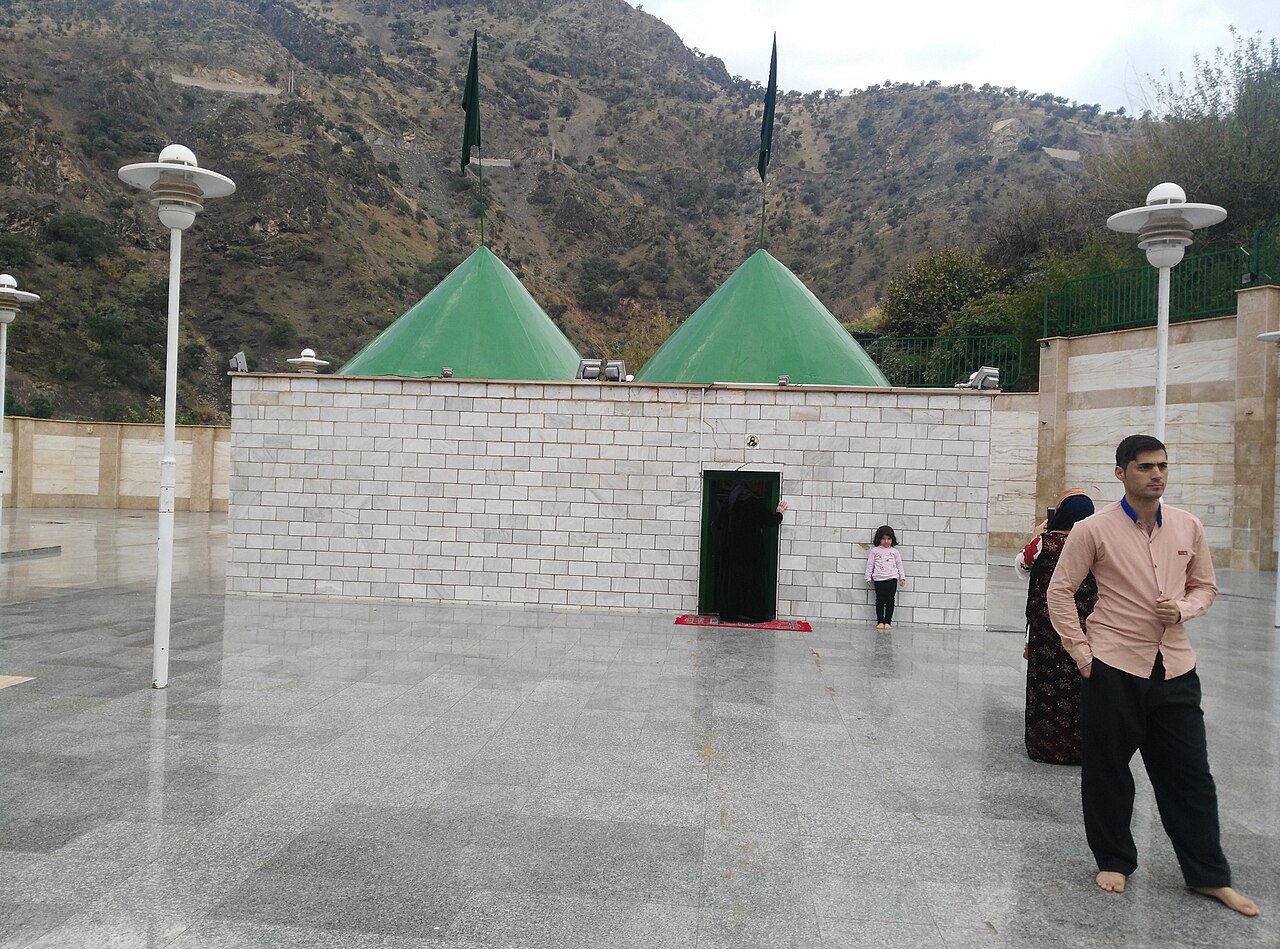
The Kaka'i: The People of Truth in Iraq
- Dala Sarkis

- 7 hours ago
- 12 min read

Introduction
The Kaka'i are the Iraqi community of the Yarsani faith, the People of Truth, one of the most ancient and most secretive of the religious traditions of the Kurdish world. Known in Iraq as the Kaka'i, the same faith that is called Yarsan or Ahl-e Haqq in Iran, this community has for centuries safeguarded its beliefs in quiet and in secret, a silence born of long persecution and the instinct to survive, while keeping alive one of the oldest faiths of the region.
Concentrated in the regions of Kirkuk, the Nineveh plains, Diyala and the Kurdish lands of northern Iraq, the Kaka'i are a Kurdish people whose very name speaks of the brotherhood and solidarity at the heart of their ethic. They share the doctrines and the sacred tradition of the wider Yarsani faith, the teachings of Sultan Sahak and the sacred poetry of the Kalam-e Saranjam, yet they have their own distinct identity and history within the Iraqi and Kurdish world.
To understand the Kaka'i is to understand both the endurance of an ancient faith and the cost of preserving it under persecution. Theirs is a story of devotion kept alive in secret, of a community bound by brotherhood and faith, and of a people who have suffered grievously for their beliefs and their Kurdish identity, yet who endure. They are among the living treasures of the religious heritage of the Kurdish world, and one of its most quietly remarkable communities.
Contents
Who Are the Kaka'i?
The Kaka'i are the followers of the Yarsani faith who live in Iraq, chiefly in the Kurdish regions and the disputed territories of northern Iraq. They belong to the same religious tradition known in Iran as Yarsan or Ahl-e Haqq, the People of Truth, founded in its classical form by Sultan Sahak, and they share its doctrines, its sacred poetry, and its way of life. In Iraq this community is known as the Kaka'i, and they are overwhelmingly Kurdish, numbering in the hundreds of thousands. They have preserved their ancient faith through centuries of life as a small and often persecuted minority, keeping their beliefs discreet for the sake of survival, and they remain one of the most distinctive religious communities of Iraq and the Kurdish world.
The Meaning of the Name
The name Kaka'i is understood to derive from the Kurdish word kaka, meaning elder brother, and it reflects the deep ethic of brotherhood, solidarity and mutual aid that marks the community. In one understanding, the name was given to the community out of respect, and it expresses the bond of brotherhood that unites its members; in another, it reflects the teaching of the faith itself, which preaches brotherhood among all human beings. The very name of the community thus carries its central value: the obligation of brotherly love, mutual support, and chivalric duty among the People of Truth.
The community is known by several names across the lands where it is found, a reflection of its spread across borders. In Iraq they are the Kaka'i; in Iran the same faith is called Yarsan or Ahl-e Haqq, the People of Truth; and the tradition is bound up by kinship and shared ideas with related communities across the region. The name Yarsan itself is understood to mean the friends or lovers of the divine, the companions of the Sultan, and the various names by which the community is known all point to the same ancient faith, one people of one tradition known by different names in the different lands of its dispersion.
Key Takeaways
The Kaka'i are the Iraqi community of the Yarsani faith, the People of Truth.
Their name comes from the Kurdish kaka, elder brother, reflecting brotherhood.
They share the doctrines and sacred poetry of the wider Yarsani tradition.
They live chiefly in Kirkuk, Nineveh, Diyala and northern Iraq.
They have kept their faith secret through centuries of persecution.
They are overwhelmingly Kurdish and number in the hundreds of thousands.
Quick Facts
Name: Kaka'i (from Kurdish kaka, elder brother)
Faith: Yarsanism (Ahl-e Haqq, the People of Truth)
Region: Kirkuk, Nineveh, Diyala, northern Iraq
Ethnicity: Overwhelmingly Kurdish
Numbers: Estimated 200,000 to 500,000 in Iraq
Founder of the faith: Sultan Sahak (14th century)
Sacred text: The Kalam-e Saranjam
Four pillars: Purity, honesty, humility, and tolerance
Worship: Personal prayer and meditation at dawn and sunset
Character: Secretive, bound by brotherhood, long persecuted
Beliefs of the People of Truth
The Kaka'i share the beliefs of the wider Yarsani faith, a profoundly mystical and esoteric tradition. At the heart of their faith is the doctrine of divine manifestation, the belief that the divine essence has appeared in human form across the ages, the last great manifestation being Sultan Sahak, the reformer of the faith in the fourteenth century. They hold also to the belief in the transmigration of the soul, the journey of the soul through many lives toward perfection. Their sacred teachings are preserved in the holy poetry of the Kalam-e Saranjam, which sets out their moral code and their rituals.
The ethic of the Kaka'i is often summed up in four pillars: purity, honesty, humility and tolerance, the cardinal virtues by which the faithful are to live, with purity understood as cleanness of both body and soul. Their worship centres on personal prayer and meditation, particularly at dawn and at sunset, rather than on the congregational forms of other religions, and the community observes fasts and upholds a strict moral discipline. As in the wider tradition, the sacred music of the tanbur and the communal ceremony of the jam hold an honoured place in the religious life of the community. Theirs is a faith of inner devotion, moral discipline, and the brotherhood that gives the community its name.
A Faith Kept in Silence
One of the most striking features of the Kaka'i is the secrecy with which they have long guarded their faith. Across the centuries, living as a small minority amid larger and sometimes hostile populations, and facing recurring persecution, the Kaka'i learned to keep their beliefs discreet, sharing the deeper teachings only within the community and concealing them from outsiders. This secrecy was not born of any shame in their faith, but of the instinct to survive, a protective silence that shielded an ancient and vulnerable tradition from those who might harm it.
This discretion has had lasting effects. It has helped preserve the faith through ages of danger, allowing the community to endure where a more open profession might have invited destruction; but it has also meant that the Kaka'i and their beliefs remain little known and often misunderstood, even in their own lands. Much of their sacred lore has been kept within the community and transmitted with care, and the full depths of their tradition are not easily accessible to outsiders. The silence of the Kaka'i is thus a key to understanding them: a faith kept alive in quiet, guarded across the generations, and only now, in more tolerant times and through the work of the community itself, beginning to be more openly known and recognised.
Where the Kaka'i Live
The Kaka'i of Iraq are concentrated in the north of the country, in the Kurdish regions and the disputed territories along the historic boundaries of Kurdistan. Their heartlands include the region of Kirkuk, where the district of Daquq is an important centre, as well as the Nineveh plains near Mosul, the province of Diyala, and the areas around Khanaqin and Halabja, with communities also in Erbil and Sulaymaniyah. Across the border, the same faith is found in great numbers in the Kurdish regions of western Iran, especially around Kermanshah, so that the community straddles the frontier between the two lands.
This geography has placed the Kaka'i in some of the most contested and troubled territories of the region, lands fought over and subjected to campaigns of displacement and demographic manipulation. Many Kaka'i villages have been destroyed or emptied over the past century, their people driven from ancestral lands, and the community has been scattered by these upheavals. Yet the Kaka'i have remained attached to their heartlands, and since the changes of recent decades have worked to re-establish themselves in their historic villages and to maintain their presence in the lands they have inhabited for centuries, holding fast to their place in the Kurdish world even amid great hardship.
Persecution and Endurance
The history of the Kaka'i has been marked by grievous persecution, the price of their distinct faith and their Kurdish identity. As a religious minority whose beliefs lay outside the dominant traditions, the Kaka'i faced suspicion and hostility, and at times outright violence and the pressure to assimilate. In the era of the Ba'ath regime, the Arabization policies directed against the Kurds fell heavily upon the Kaka'i: many were forced from their lands and displaced, their villages destroyed, and some were exiled and stripped of their nationality, suffering with the wider Kurdish people the campaigns waged against them.
In our own time, the rise of the so-called Islamic State brought fresh horror. Like the Yazidis and other minorities of the region, the Kaka'i were branded as infidels and targeted by the militants, their villages in the Nineveh and Sinjar regions attacked, their shrines destroyed, and their people forced to flee or to convert. Through all these sufferings, the Kaka'i have endured, holding to their faith and their identity at terrible cost. Their survival, like that of the other ancient minorities of the Kurdish world, is a testament to the strength of their devotion and the bonds of their community. To honour the Kaka'i is to honour a people who have kept their ancient faith alive through centuries of persecution, and who endure still.
Symbolism and Meaning
The Kaka'i embody the endurance of the ancient faiths of the Kurdish world and the cost of preserving them. As the Iraqi community of the Yarsani tradition, they carry forward one of the oldest and most distinctive religious heritages of the region, with its mystical doctrines, its sacred poetry, and its ethic of brotherhood. In their very name, the name of the elder brother, they bear the ideal of solidarity and mutual love that has bound the community together and helped it survive.
Their story holds a deeper meaning about faith and survival. The secrecy of the Kaka'i, their quiet preservation of a vulnerable tradition through ages of danger, speaks of the resilience of belief under persecution, and of the lengths to which a community will go to keep its faith alive. Their endurance through displacement, violence and the pressure to assimilate is a powerful witness to the strength of devotion and the bonds of community. In the Kaka'i, the Kurdish world has one of its most quietly heroic communities, a people who have safeguarded an ancient faith in silence and at great cost, and whose survival enriches the religious tapestry of the region. To contemplate them is to contemplate both the beauty of their tradition and the courage of its keeping.
The Kaka'i and the Kurds
The Kaka'i are firmly a part of the Kurdish world, an overwhelmingly Kurdish community whose faith is one of the indigenous religions of the Kurdish lands. Their language, their heartlands, and their identity are Kurdish, and they have shared in the wider history and the sufferings of the Kurdish people, including the campaigns of displacement and violence directed against the Kurds. The Yarsani faith they hold is, like that of the Yazidis, one of the distinctive religious traditions to have arisen among the Kurds.
As a Kurdish religious minority, the Kaka'i are part of the rich diversity of the Kurdish world, which embraces several faiths alongside the Muslim majority, including the Yazidis, the Yarsani, and others. This religious diversity is one of the distinctive features of the Kurdish heritage, and the Kaka'i are among its living expressions, a community that is at once Kurdish and the bearer of an ancient and particular faith. To honour the Kaka'i is to honour the religious richness of the Kurdish world and the endurance of its ancient minorities, and to recognise this quiet and devoted community as one of the treasured parts of the Kurdish and the wider human heritage.
Debates and Misconceptions
Are the Kaka'i a separate religion from the Yarsani? No; the Kaka'i are not a separate religion but the Iraqi community of the same Yarsani faith that is called Yarsan or Ahl-e Haqq in Iran. They share the same founder in Sultan Sahak, the same sacred poetry in the Kalam-e Saranjam, and the same core doctrines. The different names reflect the different lands in which the one community lives, rather than different religions. The Kaka'i are best understood as the Iraqi branch of the wider Yarsani tradition, with their own local identity and history within that single faith.
Are the Kaka'i 'Ali-worshippers,' as some call them? No; this is a label the community rejects. Like the wider Yarsani, the Kaka'i are sometimes disparagingly called by names suggesting that they worship Ali, the revered figure of early Islam, but the faithful firmly deny this characterisation. Their faith is its own distinct tradition, with its own profound doctrines of the divine, and it should be understood on its own terms rather than through labels imposed by outsiders. Such names reflect misunderstanding and the perspective of the surrounding majority, not the self-understanding of the Kaka'i themselves.
Why is so little known about the Kaka'i? The secrecy of the community, born of centuries of persecution, has meant that their beliefs and practices remain little known and often misunderstood, even in their own lands. Much of their sacred lore has been carefully guarded within the community, and the deeper teachings shared only among the faithful. There is, moreover, no complete and authoritative translation of their sacred poetry available to outsiders, and the scholarly study of the tradition is still limited. This combination of protective secrecy and limited study has kept the Kaka'i among the least understood of the religious communities of the region, even as, in more tolerant times, they have begun to make themselves and their faith better known, sharing kinship with the Yazidis as one of the ancient minority faiths of the Kurdish world.
Related Topics
Yarsanism: the wider faith of which the Kaka'i are the Iraqi community
Sultan Sahak: the founder of the Yarsani faith
The Kalam-e Saranjam: the sacred poetry of the tradition
Reincarnation and divine manifestation: the core doctrines of the faith
The tanbur: the sacred lute of the Yarsani tradition
The jam ceremony: the central communal ceremony of the faith
Nur Ali Elahi: the renowned Yarsani master and musician
Yazidism: the kindred ancient minority faith of the Kurdish world
Frequently Asked Questions
Who are the Kaka'i?
The Kaka'i are the Iraqi community of the Yarsani faith, the People of Truth, the same tradition known in Iran as Yarsan or Ahl-e Haqq. They are an overwhelmingly Kurdish community living chiefly in northern Iraq, in the regions of Kirkuk, Nineveh and Diyala, who share the doctrines and sacred tradition of the wider Yarsani faith. They have preserved their ancient and secretive faith through centuries of life as a persecuted minority, and number in the hundreds of thousands.
What does the name Kaka'i mean?
The name Kaka'i is understood to come from the Kurdish word kaka, meaning elder brother, and reflects the ethic of brotherhood, solidarity and mutual aid at the heart of the community. In one understanding the name was given out of respect; in another it reflects the faith's own teaching of brotherhood among all human beings. The name thus expresses the community's central value of brotherly love and mutual support.
What do the Kaka'i believe?
The Kaka'i share the beliefs of the wider Yarsani faith: the doctrine of divine manifestation, that the divine essence has appeared in human form across the ages, last in Sultan Sahak; and the belief in the transmigration of the soul through many lives toward perfection. Their teachings are preserved in the sacred poetry of the Kalam-e Saranjam. Their ethic is summed up in four pillars: purity, honesty, humility and tolerance, and their worship centres on personal prayer and meditation at dawn and sunset.
Where do the Kaka'i live?
The Kaka'i of Iraq live chiefly in the north of the country, in the Kurdish regions and disputed territories. Their heartlands include the region of Kirkuk, especially the district of Daquq, as well as the Nineveh plains, Diyala, and the areas around Khanaqin and Halabja, with communities in Erbil and Sulaymaniyah. The same faith is found in great numbers across the border in the Kurdish regions of western Iran, especially around Kermanshah.
Why do the Kaka'i keep their faith secret?
The Kaka'i have long kept their beliefs discreet because of centuries of persecution. Living as a small minority amid larger and sometimes hostile populations, they learned to guard their faith and share its deeper teachings only within the community, a protective silence born of the instinct to survive. This secrecy helped preserve the faith through ages of danger, though it has also meant that the Kaka'i and their beliefs remain little known and often misunderstood.
Have the Kaka'i been persecuted?
Yes, grievously. As a religious minority and a Kurdish people, the Kaka'i have faced suspicion, violence and pressure to assimilate. Under the Ba'ath regime's Arabization policies, many were displaced, their villages destroyed, and some exiled and stripped of nationality. With the rise of the so-called Islamic State, the Kaka'i, like the Yazidis, were branded infidels and targeted, their villages attacked and shrines destroyed. Through all this they have endured, holding to their faith and identity at great cost.
References and Further Reading
Comments