Koya’s history links Haji Qadir Koyi, an Ottoman commercial old town, Koya University and conservation work that revives local building skills.

A town with political and commercial history
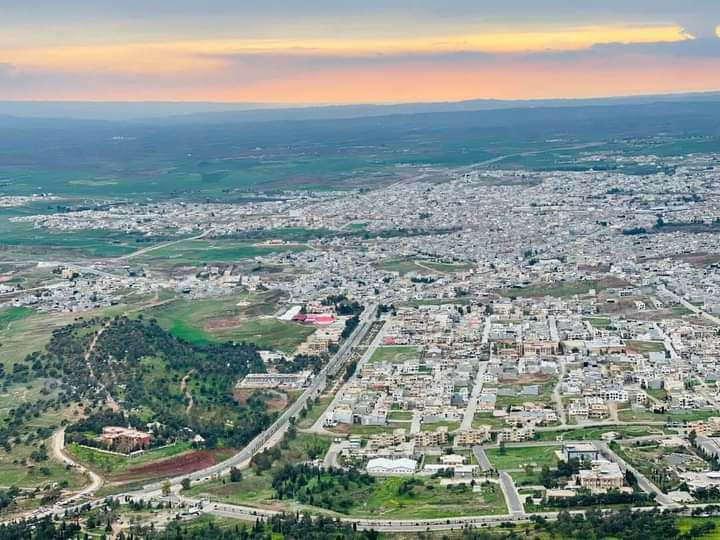
Koya, also called Koye or Koy Sanjaq, lies in Erbil Governorate in the Kurdistan Region of Iraq. The university describes its location southeast of Erbil, at the mountain foothills. [6] The Architectural Heritage of Koya project cautions that the town’s earliest origins remain unclear. Its historical account identifies an important Kurdish principality in the eighteenth century and dates the establishment of direct Ottoman control to 1847. Agriculture, livestock trade and commerce helped sustain its growth. [1] These activities gave its houses, bazaars and places of learning a shared urban setting.
The old town and Mahmud Agha Khan
The heritage project describes an oval historic core of about twenty-seven hectares, where routes connected former gates with the central mosque, covered markets and caravanserais. The reconstructed course of the old defences remains partly hypothetical. [1] Mahmud Agha Khan, founded in 1277 AH/1860–61, is a particularly informative commercial building. Its two storeys around a courtyard provided storage, stables and accommodation. Carved stone door surrounds, fireplaces and a decorated entrance inscription record the care invested in a building for trade and travel. [2] Its function places Koya within networks of merchants and movement across the region.
Haji Qadir Koyi and Kurdish literary life
Haji Qadir Koyi’s name connects the town with nineteenth-century Kurdish poetry. Ahmet Özel places his birthplace in the nearby village of Gora Karec; his childhood schooling included Koya before further study elsewhere. He later lived in Istanbul and taught children of the Bedirhan family. The biographical dates vary across sources. [4] Michiel Leezenberg examines Koyi’s role in interpreting Ehmede Xani as a national literary predecessor. A poem praising Xani was printed in the newspaper Kurdistan in 1898. [5] The association with Koya therefore extends through education, migration and publishing; it reaches beyond the idea of a poet who spent an entire lifetime in one town.
Conservation as practical work
WADI’s 2022 project account describes laser scanning and photogrammetry before emergency measures to stabilize the partly ruined khan. It also records school visits, public gatherings and an information board in the bazaar. The stated ambition of rehabilitation was a longer-term project, involving owners and residents. [3] A subsequent account of the gypsum project describes a March 2024 quarry survey, repair of firing chambers and experiments to reproduce historic mortar. A rebuilt khan wall served for observation, and the new mortar was also used at the Malai Gawra house. [7] Conservation here involves materials, skilled work and local participation alongside documentation.
The university and the town’s continuing education
Koya University’s institutional history records its foundation ceremony on 11 October 2003, following earlier colleges affiliated with Sulaimani University. It gives 2003–04 as the founding academic year and 20 July 2006 as the first graduation ceremony. [6] These dated milestones make the modern institution part of the town’s history. The linked sources offer several routes for further exploration: a poet’s biography, the old town’s buildings, conservation methods and the university’s own records. Together they explain Koya’s cultural importance through identifiable people, places and work.
Sources and further reading
- Architectural Heritage of Koya / WADI, Koya in History; historical overview, twenty-seven-hectare core and hypothetical reconstruction of old fortifications.
- Architectural Heritage of Koya / WADI, Mahmud Agha Khan; foundation inscription, building arrangement and documentation of deterioration.
- WADI, Safeguarding the Old Town of Koya, 29 May 2022; project team’s documentation, stabilization and community activities.
- Ahmet Özel, Hacı Kādir-i Kûyî, TDV İslâm Ansiklopedisi, revised edition, EK-1, 2020, pp. 503–505; biography and alternative dates.
- Michiel Leezenberg, Ehmedê Xanî’s Mem û Zîn: The Consecration of a Kurdish National Epic, Routledge Handbook on the Kurds, 2019, pp. 79–89, especially p. 84.
- Koya University, The University; institutional account of the foundation, academic year and first graduation.
- Architectural Heritage of Koya / WADI, The Gypsum Project; quarry survey in March 2024, experimental mortar production and use in conservation.