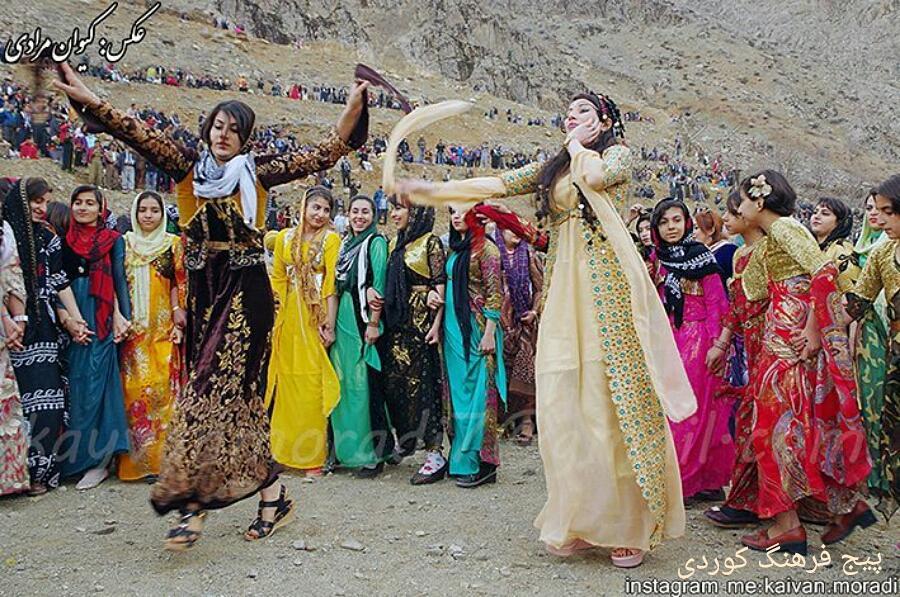
Govend: The Kurdish Circle Dance
- Dala Sarkis

- 2 hours ago
- 14 min read

Introduction
The govend is the great communal dance of the Kurds, the hand-holding circle dance that is the joyful heart of every Kurdish celebration. Known also as halparke, and by many other names across the Kurdish lands, it is danced by men and women together, linked shoulder to shoulder in a circle or a long line, moving as one to the driving rhythm of the daf and the zurna. Wherever Kurds gather to celebrate, at weddings, at Newroz, at festivals and national days, the govend rises, drawing the whole community into its circle.
Far more than a dance, the govend is an embodiment of Kurdish community and identity. In the linking of hands, the moving as one body, and the drawing in of all who are present, young and old, it enacts the unity and solidarity of the Kurdish people. Led by a dancer at the head of the line who waves a handkerchief like a flag, the dance builds from slow and stately to fast and exhilarating, expressing the joy, the pride, and the resilience of a people. In times of suppression, the govend has even become a quiet act of resistance, an assertion of Kurdish identity through the simple, powerful act of dancing together.
A living and beloved tradition danced across all the Kurdish lands and in the diaspora, the govend is among the most cherished and most characteristic of all Kurdish customs. To know it is to understand something essential about the Kurdish spirit: the deep value placed on community and togetherness, the joining of hands across generations, and the joyful, unbreakable bond of a people who dance as one. It is the dance in which the Kurdish community comes most fully to life.
Contents
What Is the Govend?
The govend, also called halparke or helperke, and by names such as dilan in some regions, is the traditional communal hand-holding dance of the Kurds. It is a group dance in which the dancers, men and women together, link hands or arms and move as one in a circle, semicircle, or line, following coordinated steps to the rhythm of traditional music. A leader at the head of the line, the serchopi, guides the dance and often waves a handkerchief or scarf. Danced at weddings, at Newroz, and at all manner of celebrations and gatherings, the govend is the central communal dance of Kurdish culture, an expression of joy, unity, and shared identity, and among the most beloved and characteristic of all Kurdish traditions, performed across all the Kurdish lands and wherever Kurds gather.
The Circle and the Line
The essential form of the govend is the joining of the dancers, hand in hand or arm in arm, into a single moving body, a circle, a semicircle, or a long curving line. The dancers stand shoulder to shoulder, linked by their hands, or by interlaced little fingers, or with arms joined across one another's backs, and move together through coordinated steps, all following the same rhythm and the same patterns, so that the many become one in the dance.
This form, the linked circle or line, is the heart of the govend's meaning and its beauty. In joining hands and moving as one, the dancers enact a powerful image of unity and community: no one dances alone, but each is bound to those on either side, and the whole line moves together as a single living body. The circle may be open or closed, sometimes forming a complete ring, sometimes a long line led by the head dancer, and as more people join, the line grows, drawing in the whole gathering. The simple, powerful act of linking hands and stepping together, repeated and varied through the dance, is what makes the govend not merely a performance but a communal experience, in which all who join are united in the rhythm and the movement. The circle of the govend is the circle of the community itself, joined hand in hand.
Key Takeaways
The govend, also called halparke, is the Kurdish communal hand-holding dance.
Dancers link hands or arms in a circle, semicircle, or line and move as one.
A lead dancer, the serchopi, guides the line and waves a handkerchief.
It is danced to the daf and zurna, building from slow to fast.
It is famously mixed-gender, danced by men and women together.
It is the heart of Kurdish weddings, Newroz, and celebration.
Quick Facts
Name: Govend (also halparke, helperke, dilan)
Type: Communal hand-holding circle or line dance
Formation: Circle, semicircle, or line, shoulder to shoulder
The hold: Hands, interlaced little fingers, or linked arms
Leader: The serchopi, at the head of the line
Leader's sign: A waved handkerchief or scarf
Music: The daf drum and the zurna
Character: Mixed-gender; builds from slow to fast
Occasions: Weddings, Newroz, festivals, national days
Meaning: Unity, joy, community, and Kurdish identity
The Serchopi and the Handkerchief
A central and distinctive figure of the govend is the leader of the dance, the serchopi, who stands at the head of the line and guides the whole company. The serchopi is typically the most skilled dancer, who sets the pace and leads the others through the steps and their variations, often improvising new moves that the line follows. As the head of the line, the serchopi is the one who directs the dance, calling its changes and carrying its energy.
The mark of the serchopi is the handkerchief or scarf held in the raised right hand, which is waved and spun above the line. This handkerchief serves both a practical and a symbolic purpose: practically, its waving signals the changes in the dance, the shift to a new step or a new tempo, which the line then follows; symbolically, the waved handkerchief is like a banner or a flag held aloft at the head of the dance, a bright and stirring sign that inspires and unites the dancers. The image of the serchopi at the head of the line, spinning the handkerchief as the company moves behind, is one of the most characteristic and beloved sights of the govend. Through the serchopi and the handkerchief, the dance is given its direction, its energy, and its rallying point, the leader carrying the whole line forward in the joyful movement of the dance.
The Music of the Dance
The govend is danced to the powerful and stirring music of the traditional Kurdish instruments, above all the daf and the zurna. The zurna, a loud double-reed wind instrument, carries the melody, its piercing, ornamented sound designed to be heard across the open air of a village square or a wedding gathering, soaring above the crowd. The daf and the great drum, the davul, provide the driving rhythm, the strong beat that propels the dancers and binds their steps together.
Together, this music gives the govend its energy and its shape. A session of the dance typically builds through a sequence of tempos, beginning with slower, stately walking patterns and gradually quickening through faster and more driving rhythms, until the dance reaches an exhilarating climax of speed and energy. The music and the dance are inseparable: the rhythm of the daf and the davul governs the steps, and the melody of the zurna carries the feeling, the two instruments alone enough to sustain hours of dancing. This pairing of the zurna and the drum is the classic sound of Kurdish celebration, the music that fills the wedding and the festival and calls the people to the govend. Other instruments, and the singing of the dengbej and others, also accompany Kurdish dance and celebration, but it is the zurna and the drum that are the heart of the music of the govend.
A Dance for Men and Women
One of the most notable features of the govend is that it is danced by men and women together, hand in hand in the same line. This mixed-gender character is a distinctive mark of Kurdish dance, setting it apart from the customs of some neighbouring peoples, and it reflects something of the place of women in Kurdish society and the communal nature of the dance, in which the whole community, men and women, young and old, joins together.
Within the shared dance, tradition has recognised characteristic differences between the movements of men and women. Women's dancing is often marked by graceful, smooth movements of the shoulders and neck and elegant footwork, while men's dancing tends toward faster, more athletic and vigorous leg movements and leaps. Yet these are danced together in the same line, the whole company joined hand in hand, moving to the same rhythm. The mixed-gender govend, in which men and women dance side by side as equals in the circle, is a beautiful expression of the communal and inclusive spirit of Kurdish celebration, and a distinctive and cherished feature of Kurdish culture, in which the joining of the whole community in the dance includes all alike in its circle.
Regional Variety
The govend is not a single fixed dance but a great family of dances, with countless regional and local variants across the Kurdish lands. While the essential form, the linked line moving to the rhythm, is shared everywhere, the particular steps, rhythms, and styles vary widely from region to region, from tribe to tribe, and from one named dance to another, so that the govend encompasses a rich diversity of forms.
Among the many named dances and variants are forms known by names such as Dilan, Chapi, Sorani, Sepe, Geryan, Delilo, and Sherin, among a great many others, each with its own characteristic steps and rhythm, and each often tied to particular regions or particular songs. Some are simple and easily danced by all, others more complex and demanding; some are slow and stately, others fast and energetic. Each region and community has its own repertoire and its own signature in the dance, so that the govend of one area differs from that of another, and a knowledgeable dancer can read in the steps the region and tradition from which they come. This rich variety, the many forms and names of the dance across the Kurdish lands, is part of the wealth of the tradition, the single great communal dance of the Kurds flowering into countless local forms, each preserving the particular heritage of its place while sharing in the common spirit of the govend.
A Dance of Unity and Resistance
Beyond its role in celebration, the govend has come to carry a deeper meaning as an expression of Kurdish unity and identity, and at times as an act of cultural resistance. In joining hands and dancing as one, the Kurds enact their solidarity and their shared identity as a people, and the govend has become a powerful symbol of Kurdish cultural pride, danced at national celebrations and gatherings as an assertion of who the Kurds are.
In times when Kurdish identity and culture have been suppressed, the simple act of gathering to dance the govend has taken on the character of quiet resistance, an assertion of Kurdish identity in the face of pressure to erase it. Centralizing regimes have at times viewed Kurdish group dances with suspicion, precisely because of their power to express and strengthen Kurdish solidarity, and the dancing of the govend has been part of the broader story of the assertion and revival of Kurdish culture. In periods of greater freedom, the dance has flourished as a celebration of heritage and identity, danced at Newroz and national gatherings as a joyful affirmation of Kurdish peoplehood. In this, the govend is far more than entertainment: it is a living embodiment of Kurdish unity, a dance in which a people joins hands and affirms, in movement and music, its identity and its bond across all the borders that divide the Kurdish lands. To dance the govend is, in a sense, to declare and to celebrate that one is part of the Kurdish people.
Symbolism and Meaning
The govend embodies, above all, the value of community and the unity of the people. In its form, the linked circle or line in which each dancer is joined to those on either side and all move as one, it is a living image of solidarity and togetherness, the many becoming one in the dance. No one dances the govend alone; it is by its nature communal, drawing in the whole gathering and binding them together in shared movement and joy. In this it expresses the deep Kurdish value of community and the bond of a people joined hand in hand.
The dance embodies, too, the joy, resilience, and identity of the Kurdish people. It is danced at the great moments of communal joy, the wedding, the festival, the new year, and it gives expression to the happiness and vitality of the community, while its energy and pride reflect the resilient spirit of a people. As a symbol of Kurdish identity and at times an act of cultural resistance, it embodies the assertion and celebration of Kurdish peoplehood across the borders that divide the Kurdish lands. And in joining the generations and all members of the community in a single circle, it embodies the continuity and inclusiveness of Kurdish culture, the young and the old, the men and the women, all united in the dance. The govend is thus among the most meaningful of all Kurdish traditions, a dance in which the community comes to life and a people affirms, in joined hands and moving feet, its unity, its joy, and its enduring identity.
The Govend and the Kurds
The govend is among the most distinctively and characteristically Kurdish of all traditions, the great communal dance danced across all the Kurdish lands, in Bakur, Bashur, Rojhilat, and Rojava, and wherever Kurds have settled in the diaspora. Though hand-holding circle dances are found among other peoples of the wider region, the Kurdish govend, with its particular forms, its mixed-gender character, its serchopi and handkerchief, and its central place in Kurdish life, is a deeply rooted and cherished part of the cultural heritage of the Kurdish people.
For the Kurds, the govend is woven into the fabric of communal life, the dance that accompanies every celebration and gathering, joining the community in joy. It is a powerful marker and expression of Kurdish identity, danced with pride at national celebrations and serving, across the divided Kurdish lands and in the diaspora, as a unifying bond, a shared tradition that connects Kurds everywhere in a common heritage. In its joining of hands across generations and across borders, the govend embodies the unity and continuity of the Kurdish people and their culture. It is one of the most beloved, most joyful, and most meaningful of all the living traditions of the Kurds, the dance in which, again and again, the Kurdish community comes together and affirms its bond. To see the Kurds dance the govend is to see a people united, hand in hand, in joy and in pride.
Debates and Misconceptions
Are govend and halparke different dances? The terms govend, halparke or helperke, dilan, and others are largely different names, used in different regions and dialects, for the same broad tradition of Kurdish communal hand-holding dance, rather than for entirely distinct dances. Govend and dilan are common terms in some regions, halparke or helperke in others. Within this shared tradition there are indeed many distinct named dances and regional variants with their own particular steps. So while there are countless specific dances, the various general names largely refer to the same overarching tradition of Kurdish group dance, and it is honest to present them as regional names for the shared tradition rather than as wholly separate dances.
Is Kurdish dance the same as the dances of neighbouring peoples? Kurdish hand-holding circle dances belong to a broad family of such dances found across the wider region, from the Balkans through Anatolia and the Caucasus to the Levant, and there are real similarities of form. At the same time, the Kurdish govend has its own distinctive character, repertoire, and styles, and its notably mixed-gender nature sets it apart from the dance customs of some neighbouring peoples. It is honest to recognise both the kinship of Kurdish dance with the wider regional family of circle dances and its genuinely distinctive Kurdish forms and character. The shared family of circle dances does not diminish the authenticity of the Kurdish tradition, which has its own rich and particular heritage within that wider world.
Is the govend only for celebrations? The govend is above all the dance of celebration and joy, danced at weddings, festivals, the new year, and happy gatherings, and this is its primary and most characteristic setting. Yet, as we have seen, it also carries deeper meanings of unity, identity, and at times resistance, and it is danced at national and political gatherings as an assertion of Kurdish identity. And the wider tradition of Kurdish dance, in the understanding of the tradition, gives expression to the whole range of the people's experience and emotion, not only joy but also, at times, sorrow and struggle. So while the govend is most associated with celebration, it is best understood as a tradition that expresses and embodies the communal life and identity of the Kurdish people in its fullness, of which joyful celebration is the central but not the only dimension.
Related Topics
Newroz: the Kurdish new year, when the govend is danced around the fire
The dengbej: the Kurdish tradition of sung memory and music
The tanbur and daf: the sacred and traditional Kurdish instruments
The Pir Shalyar festival: an ancient Kurdish ceremony with sacred dance
Buka Barane: the Kurdish Rain Bride ritual
Deq: the traditional tattoos of Kurdish women
Kawa the Blacksmith: the hero of Newroz, the great day of the dance
Kurdish folklore: the wider world of Kurdish custom and tradition
Frequently Asked Questions
What is the govend?
The govend, also called halparke or helperke, is the traditional communal hand-holding dance of the Kurds. It is a group dance in which men and women together link hands or arms and move as one in a circle, semicircle, or line, following coordinated steps to the rhythm of the daf and zurna. A leader at the head of the line, the serchopi, guides the dance and waves a handkerchief. Danced at weddings, Newroz, and all celebrations, it is the central communal dance of Kurdish culture and a symbol of unity and identity.
What is the difference between govend and halparke?
The terms govend, halparke or helperke, dilan, and others are largely different names, used in different regions and dialects, for the same broad tradition of Kurdish communal hand-holding dance. Govend and dilan are common in some regions, halparke in others. Within this shared tradition there are many distinct named dances and regional variants with their own steps. So the various general names largely refer to the same overarching tradition rather than to wholly separate dances.
Who is the serchopi?
The serchopi is the leader of the govend, who stands at the head of the line and guides the whole company. Typically the most skilled dancer, the serchopi sets the pace, leads the others through the steps and their variations, and often improvises new moves that the line follows. The mark of the serchopi is the handkerchief or scarf held in the raised hand and waved above the line, which signals the changes in the dance and serves as a stirring banner at its head.
What music accompanies the govend?
The govend is danced above all to the daf and the zurna. The zurna, a loud double-reed wind instrument, carries the melody, its piercing ornamented sound soaring across the gathering, while the daf and the great drum, the davul, provide the driving rhythm that propels the dancers. A session of the dance typically builds from slower, stately patterns through faster and more driving rhythms to an exhilarating climax. This pairing of zurna and drum is the classic sound of Kurdish celebration.
Is the govend danced by men and women together?
Yes; one of the notable features of the govend is that it is danced by men and women together, hand in hand in the same line. This mixed-gender character is a distinctive mark of Kurdish dance, setting it apart from the customs of some neighbouring peoples. Tradition recognises characteristic differences, women's smooth shoulder and neck movements, men's faster athletic leg movements, but these are danced together in the same line, the whole community joined in the circle.
Why is the govend important to the Kurds?
The govend is among the most distinctively Kurdish of all traditions and is woven into the fabric of communal life, accompanying every celebration. Beyond its joy, it embodies Kurdish unity and identity: in joining hands and dancing as one, the Kurds enact their solidarity as a people, and the dance has become a powerful symbol of Kurdish pride and, at times, an act of cultural resistance. Across the divided Kurdish lands and the diaspora, it serves as a unifying bond connecting Kurds everywhere in a shared heritage.
References and Further Reading
Comments