top of page

Kurdish Kilims and Carpets: The Weaving of Kurdistan

Illustrated banner of Kurdish and Iranic heritage evoking Kurdish kilim and carpet weaving, alongside the Newroz fire, the Simurgh and the tanbur


Introduction


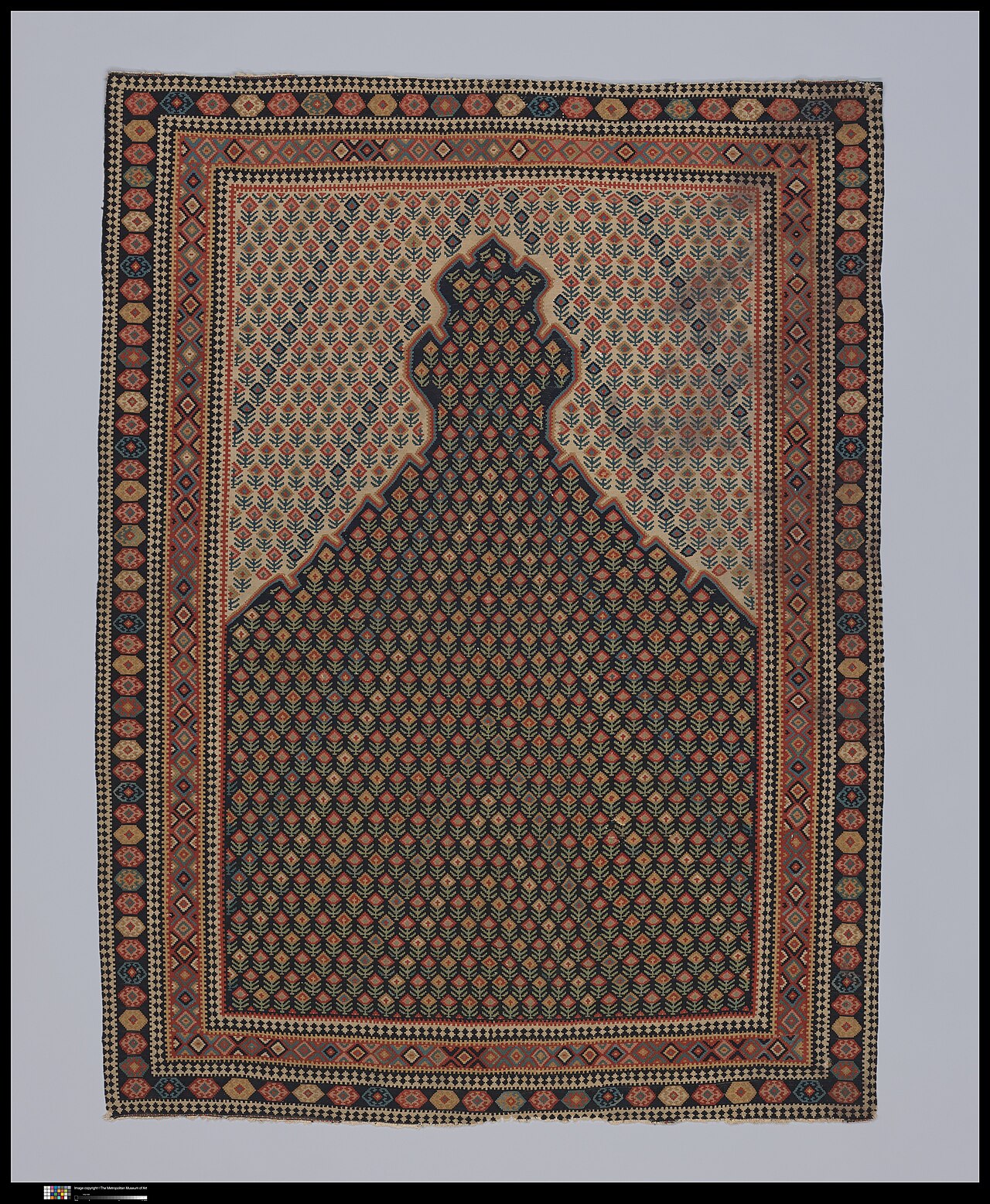
The weaving of kilims and carpets is among the greatest and most cherished of all the arts of the Kurdish people, a tradition of textile craft reaching back into the deep past, in which Kurdish weavers, above all the women, have created works of striking beauty in lustrous wool and brilliant color. From the bold geometric kilims of the tribes to the famed knotted carpets of cities such as Bijar and Senneh, Kurdish weaving stands as one of the high arts of the wider region, a heritage of skill, color, and symbol woven upon the loom.


Kurdish carpets and kilims are renowned for their vivid and saturated colors, their lustrous high-quality wool, their confident designs, and their rich vocabulary of motifs, many drawn from nature and from the ancient symbolic heritage of the Kurdish world. Far more than floor coverings, these weavings were woven into the fabric of Kurdish life, serving practical needs while expressing the beliefs, the identity, and the artistry of the weaver and her people. In their patterns can be read the symbols and stories of a culture, and each piece, woven by hand over long labor, carries something of the spirit and the heritage of the Kurds.


A living tradition still practised and treasured, and prized by collectors and connoisseurs the world over, Kurdish weaving is among the most beautiful and most distinctive expressions of Kurdish material culture. To know it is to appreciate the artistry of a people, the skill of the Kurdish weaver at her loom, the brilliance of color and design, and the depth of meaning woven into the kilims and carpets of Kurdistan. It is the heritage of a nation woven in wool, a precious and enduring art that has carried the beauty and identity of the Kurdish people across the centuries.


Contents


What Is Kurdish Weaving?


Kurdish weaving is the traditional textile art of the Kurdish people, encompassing the making of both flatwoven kilims and knotted pile carpets, along with other woven goods, in wool and other natural fibers upon the loom. Practised across the Kurdish lands and above all by Kurdish women, it is renowned for its lustrous wool, its vivid naturally dyed colors, its bold and confident designs, and its rich vocabulary of motifs, many drawn from nature and from ancient symbolism. The tradition includes the bold geometric kilims of the nomadic and village tribes and the famed knotted carpets of weaving centers such as Bijar and Senneh, among many regional forms. Far more than mere floor coverings, Kurdish weavings served practical and ceremonial purposes in Kurdish life and expressed the beliefs, identity, and artistry of their makers. A living tradition prized the world over, Kurdish weaving is among the most beautiful and distinctive of all Kurdish arts.


Kilim and Carpet


The two great forms of Kurdish weaving are the kilim and the knotted carpet, distinguished by their techniques. The kilim, known in Kurdish by names such as gelim or berr, is a flatwoven textile, made without a pile by interweaving the colored weft threads through the warp, producing a flat, often reversible fabric. The kilims of the Kurdish tribes are famed for their bold, geometric designs and brilliant colors, an art of striking graphic power. The knotted carpet, by contrast, is made by tying individual knots of wool around the warp threads to create a dense pile, a more elaborate and time-consuming technique that allows for finer detail.


Within these two great forms, Kurdish weaving encompasses a rich variety of types and techniques. There are the coarse, sturdy village and tribal flatweaves woven for everyday use; the refined tapestry-woven flatweaves of the cities; the durable knotted carpets famed for their strength; and other woven goods such as the jajim, a warp-faced flatweave, and various bags, covers, and trappings. The distinction between the flatwoven kilim and the knotted carpet is the most basic in the world of Kurdish weaving, the kilim generally bolder and more geometric, the carpet allowing greater intricacy, though both share the Kurdish virtues of fine wool, rich color, and confident design. Together, the kilim and the carpet, in their many forms, make up the great and varied tradition of Kurdish weaving, an art of many techniques united by the distinctive Kurdish feeling for color, wool, and pattern.


Key Takeaways


  • Kurdish weaving includes both flatwoven kilims and knotted pile carpets.

  • It is famed for lustrous wool, vivid natural dyes, and bold confident designs.

  • It was practised above all by Kurdish women at the loom.

  • Bijar and Senneh are among the most famous Kurdish weaving centers.

  • Motifs draw on nature and ancient symbolism, including figurative images.

  • Kurdish weavings carry meanings of identity, belief, and heritage.


Quick Facts


  • Tradition: Kurdish kilim and carpet weaving

  • Kilim: Flatweave (gelim, berr); bold and geometric

  • Carpet: Knotted pile; allows finer detail

  • Woven by: Above all Kurdish women, at the loom

  • Material: Lustrous hand-spun wool, naturally dyed

  • Famous centers: Bijar (the Iron Rug) and Senneh (Sanandaj)

  • Designs: Geometric tribal and curvilinear floral

  • Motifs: Nature, ancient symbols, animals, figures

  • Uses: Floor coverings, bags, covers, trappings

  • Today: A living tradition, prized worldwide


The Weaver and the Loom


At the heart of the Kurdish weaving tradition is the weaver, above all the Kurdish woman, working at her loom. Weaving was, in traditional Kurdish society, very largely the art and the labor of women, a skill passed down from mother to daughter across the generations, and the great body of Kurdish kilims and carpets is the work of women's hands. The weaver worked at a loom, in the villages and among the nomadic tribes often a simple horizontal loom that could be set up and taken down, and in the towns a more permanent vertical loom.


The work of weaving was one of great skill, patience, and labor. The weaver first prepared the wool, hand-spinning it into yarn and dyeing it in the desired colors, and then set up the warp threads upon the loom. The weaving itself, whether the interweaving of the flatwoven kilim or the tying of the countless individual knots of the pile carpet, was slow and painstaking work, a single fine carpet representing many months of labor. The weaver carried the design in her memory and her imagination, and in the tribal tradition often worked without a written pattern, drawing on the inherited repertoire of motifs and her own creativity, so that each piece bore the mark of its maker. This combination of inherited skill and individual creativity gives Kurdish weaving its character: the weavings are at once the product of an ancient tradition and the expression of the individual weaver, the work of generations of Kurdish women who carried the art forward and poured into it their skill, their imagination, and something of their lives.


Wool, Dye, and Color


The materials of Kurdish weaving, above all the wool and the dyes, are central to its renowned beauty. The Kurdish lands, with their mountains and their long tradition of livestock and pastoralism, produced wool of high quality, and Kurdish weavings are famed for their lustrous, superior-grade wool, hand-spun by the weavers, which gives the colors a special depth and glow. The quality of the wool is one of the celebrated virtues of Kurdish carpets and kilims.


The colors of Kurdish weaving, traditionally produced with natural dyes derived from plants, minerals, and other natural sources, are among its glories. Kurdish kilims and carpets are renowned for their vivid, saturated, and harmonious colors, the rich reds, deep indigos, glowing saffrons and rusts, and many other hues, which remain beautiful and luminous even when bold. A prized feature is the natural variation in the dyed wool, known as abrash, the subtle shifts in a color across a weaving that come from the natural dyeing and that give the piece a living movement and depth rather than a flat uniformity. The Kurdish weaver delighted in color, and the brilliant, harmonious palette of Kurdish weaving, set against the lustrous wool, is one of its most immediately striking and beloved features, a riot of color that is nonetheless held in a satisfying harmony, the mark of the weaver's eye and art.


The Famous Weaving Centers


While Kurdish weaving was practised across the Kurdish lands, certain centers became especially famous for their carpets and kilims. Foremost among these are the towns of Bijar and Senneh, in the Kurdish regions of western Iran, whose names are renowned in the world of carpets. Bijar, also written Bidjar, is famous for its exceptionally durable and tightly woven knotted carpets, so strong and sturdy that they earned the title of the Iron Rug of Persia, made by a distinctive technique in which the weave is packed extremely tightly to create a rigid and lasting structure.


Senneh, the old name of the city of Sanandaj, the capital of the Kurdish province of Iran, is renowned for its fine weaving, including both finely knotted carpets and a distinctive and refined flatwoven kilim, the Senneh gelim, famed for its densely ornamented, intricate designs, which stand in contrast to the bolder geometric kilims of the nomadic tribes. These town centers, along with the surrounding villages, produced weavings of great refinement, and their names became marks of quality and distinction. Alongside the famous town carpets, the nomadic and village weavings of the Kurdish tribes, with their bolder, more geometric and symbolic designs, form another great branch of the tradition. Together, the refined carpets of centers such as Bijar and Senneh and the bold tribal weavings of the villages and nomads make up the rich and varied world of Kurdish weaving, which ranges from the most finely detailed urban carpet to the most boldly graphic tribal kilim, all bearing the distinctive Kurdish stamp.


Motifs and Their Meanings


The designs of Kurdish kilims and carpets are rich with motifs, many of which carry meaning, drawn from nature, from daily life, and from the ancient symbolic heritage of the Kurdish world. The Kurdish weaver, in the tribal tradition, was famed for filling the field of the weaving densely with motifs, abhorring empty space, so that the surface teems with pattern and symbol. Among the motifs are geometric figures, stylized plants and flowers, animals, and even human figures, alongside medallions and borders of many kinds.


Notably, Kurdish weavings have been observed to include motifs drawn from the ancient pre-Islamic and Zoroastrian symbolic heritage, as well as images of animals and human figures, the depiction of which is discouraged in some Islamic understandings, a feature that reflects the deep roots of Kurdish symbolic tradition and the weaver's freedom in drawing on her inherited repertoire. The various motifs carried associations and meanings, expressing the beliefs, customs, and traditions of the weaver's region and people, and many drew on the symbols of nature so present in the mountainous Kurdish homeland. Some motifs are said to evoke a history reaching back many centuries. The reading of these motifs, the symbols and figures woven into the kilim and carpet, opens a window onto the beliefs and the symbolic world of the Kurdish weaver, the patterns serving as a kind of language in which the heritage and identity of the people are expressed. The designs of Kurdish weaving are thus not merely decorative but meaningful, a rich symbolic vocabulary woven in wool and color.


Weaving in Kurdish Life


Kurdish weavings were woven into the very fabric of traditional Kurdish life, serving a wide range of practical and ceremonial purposes far beyond mere decoration. Carpets and kilims covered the floors of homes and tents, providing warmth and comfort in the mountain cold; they served as bedding, as covers, and as seating; and woven goods such as bags, sacks, and trappings served countless everyday needs, from storage to the carrying of goods and the adorning of animals.


Beyond their practical uses, weavings held an important place in the social and ceremonial life of the Kurds. Fine carpets and kilims were objects of value and prestige, part of a family's wealth, and they featured in important occasions: woven goods formed part of a bride's dowry, the product of the long labor of her own hands, a display of her skill and an important part of the marriage. Weavings were given as gifts, used to honor guests, and passed down as treasured inheritances across the generations. In all these ways, the weaving was bound up with the life of the Kurdish household and community, an art that was at once practical and precious, woven for use yet treasured for its beauty and value. The making of weavings, too, was part of the rhythm of life, especially for the women, a labor and an art that occupied them through the seasons and that was woven into the social world of the home and the village. Kurdish weaving was thus not a thing apart but an integral part of Kurdish life, an art deeply embedded in the daily and ceremonial world of the people.


Symbolism and Meaning


Kurdish weaving embodies, above all, the artistry and the cultural heritage of the Kurdish people, expressed in wool and color. As one of the high arts of the Kurdish world, it gives form to the creativity, the skill, and the aesthetic sense of the Kurds, and above all of Kurdish women, the brilliant colors, the confident designs, and the rich motifs together making the kilim and carpet a work of art and a vessel of cultural heritage. In its patterns and symbols, the weaving carries the beliefs, the traditions, and the identity of the weaver and her people.


The weaving embodies, too, the tradition and labor of Kurdish women, and the bond of the generations. As an art passed from mother to daughter and practised above all by women, it represents a great tradition of female creativity and skill, the weavings the work of generations of Kurdish women's hands, each carrying something of its maker. In its motifs drawn from the ancient symbolic heritage, it embodies the deep roots and continuity of Kurdish culture, preserving in pattern the symbols of a distant past. And in its union of the practical and the beautiful, the weaving woven for use yet treasured as art, it embodies a characteristic of so much of traditional Kurdish material culture, in which beauty and meaning are woven into the objects of daily life. Kurdish weaving is thus a deeply meaningful art, in which the heritage, the identity, the beliefs, and the creativity of the Kurdish people, and the great tradition of Kurdish women's artistry, are woven together into objects of enduring beauty and value. It is among the most precious of all the cultural treasures of the Kurds.


Kurdish Weaving and the Kurds


Kurdish weaving is among the most distinctive and celebrated of all Kurdish arts, the great textile tradition of the Kurdish people, practised across the Kurdish lands and bearing an unmistakable Kurdish character of color, wool, and design. Though the Kurdish lands lie within the wider carpet-weaving region of the Near East, and Kurdish weaving shares in and overlaps with the broader traditions of the region, the Kurdish kilim and carpet have their own distinctive feeling and heritage, recognized and prized by connoisseurs as a particular and valuable tradition within the wider world of weaving.


For the Kurds, weaving is a precious part of the cultural heritage and identity, an art bound up with the history, the daily life, and the creativity of the people, and above all of Kurdish women. The kilims and carpets of Kurdistan carry the beauty, the symbols, and the identity of the Kurdish people, and they have served, too, as bearers of memory and heritage across the generations and through times of hardship. Today, Kurdish weaving remains a living tradition, still practised in the Kurdish lands, and Kurdish carpets and kilims are prized and collected the world over, valued both as works of art and as expressions of a distinctive cultural heritage. The weaving stands as a testament to the artistry of the Kurdish people, to the great tradition of Kurdish women's craft, and to the depth and beauty of Kurdish material culture. It is one of the most beautiful and enduring of all the living arts of the Kurds, the heritage of a people woven in wool and color.


Debates and Misconceptions


Are Kurdish carpets the same as Persian carpets? Kurdish weaving lies within the wider carpet-weaving world of the region, which includes the great Persian, Turkish, Caucasian, and other traditions, and there is real overlap and mutual influence, with many Kurdish rugs woven in the Kurdish regions of Iran sometimes classed within the broader category of Persian carpets, and Kurdish weaving sometimes echoing Northwest Persian or Caucasian styles. At the same time, Kurdish weaving has its own distinctive character, the particular feeling of its color, wool, and drawing, and is recognized by connoisseurs as a distinct and valuable tradition. It is honest to recognise both the place of Kurdish weaving within the wider regional family of carpets and its genuinely distinctive Kurdish character, rather than either wholly separating it from or wholly merging it into the Persian tradition.


Is Kurdish weaving only done by women? Weaving in traditional Kurdish society was very largely the art and labor of women, and the great body of Kurdish kilims and carpets is the work of women's hands, the skill passed down from mother to daughter. This strong association of weaving with women is genuine and important. At the same time, men too were involved in aspects of the wider textile and carpet trade, including in the commercial workshops of the towns and in the trading and finishing of carpets, and some weaving was done by men. It is honest to recognise both the central and defining role of women in the Kurdish weaving tradition, especially in the villages and among the tribes, and the involvement of men in parts of the broader textile world, particularly its commercial side.


Do the motifs have fixed, decodable meanings? The motifs of Kurdish weaving are rich with association and meaning, drawn from nature, tradition, and ancient symbolism, and many carry significances expressing the beliefs and identity of the weaver and her people. At the same time, it is best to be cautious about treating the motifs as a fixed, precisely decodable code with one universal meaning for each symbol. The meanings of motifs varied by region, tribe, and weaver, and were often a matter of inherited tradition, association, and the weaver's own sense rather than a rigid system. Some popular accounts assign very specific and certain meanings to particular motifs, but scholars are often more cautious. It is honest to present the motifs as meaningful and rich with association, reflecting a genuine symbolic tradition, while recognising that their meanings are varied, regional, and not always precisely or certainly decodable.


Frequently Asked Questions


What is Kurdish weaving?


Kurdish weaving is the traditional textile art of the Kurdish people, encompassing both flatwoven kilims and knotted pile carpets, along with other woven goods, made in wool upon the loom. Practised across the Kurdish lands and above all by Kurdish women, it is renowned for its lustrous wool, its vivid naturally dyed colors, its bold confident designs, and its rich vocabulary of motifs. It includes the bold geometric kilims of the tribes and the famed knotted carpets of centers such as Bijar and Senneh.


What is the difference between a kilim and a carpet?


The kilim, known in Kurdish as gelim or berr, is a flatwoven textile made without a pile by interweaving the colored weft through the warp, producing a flat, often reversible fabric, famed among the Kurdish tribes for bold geometric designs. The knotted carpet is made by tying individual knots of wool around the warp to create a dense pile, a more elaborate and time-consuming technique allowing finer detail. The kilim is generally bolder and more geometric, the carpet capable of greater intricacy.


What are Bijar and Senneh?


Bijar and Senneh are towns in the Kurdish regions of western Iran famous for their weaving. Bijar (Bidjar) is renowned for exceptionally durable, tightly woven knotted carpets so sturdy they earned the title the Iron Rug of Persia. Senneh, the old name of Sanandaj, the capital of Iran's Kurdish province, is renowned for fine weaving, including a distinctive refined flatwoven kilim, the Senneh gelim, famed for densely ornamented intricate designs. Both names are marks of quality in the world of carpets.


Who did the weaving?


Weaving in traditional Kurdish society was very largely the art and labor of women, a skill passed down from mother to daughter across the generations, and the great body of Kurdish kilims and carpets is the work of women's hands. The weaver prepared and dyed the wool, set up the loom, and wove the piece, often carrying the design in her memory and drawing on an inherited repertoire of motifs and her own creativity. Men were also involved in parts of the broader textile trade, especially its commercial side.


What do the motifs mean?


The motifs of Kurdish weaving are drawn from nature, daily life, and ancient symbolism, including geometric figures, stylized plants, animals, and even human figures, as well as motifs from the pre-Islamic and Zoroastrian heritage. Many carry associations and meanings expressing the beliefs, customs, and identity of the weaver and her people. However, the meanings varied by region, tribe, and weaver, and are best understood as a rich symbolic tradition rather than a fixed, precisely decodable code with one universal meaning per symbol.


Is Kurdish weaving still practised?


Yes; Kurdish weaving remains a living tradition, still practised in the Kurdish lands, and Kurdish carpets and kilims are prized and collected the world over, valued both as works of art and as expressions of a distinctive cultural heritage. Like many traditional crafts it has faced the pressures of modern life and machine production, but it endures, and there is continued appreciation and effort to sustain the tradition, which remains one of the most beautiful and celebrated of all Kurdish arts.


References and Further Reading


Comments


bottom of page