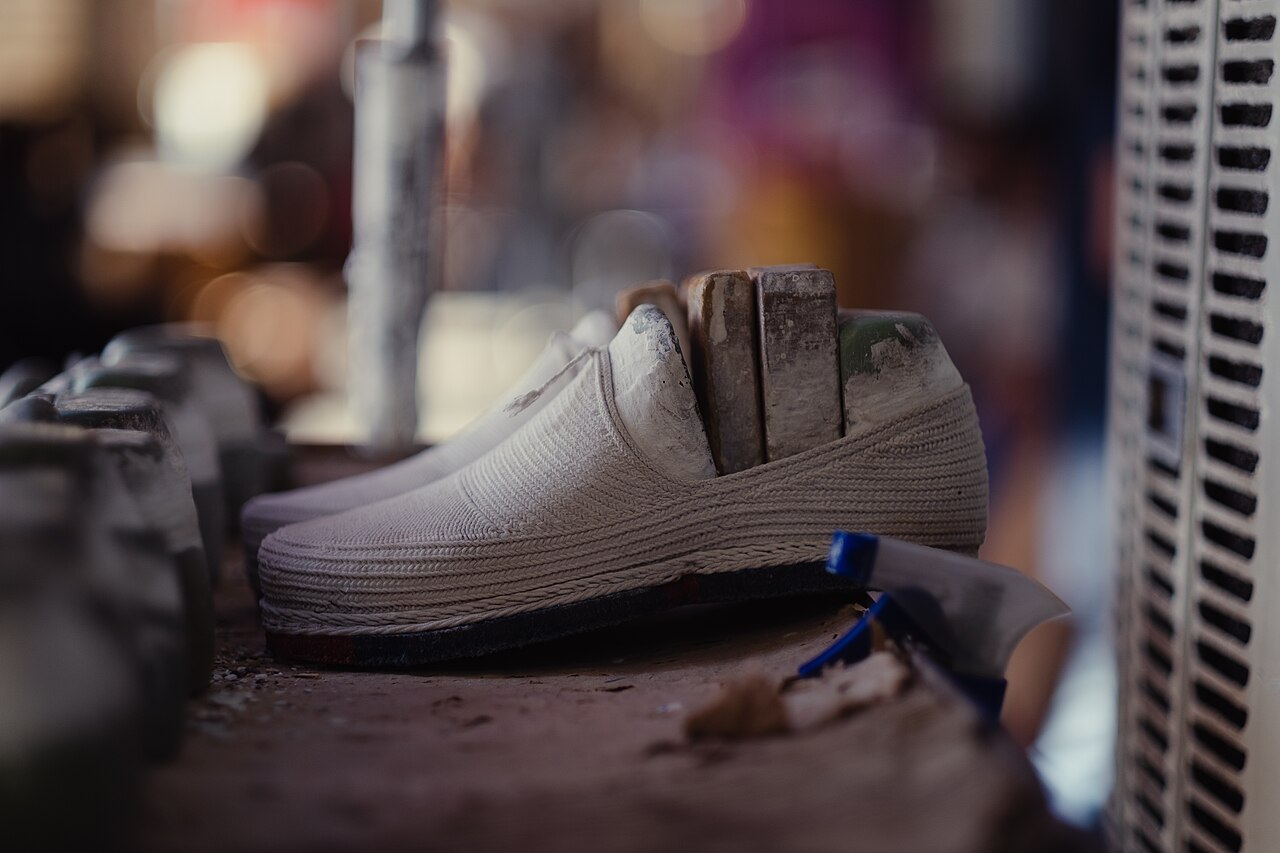
Klash: The Handmade Shoes of Kurdistan
- Sherko Sabir

- 2 hours ago
- 14 min read

Introduction
Klash are the beautiful handmade shoes of Kurdistan, the traditional white footwear, hand-stitched from cotton and leather, that completes the Kurdish national costume and that is among the most distinctive of all Kurdish crafts. Crafted above all in the Hawraman region, the mountainous heartland of Kurdish tradition, klash are worn with the traditional dress at Newroz, at weddings, and on festive occasions, and they are cherished as a proud emblem of Kurdish heritage, craftsmanship, and identity.
Far more than mere footwear, the klash is a work of patient handcraft and a bearer of deep cultural meaning. Each pair is made entirely by hand, in a painstaking process that may take a week or more and that traditionally divides the labor among several skilled makers, the strong soles built up of compressed layers of cotton and stitched with leather thread, the uppers knitted and sewn. Light, cool, and comfortable, suited to the Kurdish climate, the klash is at once a practical shoe and a precious expression of the artistry and the heritage of the Kurdish people.
A craft of great antiquity, with roots reaching back many centuries in the Hawraman region, the klash is today celebrated as a symbol of Kurdish identity and pride, honored by international recognition and cherished by Kurds at home and in the diaspora. To know the klash is to encounter one of the most beloved of all Kurdish handicrafts, the handmade shoe of the mountains, in which the skill of the Kurdish artisan, the materials of the land, and the heritage of a people come together in a thing of both beauty and use. It is the heritage of Kurdistan worn upon the feet, a precious and enduring emblem of the Kurdish spirit.
Contents
What Are Klash?
Klash, also spelled kalash, are the traditional handmade shoes of the Kurds: light, hand-stitched footwear, classically white, made from cotton, wool, and leather, and crafted entirely by hand in a painstaking traditional process. The shoe consists of a durable sole, built up from many compressed layers of cotton fabric and cowhide and stitched with leather thread, and a knitted upper vamp of wool or cotton thread. Worn above all by men as part of the traditional Kurdish costume, and historically by women too, klash are donned with the national dress on festive and ceremonial occasions such as Newroz and weddings. Crafted above all in the Hawraman region of Kurdistan, with the city of Marivan and the area of Halabja as famous centers, the klash is an ancient family craft, a practical and beautiful shoe suited to the Kurdish climate, and one of the most distinctive and cherished symbols of Kurdish heritage and identity.
The Home of the Klash
The heartland of the klash is the Hawraman region, also called Uramanat, the rugged and beautiful mountainous area straddling the border of Eastern Kurdistan, in northwestern Iran, and Southern Kurdistan, in northern Iraq. This region, renowned for its dramatic terraced villages, its ancient traditions, and its deep preservation of Kurdish heritage, is the original and principal home of the klash, where the craft has been practised for centuries and where its finest makers are found.
Within the Hawraman region and beyond, certain centers became especially famous for the klash. On the Eastern Kurdish side, the city of Marivan, in the mountains of Iranian Kurdistan near the beautiful Lake Zaribar, is among the most celebrated centers of klash-making, so renowned that it received international recognition for the craft. On the Southern Kurdish side, the area of Halabja, and the historic Sabunkaran market of the city of Sulaymaniyah, where many makers from Hawraman settled, are noted homes of the klash. The same mountainous Hawraman region is also famed as the home of the ancient Pir Shalyar festival, and the area's deep traditionalism has preserved many ancient Kurdish customs, the klash among them. The association of the klash with Hawraman, the mountainous cradle of Kurdish tradition, is part of its meaning and its prestige, the shoe carrying something of the heritage of that storied region, where the craft is woven into the life and identity of the people.
Key Takeaways
Klash are the traditional handmade shoes of the Kurds, classically white.
They are made by hand from cotton, wool, and leather, with no machines.
The Hawraman region, with Marivan and Halabja, is the heartland of the craft.
The making divides the labor: men craft the soles, women sew the uppers.
Each pair can take a week or more to complete.
Klash are worn with traditional dress and are a symbol of Kurdish identity.
Quick Facts
Name: Klash (also kalash); related to the giveh
What: Traditional handmade Kurdish shoes
Color: Classically white; also red, blue, and others
Materials: Cotton, wool, and leather; all natural
Sole: Compressed layers of cotton and cowhide, stitched
Upper: Knitted vamp of wool or cotton thread
Heartland: The Hawraman region; Marivan and Halabja
Making: Entirely by hand; about a week per pair
Worn: With traditional dress, at Newroz and weddings
Honors: Marivan named a World Crafts Council craft city
How the Klash Is Made
The making of the klash is a craft of remarkable patience and skill, carried out entirely by hand using natural materials, with no machine production. The shoe is built in two main parts: the sole and the upper. The sole, the foundation of the shoe and the most demanding part to make, is built up from many layers of cotton fabric, which are cut, folded, compressed, and beaten together into a dense, strong unit, then stitched through with tough thread of leather to bind it into a durable base, with cowhide also used. By some accounts, a single sole may be made of well over a hundred tightly compressed pieces of fabric, an indication of the labor involved.
The upper, or vamp, is made separately, knitted or woven from wool or cotton thread into the covering that encloses the foot, often in the classic white, and sometimes worked with decorative needlework and stitching. Once the sole and the upper are each prepared, they are stitched together by skilled hands to form the finished shoe, and final touches and finishing are applied. The whole process is slow and painstaking, a single pair of klash taking around a week or more to complete, depending on the design and the skill of the maker. The special techniques used in compressing and stitching the sole are key to the shoe's renowned strength and durability, and the use of natural cotton and wool makes the klash light, cool, and breathable, well suited to the warm seasons of Kurdistan. Each pair, made entirely by hand through this exacting process, is a testament to the skill and dedication of its makers, a work of true craftsmanship.
A Craft of Many Hands
A distinctive feature of klash-making, in the traditional way, is that it is often a craft of several hands, the labor divided among different makers according to a customary division of work, frequently within a family. Rather than one person making the whole shoe, the different stages, each requiring its own skill, are traditionally entrusted to different people, so that the finished klash is the product of collaborative labor.
In the customary division, the making of the sole, the hardest and most physically demanding part of the work, requiring strength to compress and stitch the dense layers, is traditionally the task of the men, who craft the soles in their workshops. The making of the upper, the knitting and sewing of the vamp, is traditionally the work of the women, who sew the parts of the covering together. And the final joining of the upper to the sole, with its finishing, may be the task of a third skilled maker. In this way, klash-making was traditionally a family profession, the craft and its various skills passed down through the generations and shared among the members of the household, men and women each contributing their part. This collaborative, family-based character is part of the social fabric of the craft, the klash being not only a beautiful shoe but the product of a whole tradition of shared labor and inherited skill, woven into the life of the families and communities of Hawraman and the other centers of the craft.
Klash and Giveh
The klash is closely related to, and often identified with, a wider tradition of traditional handmade footwear known in Persian as giveh, of which the Kurdish klash is a particular and renowned form. The word klash is the Kurdish name for this footwear, while giveh is the broader term used in Iran for similar traditional hand-woven shoes, which are made in various forms in different regions. The Kurdish klash, with its distinctive construction and its association with Hawraman, is among the most famous and esteemed of these traditional shoes.
The giveh and the klash share the essential character of light, hand-woven traditional footwear made from natural materials such as cotton and wool, with a durable stitched sole and a knitted upper, designed for comfort and suited to the climate. Within this wider family, the Kurdish klash of Hawraman has its own particular techniques, forms, and prestige, recognized as a distinctive Kurdish craft. The relationship between the klash and the broader giveh tradition reflects the way Kurdish material culture is at once part of the wider world of the region and possessed of its own distinctive forms and heritage. For the Kurds, the klash is unmistakably their own, a Kurdish shoe with a Kurdish name, bound up with Kurdish dress and identity, even as it belongs to the broader family of traditional handmade footwear of the wider region. It is the particular Kurdish flowering of an ancient and widespread craft.
Legend and Antiquity
The klash, and the wider tradition of the giveh, is a craft of great antiquity, its roots reaching back many centuries, by some accounts more than a thousand years, in the Hawraman region and the wider Kurdish and Iranian world. This deep antiquity is part of the prestige and meaning of the klash, the shoe carrying the heritage of a very old tradition of handcraft, preserved especially in the traditionalist mountain region of Hawraman.
Legend and tradition link the footwear to figures of the ancient past. One well-known folk tradition connects the name giveh to Giv, also spelled Gev, the great hero of the Shahnameh, the Persian and shared Iranic epic. According to this tradition, Giv, during his long years of wandering in search of the lost prince, needed strong and light footwear for his journey, and so the giveh came into being, taking its name from the hero. Another tradition holds that Pir Shalyar, the legendary ancient holy man of Hawraman, wore this kind of shoe. These legends, linking the humble shoe to the heroes of epic and the holy men of old, reflect the deep place of the klash in Kurdish tradition and the sense of its great antiquity. While such folk etymologies and legends are matters of tradition rather than established history, they express the cultural depth and the cherished status of the klash, a shoe woven into the stories and the heritage of the Kurdish and wider Iranic world, and worn, in the imagination of tradition, by the very heroes of the ancient past.
Recognition and Revival
In recent times, the klash has gained growing recognition and renewed appreciation, both as a cultural treasure and as a craft worthy of preservation. The city of Marivan, one of the great centers of klash-making in Eastern Kurdistan, received international recognition for the craft, being honored in connection with the World Crafts Council as a city distinguished for this traditional handicraft. And the Hawraman, or Uramanat, region, the heartland of the klash, was inscribed in recent years on the UNESCO World Heritage List as a cultural landscape, recognizing the deep heritage of the region of which the klash is a part.
At the same time, the traditional craft of the klash has faced challenges in the modern world, above all the competition of cheap manufactured and imported footwear, which has threatened the livelihood of the traditional makers and the survival of the painstaking handcraft. In response, dedicated artisans and cultural advocates have worked to preserve, promote, and revive the craft, sustaining the inherited skills, finding new markets, and championing the klash as a symbol of Kurdish heritage and a source of local pride and livelihood. The klash has also gained popularity beyond Kurdistan, worn by Kurds in the diaspora as an emblem of identity and appreciated more widely as a distinctive handmade craft. Through these efforts, the ancient craft of the klash, though it faces real pressures, continues as a living tradition, cherished and defended as a precious part of the Kurdish cultural heritage, and worn with pride as a symbol of who the Kurds are. The story of the klash today is one of both challenge and resilience, of an ancient craft carried forward into the modern world.
Symbolism and Meaning
The klash embodies, above all, the artistry and the heritage of the Kurdish people, expressed in a humble yet beautiful object of daily and ceremonial use. As a craft made entirely by hand, with patience and inherited skill, from the natural materials of the land, it gives form to the creativity and the craftsmanship of the Kurds and to their deep connection to their environment. Worn with the traditional dress, it completes the costume of Kurdish identity, the heritage of the people carried upon the feet.
The klash embodies, too, the values of tradition, family, and community. As a family craft, its skills passed down through the generations and its labor shared among the members of the household, it represents the transmission of inherited knowledge and the collaborative, communal character of traditional Kurdish craft and life. In its deep antiquity and its association with the traditionalist heartland of Hawraman, it embodies the endurance and continuity of ancient Kurdish tradition. And in its modern story, its international recognition, its role as a symbol of identity and pride, and the efforts to preserve it against the pressures of the modern market, it embodies the wider story of the defense and celebration of Kurdish heritage. The klash is thus a deeply meaningful craft, in which the artistry, the heritage, the family tradition, and the identity of the Kurdish people are woven together in a single beautiful object, the handmade shoe of the mountains that is worn with pride as an emblem of the Kurdish spirit. It is among the most beloved of all the material traditions of the Kurds.
The Klash and the Kurds
The klash is among the most distinctive and cherished of all Kurdish crafts, a handmade shoe with a Kurdish name, rooted in the Kurdish heartland of Hawraman, worn with the Kurdish national dress, and bound up with Kurdish identity. Though it belongs to a wider regional family of traditional footwear, the klash is unmistakably Kurdish in its particular forms, its heartland, and its place in Kurdish life and culture, a genuine and beloved part of the heritage of the Kurdish people.
For the Kurds, the klash is a precious inheritance and a proud emblem of identity. Worn with the traditional dress at Newroz, at weddings, and on festive and ceremonial occasions, it is part of the visible expression of Kurdish heritage and belonging, and it is cherished as a symbol of Kurdish craftsmanship, tradition, and pride. Across the Kurdish lands and in the diaspora, the klash is worn and treasured as a mark of Kurdish identity, and the efforts to preserve and promote the craft are part of the wider commitment of the Kurdish people to defend and celebrate their cultural heritage. The klash stands as a testament to the artistry and resilience of the Kurdish people, to the depth of their material culture, and to the enduring connection between the Kurds and the mountainous homeland that shaped their traditions. It is one of the most beautiful and beloved of all the living crafts of the Kurds, the heritage of Kurdistan worn upon the feet and displayed with pride to the world.
Debates and Misconceptions
Are klash and giveh the same thing? The klash is closely related to the wider tradition of traditional handmade footwear known in Persian as giveh, and the two are often identified, the klash being essentially the Kurdish name and the Kurdish form of this kind of shoe. The giveh is made in various forms in different regions, and the Kurdish klash of Hawraman is a particular and renowned form within this broader family. It is honest to recognise both that the klash belongs to the wider giveh tradition of the region and that it is a distinctively Kurdish form, with its own techniques, heartland, and place in Kurdish culture. The klash is unmistakably Kurdish, even as it is part of a broader family of traditional footwear.
Is the klash only worn by men? The klash is worn above all by men, as part of the traditional male Kurdish costume, and it is most strongly associated with men's dress. However, historically the klash was worn by women as well as men, and it is not exclusively male footwear. The strong association with men reflects its place in the male national costume, but the shoe has been worn by both. Interestingly, in the making of the klash, both men and women have their essential roles, the men crafting the soles and the women sewing the uppers, so that the craft, whatever the wearing, is a shared tradition of both.
Is the legend of Giv the true origin of the giveh? The folk tradition linking the name giveh to Giv, the hero of the Shahnameh, is a cherished and well-known story, but it is best understood as a folk etymology and legend rather than as established historical fact. The true origins of the craft lie in the deep tradition of handmade footwear in the region, reaching back many centuries, rather than in a single legendary inventor. The legend, like the tradition that Pir Shalyar wore such shoes, is valuable as an expression of the cultural depth and the cherished antiquity of the klash and the giveh, linking the humble shoe to the heroes and holy men of the ancient past, and it is honest to present these as meaningful traditions and legends rather than as literal history. They reflect the love and esteem in which the craft is held.
Related Topics
Kurdish traditional dress: the national costume the klash completes
Kurdish kilims and carpets: another great Kurdish craft of wool and skill
The Pir Shalyar festival: the ancient festival of Hawraman, home of the klash
Giv: the Shahnameh hero linked by legend to the giveh
Newroz: the Kurdish new year, when the klash is worn
The govend: the Kurdish circle dance, danced in traditional dress
The Shahnameh: the great epic of the shared Iranic heritage
Kurdish folklore: the wider world of Kurdish custom and tradition
Frequently Asked Questions
What are klash?
Klash are the traditional handmade shoes of the Kurds: light, hand-stitched footwear, classically white, made from cotton, wool, and leather entirely by hand. The shoe has a durable sole built from many compressed layers of cotton fabric and cowhide stitched with leather thread, and a knitted upper vamp of wool or cotton. Worn above all by men as part of the traditional Kurdish costume, they are donned with the national dress at festive occasions such as Newroz and weddings, and are crafted above all in the Hawraman region.
Where are klash made?
The heartland of the klash is the Hawraman (Uramanat) region, the mountainous area straddling the border of Eastern Kurdistan (northwestern Iran) and Southern Kurdistan (northern Iraq). Famous centers include the city of Marivan, in Iranian Kurdistan near Lake Zaribar, which received international recognition for the craft, and the area of Halabja and the Sabunkaran market of Sulaymaniyah in Iraqi Kurdistan, where many Hawrami makers settled. The same region is famed for its deep preservation of Kurdish tradition.
How are klash made?
Klash are made entirely by hand. The sole, the most demanding part, is built up from many layers of cotton fabric, cut, folded, compressed, and beaten into a dense unit, then stitched with leather thread, with cowhide also used; a single sole may contain well over a hundred compressed pieces. The upper is knitted or woven from wool or cotton thread. The sole and upper are then stitched together and finished. The whole painstaking process takes about a week or more per pair.
Why is the making of klash divided between men and women?
In the traditional way, klash-making is a family craft with a customary division of labor. The making of the sole, the hardest and most physically demanding part, requiring strength to compress and stitch the dense layers, is traditionally the task of men. The making of the upper, the knitting and sewing of the vamp, is traditionally the work of women. The final joining and finishing may be done by a third skilled maker. In this way klash-making was traditionally a collaborative family profession, with skills passed down through the generations.
What is the connection between klash and giveh?
The klash is closely related to a wider tradition of traditional handmade footwear known in Persian as giveh, of which the Kurdish klash is a particular and renowned form. Klash is the Kurdish name; giveh is the broader regional term for similar hand-woven shoes made in various forms. The Kurdish klash of Hawraman, with its distinctive construction and prestige, is among the most famous of these. A folk tradition links the name giveh to Giv, the hero of the Shahnameh, said to have needed such footwear on his long wanderings.
Is the klash still made today?
Yes, though the craft faces challenges. The traditional handmade klash competes with cheap manufactured and imported footwear, which has threatened the livelihood of traditional makers. In response, dedicated artisans and cultural advocates work to preserve, promote, and revive the craft, sustaining the inherited skills and championing the klash as a symbol of Kurdish heritage. Marivan was honored as a craft city for the klash, and the Hawraman region was inscribed on the UNESCO World Heritage List. The klash remains a living, cherished tradition.
References and Further Reading
Comments