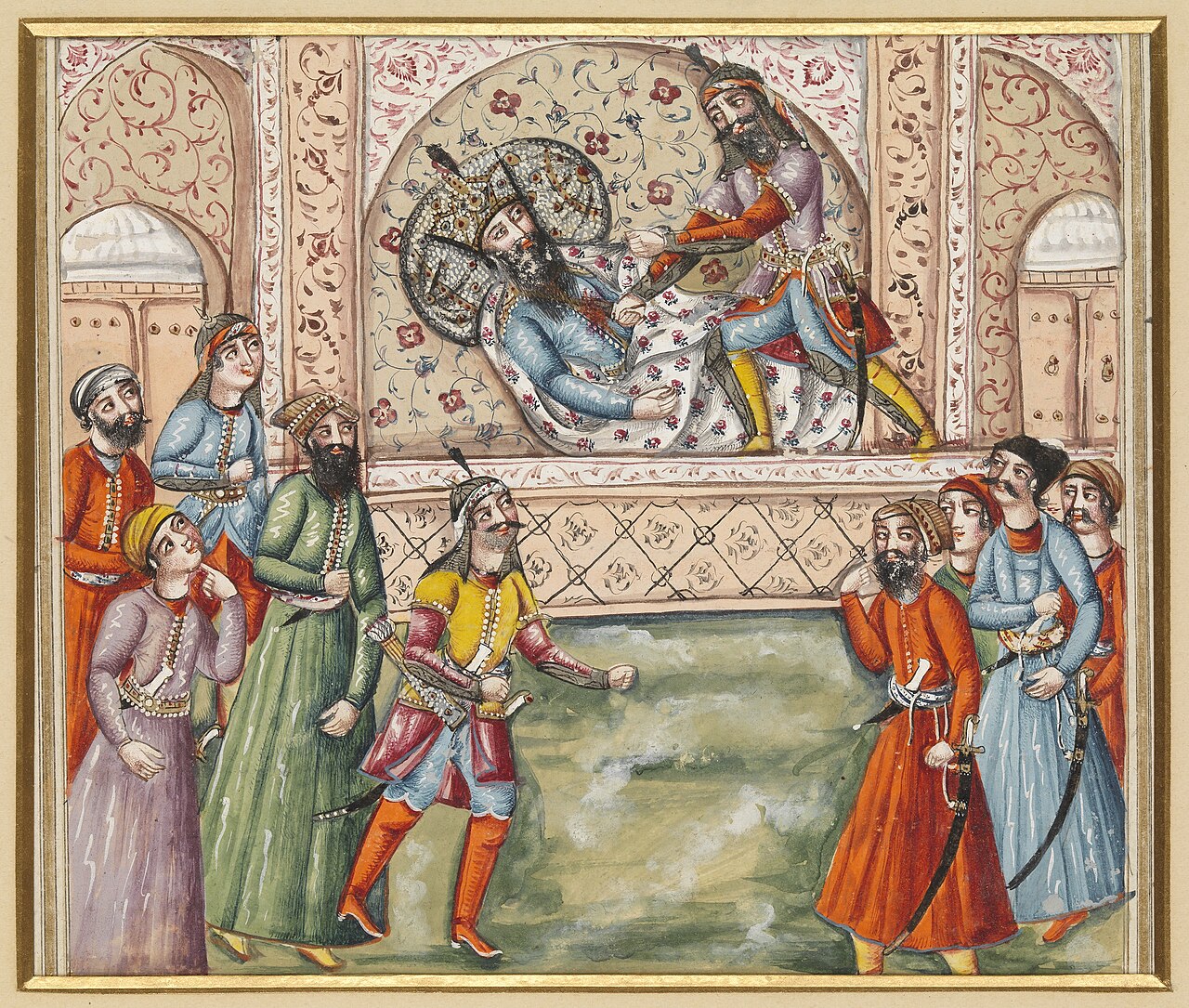
Nowzar: The Ill-Fated King of the Shahnameh
- Dala Sarkis

- 1 hour ago
- 11 min read

Introduction
Among the kings of the Shahnameh, Nowzar stands as one of the most sombre and cautionary figures: the son of the great and righteous Manuchehr, who inherited a kingdom at its height yet, through the failings of his rule, brought it low. Where his father had been the very model of the just avenger-king, Nowzar's reign was troubled from the first, and it ended in disaster, with the king himself captured and slain by the Turanian conqueror Afrasiab.
Nowzar was the ninth king of the Pishdadian dynasty, the first legendary royal line of Iran. His story is a meditation on the fragility of kingship and on what becomes of a realm when its ruler loses the path of justice. Inheriting the throne and the long feud with Turan from his father Manuchehr, he proved unequal to the burden, and his fall opened one of the darkest chapters in the long war between Iran and Turan.
Belonging to the shared epic heritage of the Iranian peoples, a tradition the Kurds hold in common with the Persians and others of the Iranic world, the tale of Nowzar is a powerful study in the loss of legitimacy. In the epic's moral vision, kingship rests upon justice and upon the divine glory, the farr, that justice sustains, and Nowzar is the king in whom that glory falters. To know his story is to know how the Shahnameh understands the duties of a king, and the ruin that follows when those duties are betrayed.
Contents
Who Was Nowzar?
Nowzar, also spelled Nozar or Naudar, is a legendary king of the Pishdadian dynasty in the Shahnameh, the son and successor of the righteous king Manuchehr. His reign, traditionally counted as seven years, is portrayed as troubled and flawed, marked by internal divisions and injustice, and it ended in catastrophe when the Turanian king Afrasiab invaded Iran, defeated and captured Nowzar, and put him to death. He is also named in the ancient Avesta as a warrior and hero, a sign of his deep roots in Iranian tradition.
Son of Manuchehr
Nowzar was the son of Manuchehr, one of the greatest and most righteous of the Pishdadian kings, the avenger of Iraj and the sovereign in whose long reign the heroes Sam, Zal and Rostam arose. From his father Nowzar inherited a kingdom that stood at the height of its power and glory, and with it the long and bitter feud with Turan, the rival realm descended from Tur, the murderer of Iraj. It was a great inheritance, but also a heavy one.
The contrast between father and son is one of the keys to Nowzar's tragedy. Manuchehr had embodied the ideal of the just king, ruling with wisdom and righteousness and keeping the divine glory, the farr, that legitimised his throne. Nowzar, coming after so great a father, proved unable to sustain that standard. The epic presents his reign as a falling-away from his father's justice, and it is this moral decline, as much as the military disaster that followed, that defines his place in the story. He is the unworthy heir of a worthy father, a recurring and poignant theme in the literature of kingship.
Key Takeaways
Nowzar was the ninth Pishdadian king, son of Manuchehr.
His reign, traditionally seven years, was troubled and unjust.
His failings alienated the nobles and champions of Iran.
The hero Sam came to restore order and advised the king.
The Turanian king Afrasiab invaded, defeated and slew Nowzar.
His fall is the epic's study of kingship that loses its way.
Quick Facts
Name: Nowzar (also Nozar, Naudar)
Source: The Shahnameh; also named in the Avesta
Role: The ninth king of the Pishdadian dynasty
Father: Manuchehr, the righteous avenger-king
Reign: Traditionally counted as seven years
Character: Portrayed as flawed, unjust, and weak
Adviser: Sam, the great hero, who declined the throne
Nemesis: Afrasiab, king of Turan
Fate: Defeated, captured, and slain by Afrasiab
Successor: Zav, son of Tahmasp (his own sons passed over)
A Troubled Reign
Nowzar's kingship began in turmoil and never found firm ground. The epic portrays his reign as marked by internal divisions, by favouritism toward unworthy advisers, and by a turning-away from the justice that his father Manuchehr had upheld. Where the realm had been united and well-ordered, under Nowzar it grew discontented and divided, the nobles and the great champions of Iran estranged from their king by his failings.
This was, in the moral logic of the Shahnameh, a danger far graver than any external threat. For the epic teaches that the strength of a kingdom rests upon the justice of its king and upon the divine glory, the farr, that justice sustains. A king who rules unjustly forfeits the loyalty of his people and, in time, the glory that legitimises his throne. Nowzar's internal failings thus hollowed out the kingdom from within, leaving it weak and divided precisely when it would soon face its gravest trial. The turmoil of his reign was the seedbed of the disaster to come, for a realm at odds with itself cannot stand against a determined foe.
The Counsel of Sam
In the crisis of his early reign, Nowzar turned to the greatest hero of the age, Sam, the mighty champion and lord of Sistan, the father of Zal and grandfather of Rostam. Sam was summoned from his campaigns to help quell the unrest that beset the new king. So great was Sam's prestige that the discontented nobles, despairing of Nowzar, urged the hero himself to take the throne of Iran.
But Sam refused. Though he was the foremost warrior of the realm, he was not of the royal blood, and he would not usurp the throne that belonged by right to the line of Faridun and Manuchehr. Instead, Sam chose to serve as Nowzar's loyal adviser and to calm the turmoil, persuading the champions and nobles to soften their stance toward the king and to remain loyal to the rightful line. In this Sam embodied the ideal of the loyal hero who upholds legitimate kingship even when its bearer is unworthy, placing the order of the realm above his own ambition. His loyalty bought the kingdom a respite, but it could not undo the deeper weakness of Nowzar's rule.
The Invasion of Afrasiab
The death of the great Manuchehr and the weakness of his son did not go unnoticed by Iran's ancient enemy. Pashang, the king of Turan, seeing the kingdom of Iran divided and vulnerable under its new and faltering king, resolved to strike. He sent his son, the formidable Afrasiab, at the head of a great army, to invade Iran and to carry forward the long feud between the two realms.
Afrasiab was no ordinary foe. Fierce, cunning and relentless, he would become the great nemesis of the Iranian line for generations to come, the embodiment of Turanian aggression. Against him marched Nowzar at the head of the armies of Iran, and great battles were fought, in which famous champions on both sides fell. But the kingdom, weakened and divided by the failings of Nowzar's reign, could not prevail. The very disunity that the king's injustice had sown now bore its bitter fruit on the field of battle, as the forces of Iran were overwhelmed by the Turanian host.
The Fall of the King
The war went against Iran, and at last Nowzar himself was defeated and fell into the hands of his enemy. Captured and made captive by Afrasiab, the king of Iran was held prisoner, and soon afterward he was put to death by the Turanian conqueror. With the killing of Nowzar, Afrasiab seized the throne of Iran itself, and for a time the rival realm of Turan held dominion over the land, a low point and a moment of profound humiliation in the long history of the Iranian kings.
The image of the captured king brought low before the blade of his enemy became one of the enduring motifs of the epic, depicted in many later illustrated manuscripts as a symbol of the fragility of Iranian dominion and of the ruin that follows when kingship loses its way. It stands in stark contrast to the triumphs of the great and just kings such as Kay Khosrow, who would one day bring the long war to its final reckoning. The fall of Nowzar was not the end of Iran, but it was its darkest hour, a defeat made possible by the failings of the king himself.
The House of Nowzar
Though Nowzar fell, his line did not perish, and the House of Nowzar lived on as a noble lineage of champions in the service of Iran. Yet the throne did not pass to his sons. Nowzar left two sons, Tus and Gustaham, but the nobles of Iran judged them ineligible for the kingship, holding that they lacked the farr, the divine glory that marks the rightful king. In the epic's understanding, kingship is not merely a matter of inheritance but of divine legitimacy, and the sons of a fallen and unworthy king were not deemed to bear it.
Instead the throne passed to Zav, the son of Tahmasp, of the wider Pishdadian line, who restored a measure of order and made a peace with Turan before his own reign ended. The sons of Nowzar, however, remained great figures: Tus in particular became one of the foremost champions and generals of Iran in the later wars, a leading paladin in the age of Kay Khosrow, though one whose pride and rashness sometimes brought trouble. Thus the House of Nowzar endured, its kings giving way to others but its heroes continuing to serve the realm, a lineage marked both by the tragedy of its founder and by the valour of his descendants.
Symbolism and Meaning
Nowzar embodies the epic's profound teaching on the nature of kingship. In the Shahnameh, the right to rule rests not on birth alone but on justice and on the divine glory, the farr, that justice sustains. Nowzar is the king who inherits the throne but not the virtue of his father Manuchehr, and who, by ruling unjustly, forfeits the loyalty of his people and the glory that protects his throne. His fall is the epic's great demonstration that a kingdom's strength flows from the righteousness of its king, and that injustice at the summit brings ruin upon the whole realm.
His story is thus a cautionary tale, a dark mirror to the reigns of the just kings. Where the righteous sovereign brings order, prosperity and victory, the unjust king brings division, weakness and defeat. The contrast between Nowzar and his great father, and between Nowzar and the later just king Kay Khosrow, frames one of the epic's central concerns: the moral foundation of legitimate rule. To contemplate Nowzar is to contemplate the fragility of power that is not grounded in justice, and the heavy responsibility that the epic lays upon those who would wear the crown. He remains the Shahnameh's sombre example of the king who loses his way, and brings his people down with him.
Nowzar and the Kurds
Nowzar belongs to the shared epic heritage of the Iranian peoples, the tradition of the Shahnameh that the Kurds hold in common with the Persians and other Iranic peoples. As an Iranic people with deep roots in this cultural world, the Kurds are heirs to its great cycle of kings and heroes, including the Pishdadian dynasty to which Nowzar belongs. His figure is part of this common inheritance of legend shared across the Iranian world.
It is honest to say that Nowzar, like the other kings of the Shahnameh's legendary dynasties, is part of this wider Iranic tradition rather than a specifically Kurdish figure; he is a king of the shared epic past of the Iranian peoples as a whole. Yet the moral lessons embodied in his story, the dependence of kingship upon justice, the ruin that follows the loss of legitimacy, and the duty of the loyal subject to uphold rightful rule, are universal, and they have resonated across the whole Iranian cultural world, including among the Kurds who have long cherished the great epic. In the figure of Nowzar, the shared heritage offers a timeless meditation on the moral foundations of power, a meditation that belongs to all the peoples who have treasured the Book of Kings.
Debates and Misconceptions
Was Nowzar simply a wicked king? Not exactly; the epic's portrait is more nuanced. Nowzar is presented as a flawed and weak king rather than a monster of evil, a ruler who fell away from the justice of his father Manuchehr through favouritism and injustice, and who proved unequal to the burdens of his throne. His tragedy is one of weakness and moral failing rather than of deliberate villainy, which makes him a more poignant and instructive figure than a mere tyrant. He is the cautionary example of the unworthy heir, not the embodiment of malice.
Why were Nowzar's sons not made king? In the epic's understanding, kingship requires the farr, the divine glory that marks the legitimate ruler, and this is not guaranteed by mere descent. After Nowzar's fall, the nobles judged that his sons Tus and Gustaham did not bear this glory, and so the throne passed instead to Zav of the wider Pishdadian line. This reflects the Shahnameh's deep idea that legitimate rule is a matter of divine sanction and moral worth, not of inheritance alone, an idea that runs throughout the epic's vision of kingship.
Is the story of Nowzar history? No; Nowzar belongs to the legendary cycles of the Shahnameh, not to documented history, though his name is ancient and appears already in the Avesta. He is a king of the epic's mythical Pishdadian dynasty, a tradition rich in moral and symbolic meaning but belonging to the realm of legend rather than fact. His tale is to be appreciated for its powerful exploration of the nature of kingship and the consequences of injustice, rather than as a record of real events.
Related Topics
Manuchehr: the righteous father of Nowzar, the great avenger-king
Afrasiab: the Turanian king who defeated and slew Nowzar
Sam: the great hero who advised Nowzar and declined the throne
Faridun: the ancestor of the royal line to which Nowzar belonged
Kay Khosrow: the just king who brought the war with Turan to its reckoning
Siyavash: the pure prince of a later chapter in the Iran-Turan war
The Shahnameh: the epic Book of Kings in which Nowzar's tale is told
Frequently Asked Questions
Who was Nowzar in the Shahnameh?
Nowzar was a legendary king of the Pishdadian dynasty in the Shahnameh, the son and successor of the righteous king Manuchehr. His reign, traditionally counted as seven years, is portrayed as troubled and unjust, marked by internal divisions and weakness. It ended in catastrophe when the Turanian king Afrasiab invaded Iran, defeated and captured Nowzar, and put him to death, seizing the throne of Iran for a time.
Who was Nowzar's father?
Nowzar was the son of Manuchehr, one of the greatest and most righteous of the Pishdadian kings, the avenger of Iraj and the sovereign in whose long reign the heroes Sam, Zal and Rostam arose. The contrast between the just father and the flawed son is central to Nowzar's tragedy: he inherited a kingdom at its height but, through the failings of his rule, brought it low.
How did Nowzar die?
Nowzar was defeated and killed during the Turanian invasion of Iran. When the king of Turan, Pashang, learned of Manuchehr's death and saw Iran weakened under Nowzar, he sent his son Afrasiab with a great army to invade. Nowzar led Iran's forces but was overwhelmed, captured and held prisoner, and soon afterward was put to death by Afrasiab, who then seized the throne of Iran.
Why was Nowzar's reign considered a failure?
The epic portrays Nowzar's reign as marked by internal divisions, favouritism toward unworthy advisers, and a turning-away from the justice his father Manuchehr had upheld. In the moral logic of the Shahnameh, a king who rules unjustly forfeits the loyalty of his people and the divine glory, the farr, that legitimises his throne. Nowzar's injustice weakened and divided the kingdom from within, leaving it vulnerable to the disaster that followed.
What was the role of Sam in Nowzar's reign?
Sam, the greatest hero of the age and lord of Sistan, was summoned to help quell the turmoil of Nowzar's early reign. So great was his prestige that the discontented nobles urged him to take the throne himself, but Sam refused, since he was not of royal blood and would not usurp the rightful line. Instead he served as Nowzar's loyal adviser and calmed the unrest, embodying the ideal of the hero who upholds legitimate kingship.
Why did Nowzar's sons not become king?
Nowzar left two sons, Tus and Gustaham, but the nobles of Iran judged them ineligible for the kingship, holding that they lacked the farr, the divine glory that marks the rightful king. The throne passed instead to Zav, son of Tahmasp, of the wider Pishdadian line. This reflects the Shahnameh's deep idea that legitimate rule depends on divine sanction and moral worth, not on inheritance alone. Tus, however, became a great champion of Iran in the later wars.
References and Further Reading
Comments