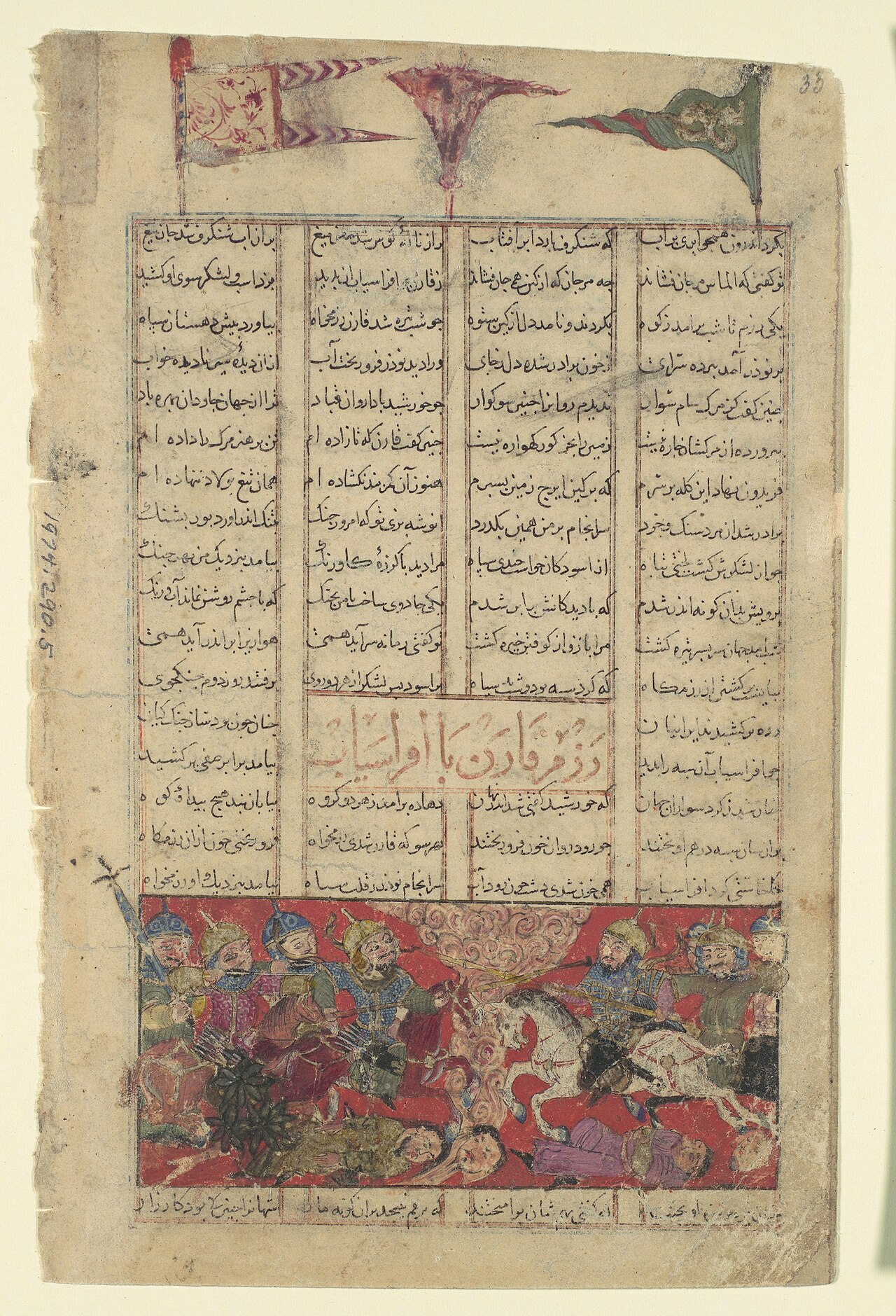
Qaren: The Warrior Son of Kawa
- Sherko Sabir

- 1 hour ago
- 11 min read

Introduction
Among the great champions of the Shahnameh, few carry so resonant a legacy as Qaren, the warrior son of Kawa the blacksmith. Where his father had been the smith whose rebellion against the tyrant Zahhak raised the banner of freedom and brought Faridun to the throne, Qaren carried that heroic inheritance into the age of kings, serving as the chief general of Iran through the reigns of Manuchehr and Nowzar in the long wars against Turan.
Known by such epithets as Qaren the Warrior and Qaren the Hero, he was one of the foremost paladins of the early Shahnameh, a commander of armies and a champion of the battlefield. He fought in the great war of vengeance for Iraj, led the hosts of Iran in the terrible war that followed the death of Manuchehr, and avenged his fallen brother in single combat. From him, tradition holds, descended the famed House of Karen, one of the great noble warrior-lines of the Iranian world.
Belonging to the shared epic heritage of the Iranian peoples, a tradition the Kurds hold in common with the Persians and others of the Iranic world, Qaren is a figure who binds together the great themes of the epic's early age: the legacy of Kawa's rebellion, the loyalty of the champion to the rightful throne, and the long struggle between Iran and Turan. To know Qaren is to know the warrior who carried the fire of his father's heroism into the service of the kings, a faithful general across the generations.
Contents
Who Was Qaren?
Qaren, also spelled Qaran or Karen, is one of the great Iranian warriors of the Shahnameh, the son of Kawa the blacksmith. Ferdowsi gives him the epithets Qaren-e Razmzan, Qaren the Warrior, and Qaren-e Gord, Qaren the Hero, marking him as a champion of the first rank. He served as the chief general and commander of the armies of Iran under the kings Manuchehr and Nowzar, fighting in the great wars against Turan, and he is remembered as the ancestor of the famed House of Karen, one of the noble warrior-lineages of the Iranian tradition.
Son of Kawa the Blacksmith
Qaren's glory begins with his father, Kawa the blacksmith, the great hero of the Kurdish and Iranian tradition whose rebellion against the serpent-tyrant Zahhak is one of the most beloved tales of the Shahnameh. It was Kawa who raised his leather apron upon a spear as a banner of revolt, rallied the people, and helped bring Faridun to the throne, overthrowing the thousand-year tyranny. As the son of so great a father, Qaren inherited a heroic legacy of the highest honour.
Qaren carried that legacy forward into the age of the kings who followed Faridun. The blacksmith's banner, the Derafsh-e Kaveyani, became the sacred standard of the Iranian kings, and the line of Kawa was honoured as a house of heroes. Qaren, as Kawa's son, took his place among the foremost champions of the realm, a warrior who bore both the valour and the loyal devotion to rightful kingship that his father had shown. In him the heroism of the smith who defied a tyrant was renewed in the service of the throne that the smith had helped to raise, a continuity of valour across the generations that is one of the beautiful threads of the epic.
Key Takeaways
Qaren was the warrior son of Kawa the blacksmith.
Ferdowsi calls him Qaren the Warrior and Qaren the Hero.
He was the chief general of the kings Manuchehr and Nowzar.
He fought in the wars of vengeance and against Turan.
He avenged his slain brother Qobad in single combat.
He is the ancestor of the famed House of Karen.
Quick Facts
Name: Qaren (also Qaran, Karen)
Epithets: Qaren-e Razmzan (the Warrior), Qaren-e Gord (the Hero)
Source: The Shahnameh, the Persian Book of Kings
Father: Kawa (Kaveh) the blacksmith
Role: Chief general and champion of Iran
Kings served: Manuchehr and Nowzar
Famous deeds: Wars against Salm, Tur, and Afrasiab's Turan
Avenged: His brother Qobad, slain by the Turanian Barman
Seat: Lord of Ray, in tradition
Legacy: Ancestor of the House of Karen
Champion of Manuchehr
Qaren first rises to prominence as the chief commander of Manuchehr, the righteous great-grandson of Faridun who took up the long-delayed vengeance for the murder of the innocent Iraj. When Salm and Tur, the murderers of their own brother, gathered their armies against Iran, Manuchehr marched to meet them, and at the head of his host rode Qaren, the son of Kawa, his chief general.
In a series of hard-fought battles, Qaren fought alongside the other great champions of the age, among them Sam, the mighty lord of Sistan, and the warriors Garshasp and Qobad. Through their valour, and under Manuchehr's leadership, Salm and Tur were at last defeated and slain, and the long vengeance for Iraj was accomplished. Qaren's role as the trusted commander of the righteous king's armies established him as one of the foremost paladins of the early Shahnameh, the loyal sword of the legitimate throne and a worthy bearer of his father's heroic name.
Commander Under Nowzar
After the long and glorious reign of Manuchehr, Qaren continued to serve as the chief commander of Iran under the king's son Nowzar, whose troubled reign brought the kingdom to crisis. When the Turanian king sent his formidable son Afrasiab to invade the weakened realm, it was Qaren who stood as the principal ally of Nowzar and the commander of the Iranian army in the great war that followed.
The war against Afrasiab was long and bitter, and it went hard for Iran. In the fighting, great champions on both sides fell, and the kingdom, weakened by the failings of Nowzar's rule, was hard pressed. Yet Qaren remained steadfast, the loyal general fighting for his king even as the tide turned against them. In one of the war's episodes, when the royal family of Iran was in danger of captivity, it was Qaren who led a daring expedition with his army to try to save them, pressing on with the rescue even against the king's hesitation. Through all the disasters of Nowzar's reign, Qaren stood as the faithful sword of Iran, a constant of valour and loyalty amid the ruin.
The Avenging of His Brother
One of the most stirring episodes of Qaren's story is the avenging of his brother. In the great war against Afrasiab, the Turanian champion Barman slew Qobad, the brother of Qaren and likewise a son of Kawa, in single combat. The death of his brother demanded vengeance, in the heroic code of the epic, and Qaren took up that vengeance himself.
Qaren faced the Turanian Barman and slew him, avenging the death of his brother Qobad by his own hand. This deed of vengeance, a brother answering for a brother on the field of battle, belongs to the deep pattern of the Shahnameh, in which the shedding of blood demands its answer and the bonds of kin are honoured in the rendering of justice. In avenging Qobad, Qaren showed both his prowess as a warrior and his devotion to the bonds of his house, the heroic line of Kawa, and the episode stands as one of the memorable moments of valour in the long and sombre war of Nowzar's reign.
The House of Karen
Qaren's greatest legacy, beyond his own deeds, is as the ancestor of the House of Karen, one of the great noble warrior-lineages of the Iranian epic tradition. From the line of Qaren, son of Kawa, sprang a house of champions whose members served the kings of Iran across the generations, a lineage of heroes bound by blood to the smith whose rebellion had founded the dynasty's glory.
In the later epic, some of the greatest paladins of Iran are reckoned to the House of Karen, among them the mighty Gudarz and his many heroic sons, including Giv, the champions who fought in the wars of Kay Khosrow against Turan. The House of Karen also echoes in the historical traditions of Iran, where a great noble family of the same name held high honour in the Parthian and Sasanian ages, a sign of how the epic lineage and the historical nobility were interwoven in the Iranian imagination. Through the House of Karen, the heroism of Qaren and of his father Kawa was carried forward into age after age, a fountainhead of champions in the service of Iran.
Symbolism and Meaning
Qaren embodies the ideal of the loyal champion and the continuity of heroism across the generations. As the son of Kawa, he carries forward the legacy of the blacksmith whose rebellion founded the freedom of Iran, transforming the heroism of revolt into the steadfast service of the rightful throne. In him the epic shows how the valour of one great age is renewed in the next, the fire of the father burning on in the son, a beautiful vision of heroism as an inheritance honoured and continued.
He embodies, too, the ideal of the faithful general, the commander who serves his king and his country with unwavering loyalty through both triumph and disaster. Under the righteous Manuchehr and the faltering Nowzar alike, Qaren remained the loyal sword of Iran, fighting on even when the tide turned against him and pressing forward to rescue the royal house in its hour of peril. To contemplate Qaren is to contemplate the virtues of loyalty, valour and devotion to the bonds of kin and king, the qualities of the true champion, and to see how the heroic legacy of Kawa was carried, through his son and his house, into the long story of Iran.
Qaren and the Kurds
Qaren holds a special interest in the heritage of the Kurds, for he is the son of Kawa the blacksmith, the hero whose tale is among the most cherished in the Kurdish tradition and whose rebellion against Zahhak is linked in Kurdish memory to the festival of Newroz. As the warrior son who carried Kawa's heroic legacy forward, Qaren is bound up with one of the figures most beloved in the Kurdish imagination, and his story extends the legacy of the great smith into the age of the kings.
At the same time, it is honest to say that Qaren, like the other heroes of the Shahnameh, belongs to the shared epic heritage of the Iranian peoples as a whole, the tradition the Kurds hold in common with the Persians and others of the Iranic world, rather than being a specifically Kurdish figure. He is a champion of the shared legendary past, the son of a hero whom the Kurds especially cherish. In Qaren, the shared Iranic heritage and the particular Kurdish love of Kawa meet, for he is the warrior in whom the legacy of the blacksmith, so dear to the Kurds, was carried into the service of the kings of the epic. His story belongs to all the peoples who treasure the Book of Kings, with a special resonance for those who hold the tale of Kawa most dear.
Debates and Misconceptions
Is Qaren the same as his father Kawa? No; they are distinct figures, father and son. Kawa is the blacksmith whose rebellion against Zahhak is the famous tale; Qaren is his son, a champion and general of the generations that followed, serving the kings Manuchehr and Nowzar. The two are sometimes confused because of their shared line and heroism, but Qaren's story is his own, set in the age of the kings after Faridun rather than in the rebellion against the tyrant.
How important a character is Qaren in the epic? Qaren is a significant figure of the early Shahnameh, named as the chief general of two kings and given heroic epithets, though he is not one of the central protagonists like Rostam or the great kings. He belongs to the company of the important paladins and commanders, the loyal champions who serve the throne, and his role as the son of Kawa and ancestor of the House of Karen gives him a special place in the lineage of heroes. He is a notable and honoured figure rather than a leading hero, a pillar of the epic's world of champions.
Is the story of Qaren history? No; Qaren belongs to the legendary cycles of the Shahnameh, not to documented history, though the House of Karen that bears his name also appears as a real noble family in the later Parthian and Sasanian periods. The epic Qaren is a figure of the heroic age, and the relationship between the legendary ancestor and the historical house is a matter of how the Iranian tradition wove together myth and noble genealogy. His tale is to be appreciated as legend, rich in meaning, rather than as a record of real events.
Related Topics
Kawa the Blacksmith: the father of Qaren, the hero of the rebellion against Zahhak
Manuchehr: the righteous king whose chief general was Qaren
Nowzar: the king under whom Qaren commanded the army of Iran
Faridun: the king whom Kawa's rebellion raised to the throne
Sam: the great hero who fought alongside Qaren under Manuchehr
Afrasiab: the Turanian king against whom Qaren fought
Kay Khosrow: the king served by the later House of Karen
The Shahnameh: the epic Book of Kings in which Qaren appears
Frequently Asked Questions
Who was Qaren in the Shahnameh?
Qaren was one of the great Iranian warriors of the Shahnameh, the son of Kawa the blacksmith. Given the epithets Qaren the Warrior and Qaren the Hero, he served as the chief general and commander of the armies of Iran under the kings Manuchehr and Nowzar, fighting in the great wars against Turan. He is remembered as the ancestor of the famed House of Karen, one of the noble warrior-lineages of the Iranian tradition.
Was Qaren really the son of Kawa the blacksmith?
Yes, in the Shahnameh Qaren is the son of Kawa (Kaveh) the blacksmith, the hero whose rebellion against the tyrant Zahhak raised Faridun to the throne. As the son of so celebrated a father, Qaren inherited a heroic legacy and carried it forward into the age of the kings, serving as a champion and general of Iran. His brother Qobad was likewise a son of Kawa and a warrior of the realm.
Which kings did Qaren serve?
Qaren served as the chief general of two Pishdadian kings. Under the righteous Manuchehr, he was a commander in the war of vengeance against Salm and Tur for the murder of Iraj. He continued under Manuchehr's son Nowzar as the principal commander of the Iranian army in the great war against the Turanian king Afrasiab, remaining loyal through the disasters of that troubled reign.
How did Qaren avenge his brother?
In the great war against Turan under Nowzar, the Turanian champion Barman slew Qobad, the brother of Qaren and likewise a son of Kawa, in single combat. Qaren took up the vengeance for his brother and faced Barman in battle, slaying him and avenging Qobad's death by his own hand. The episode is one of the memorable moments of valour in the war of Nowzar's reign.
What is the House of Karen?
The House of Karen is one of the great noble warrior-lineages of the Iranian epic tradition, reckoned to descend from Qaren, the son of Kawa. From this line sprang many champions who served the kings of Iran, including, in the later epic, heroes such as Gudarz and his sons. The House of Karen also appears as a real noble family in the historical Parthian and Sasanian periods, a sign of how epic lineage and historical nobility were interwoven in Iran.
Is Qaren a Kurdish hero?
Qaren belongs to the shared epic heritage of the Iranian peoples, which the Kurds hold in common with the Persians and others of the Iranic world, rather than being a specifically Kurdish figure. He has a special resonance for the Kurds, however, as the son of Kawa the blacksmith, a hero especially cherished in Kurdish tradition and linked to the festival of Newroz. In Qaren, the shared Iranic heritage and the particular Kurdish love of Kawa meet.
References and Further Reading
Comments