top of page

Tus: The Proud Paladin of the Shahnameh

Illustrated banner of Kurdish and Iranic heritage evoking Tus, the proud paladin of the Shahnameh and bearer of the Kaviani banner, alongside the Newroz fire, the Simurgh and the tanbur


Introduction


Among the great champions of the Shahnameh, Tus stands as one of the most prominent and most flawed: a mighty paladin and commander of Iran, son of a king, bearer of the most sacred banner of the realm, yet a hero whose pride, rashness and quarrelsome temper brought tragedy and strife upon his own people. He was the son of the ill-fated king Nowzar, and like his father he was a figure in whom high station and grave fault were joined.


As one of the foremost commanders of Iran through the long wars against Turan, and as the hereditary bearer of the Kaviani banner, the Derafsh-e Kaveyani, Tus held a place of the highest honour among the heroes. Yet his story is shadowed by the disasters his own pride and impetuosity brought about, above all the tragedy of Forud and the bitter feud among the champions of Iran. He is the epic's great study of the brave but flawed warrior, the mighty hero undone by his own faults.


Belonging to the shared epic heritage of the Iranian peoples, a tradition the Kurds hold in common with the Persians and others of the Iranic world, Tus is one of the most vivid and human of the Shahnameh's champions, neither hero nor villain but a great warrior marred by serious flaws. To know him is to know the epic's clear-eyed understanding that valour and virtue do not always go together, and that even the mightiest of heroes may bring ruin through pride. His tale is one of the most instructive in all the great cycle of the Book of Kings.


Contents


Who Was Tus?


Tus, also spelled Tous, is one of the great Iranian paladins of the Shahnameh, the son of the Pishdadian king Nowzar and a leading commander of the armies of Iran through the reigns of Kay Kavus and Kay Khosrow. He was the hereditary bearer of the Kaviani banner, the sacred standard of Iran, and one of the foremost champions of the realm. Yet he was also proud, rash and quarrelsome, and his flaws brought about grave disasters, above all the tragedy of Forud and a bitter civil strife among the heroes of Iran. He is remembered as one of the epic's most prominent but most flawed warriors.


Son of King Nowzar


Tus was a son of Nowzar, the Pishdadian king whose troubled reign ended in defeat and death at the hands of the Turanians, and so he was of the royal Pishdadian line, descended ultimately from the great kings of old. After the fall of Nowzar, however, neither Tus nor his brother Gostaham was made king, for the nobles of Iran judged that they lacked the farr, the divine glory that marks the rightful sovereign, and the throne passed instead to other lines. Tus thus became not a king but a champion and commander, the head of the House of Nowzar in its role as a great warrior-family of Iran.


In this, Tus inherited something of his father's character as well as his station. Like Nowzar, he was a figure of high birth and real ability who was nonetheless marred by serious flaws, a brave and capable warrior whose pride and rashness repeatedly caused trouble. The parallel between the flawed father and the flawed son is one of the threads the epic weaves through the House of Nowzar, a lineage of high honour and high fault. Yet where Nowzar's failings brought down a kingdom, Tus's would bring tragedy and strife among the heroes, in a long career of valour shadowed always by the defects of his temper.


Key Takeaways


  • Tus was a great Iranian paladin, the son of King Nowzar.

  • He was the hereditary bearer of the sacred Kaviani banner.

  • He was a leading commander of Iran in the wars against Turan.

  • He was brave but proud, rash, and quarrelsome.

  • His rashness caused the tragedy of Forud and a feud among the heroes.

  • He vanished in the snow at Kay Khosrow's final ascent.


Quick Facts


  • Name: Tus (also Tous)

  • Source: The Shahnameh, the Persian Book of Kings

  • Father: Nowzar, the Pishdadian king

  • Brother: Gostaham, also a hero of Iran

  • Standard: Hereditary bearer of the Kaviani banner

  • Role: Leading commander and champion of Iran

  • Kings served: Kay Kavus and Kay Khosrow

  • Character: Brave but proud, rash, and quarrelsome

  • Famous for: The tragedy of Forud; the feud with the House of Gudarz

  • Fate: Vanished in the snow at Kay Khosrow's ascent


Bearer of the Kaviani Banner


One of the chief marks of Tus's high station was his role as the hereditary bearer of the Derafsh-e Kaveyani, the sacred Kaviani banner that was the royal standard of Iran, born of the apron of Kawa the blacksmith and the emblem of legitimate Iranian sovereignty. To bear this most sacred of standards was a great honour, marking Tus and his house as among the foremost of the champions of Iran, entrusted with the very symbol of the realm's legitimacy and glory.


This honour reflected the high standing of the House of Nowzar among the warrior-families of Iran. As the bearer of the Kaviani banner and a son of a king, Tus held a position of the greatest prestige, a leading figure in the councils of the kings and on the field of battle. The standard he carried was the focus of the army's courage and the sign of the rightful cause, and in bearing it Tus stood at the very heart of the Iranian war effort. Yet the contrast between the dignity of his office and the flaws of his character is one of the ironies of his story, for the bearer of the sacred banner of legitimacy was himself a figure of pride and rashness whose conduct repeatedly brought trouble upon the cause he served.


The Tragedy of Forud


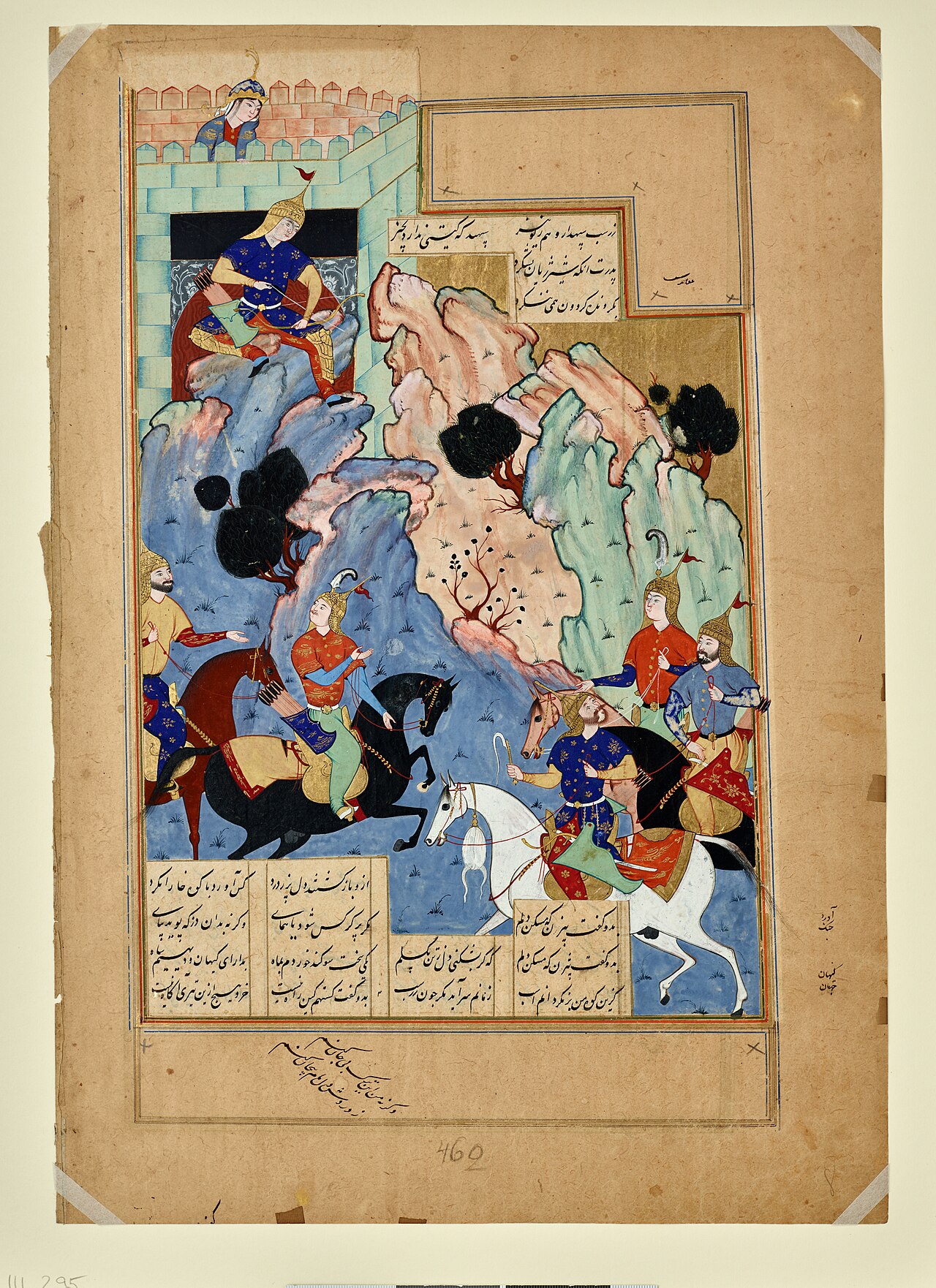
The most grievous of the disasters caused by Tus's rashness was the tragedy of Forud. When the ideal king Kay Khosrow sent his armies against Turan in the great war of vengeance for Siyavash, he gave Tus, the commander, a clear instruction: to avoid the castle of Forud, who was the son of Siyavash by another mother and thus Kay Khosrow's own half-brother, a young man of the royal blood living on the borders.


But Tus, in his pride and willfulness, disregarded the king's command and approached Forud's castle. When the young Forud, recognising his kinsmen, came out and offered to join the avenging army, Tus, instead of welcoming him, attacked him. In the fighting that followed, Forud killed Tus's own son Zarasp and others, before he himself was overwhelmed and slain, a needless death of one of Siyavash's own sons at the hands of the very army sent to avenge his father. The tragedy of Forud, brought about wholly by Tus's disobedience and rashness, is one of the most sorrowful episodes of the war, a disaster that cost the life of an innocent prince and of Tus's own son, and that stands as the clearest demonstration of the ruin that the commander's pride could bring.


The Feud with the House of Gudarz


Tus's quarrelsome pride also embroiled him in a bitter feud with the other great warrior-house of Iran, the House of Gudarz. The deepest cause of the strife was the question of the succession to the throne. When the aged Kay Kavus came to choose his heir, Tus opposed the claim of Kay Khosrow, the son of Siyavash, on the grounds that Kay Khosrow's mother was a Turanian, the daughter of Iran's arch-enemy, and that his coronation might bring the blood of Turan to the throne of Iran.


Tus instead favoured another claimant, and his opposition to Kay Khosrow set him against the House of Gudarz, who loyally supported the rightful heir. A civil strife broke out between the two houses over the succession, in which famous warriors fell on both sides. In the end, the old king Kay Kavus resolved the dispute by setting the rival claimants a test, which Kay Khosrow won, securing his right to the throne. Tus was made to submit to the rightful king, but the episode revealed once more his pride and his readiness to set his own judgement against the proper order, bringing the heroes of Iran to the brink of ruinous internal war. That the bearer of the banner of legitimacy should so nearly have plunged Iran into civil strife is among the sharpest of the epic's ironies.


Commander in the Great War


For all his flaws, Tus remained one of the foremost commanders and champions of Iran throughout the long wars against Turan, a mighty warrior whose valour, when not marred by his rashness, served the realm well. Under Kay Kavus and Kay Khosrow he led great hosts and fought in the major campaigns, and despite the troubles his temper caused, he was repeatedly entrusted with high command, a measure of his real ability and his standing as a leading paladin of the age.


His career thus presents a complex picture, neither simply heroic nor simply disastrous. Tus was a brave and capable commander who could lead armies and win battles, and who served Iran across the reigns of its kings; yet he was also a source of repeated trouble, whose pride and rashness brought tragedy and strife. Like several of the heroes of his generation, he met his end at the close of the age: when the ideal king Kay Khosrow renounced his throne and ascended into the mountains, Tus was among the company of paladins who accompanied him and who perished in the snow on the heights, vanishing from the world as their king did. So passed one of the most prominent and most flawed of the champions of Iran.


Symbolism and Meaning


Tus embodies the epic's clear-eyed understanding that valour and virtue do not always go together. He is the great study of the brave but flawed warrior, the mighty hero of high birth and high office whose pride, rashness and quarrelsome temper repeatedly bring ruin. In him the epic shows that even the bearer of the sacred banner of legitimacy, even a son of kings and a leading champion of the realm, may be marred by serious faults, and may, through those faults, cause tragedy and strife among his own people.


His story carries a moral resonance that runs throughout the Shahnameh: that the gravest dangers often come not only from external enemies but from the flaws of those within, from the pride and willfulness of the great. The tragedy of Forud and the feud with the House of Gudarz both spring from Tus's defects of character, and both bring needless suffering upon Iran. In this, Tus is a cautionary figure, a warning of the harm that pride and disobedience can do even in the hands of a brave and capable man. To contemplate Tus is to contemplate the epic's honest and unsentimental vision of heroism, in which the champions of Iran are not flawless paragons but complex and fallible men, capable of both great valour and grave fault.


Tus and the Kurds


Tus belongs to the shared epic heritage of the Iranian peoples, the tradition of the Shahnameh that the Kurds hold in common with the Persians and other Iranic peoples. As an Iranic people deeply rooted in this cultural world, the Kurds are heirs to its great cycle of kings and heroes, including the champions of the House of Nowzar to which Tus belongs. His figure is part of this common inheritance of legend shared across the Iranian world.


It is honest to say that Tus, like the other heroes of the Shahnameh, is part of this wider Iranic tradition rather than a specifically Kurdish figure; he is a champion of the shared legendary past of the Iranian peoples as a whole. Yet the moral lessons embodied in his story, the dangers of pride and rashness, the harm that the flaws of the great can do, and the complex truth that valour and virtue do not always coincide, are universal, and they have resonated across the whole Iranian cultural world, including among the Kurds who have long treasured the great epic. In the figure of Tus, the shared heritage offers a vivid and instructive portrait of the flawed hero, a portrait that belongs to all the peoples who have cherished the Book of Kings.


Debates and Misconceptions


Was Tus a hero or a villain? Neither, exactly; he is one of the epic's most interesting figures precisely because he is both brave and gravely flawed. Tus was a genuine champion and commander of Iran, a son of kings and bearer of the sacred banner, who fought valiantly for his country. But he was also proud, rash and quarrelsome, and his flaws caused real tragedy, above all the death of Forud. He is best understood not as a hero or a villain but as a complex and fallible man, a brave warrior marred by serious faults, in keeping with the epic's honest vision of its champions.


Was Tus right to doubt Kay Khosrow because of his Turanian mother? The epic does not present his opposition sympathetically. Tus's objection, that Kay Khosrow's mother was a Turanian, was rooted in suspicion and in his own preference for another claimant, and it set him against the rightful heir and the loyal House of Gudarz, nearly plunging Iran into civil war. Kay Khosrow proved to be the ideal king, the great avenger of Siyavash, so that Tus's doubts were not only divisive but mistaken. The episode is presented as another instance of his willful pride rather than of sound judgement.


Is the story of Tus history? No; Tus belongs to the legendary cycles of the Shahnameh, not to documented history, though his name is ancient and the House of Nowzar to which he belongs is part of the old Iranian heroic tradition. He is a figure of the epic's heroic age, his tale rich in moral meaning but belonging to the realm of legend rather than fact. His story is to be appreciated for its powerful and honest exploration of the flawed hero, rather than as a record of real events.


  • Nowzar: the ill-fated king, father of Tus

  • Kay Khosrow: the ideal king whom Tus opposed and then served

  • Kay Kavus: the king who resolved the succession dispute

  • Gudarz: the patriarch of the rival house in the feud

  • Rostam: the great champion who fought alongside Tus

  • Siyavash: the murdered prince, father of Forud and Kay Khosrow

  • The Derafsh-e Kaveyani: the sacred Kaviani banner borne by Tus

  • The Shahnameh: the epic Book of Kings in which Tus appears


Frequently Asked Questions


Who was Tus in the Shahnameh?


Tus was one of the great Iranian paladins of the Shahnameh, the son of the Pishdadian king Nowzar and a leading commander of Iran through the reigns of Kay Kavus and Kay Khosrow. He was the hereditary bearer of the sacred Kaviani banner and one of the foremost champions of the realm, but he was also proud, rash and quarrelsome, and his flaws brought about the tragedy of Forud and a bitter feud among the heroes of Iran.


Who was Tus's father?


Tus was a son of Nowzar, the Pishdadian king whose troubled reign ended in defeat and death at the hands of the Turanians. Tus was thus of the royal Pishdadian line, but after Nowzar's fall neither he nor his brother Gostaham was made king, the nobles judging that they lacked the farr, the divine glory of rightful sovereignty. Tus became instead a champion and commander, the head of the House of Nowzar as a warrior-family.


What was the tragedy of Forud?


When Kay Khosrow sent his army against Turan, he ordered Tus, the commander, to avoid the castle of Forud, his own half-brother, a son of Siyavash. But Tus, in his pride, disregarded the command and attacked Forud when the young man came out to greet his kinsmen. In the fighting Forud killed Tus's son Zarasp before being slain himself, a needless death of an innocent prince caused wholly by Tus's rashness and disobedience.


Why did Tus feud with the House of Gudarz?


The feud arose chiefly over the succession. Tus opposed the claim of Kay Khosrow to the throne, objecting that his mother was a Turanian and fearing the blood of Iran's enemy on the throne, and he favoured another claimant. This set him against the House of Gudarz, who loyally supported the rightful heir, and a civil strife broke out in which warriors fell on both sides, until the old king Kay Kavus resolved the dispute by a test that Kay Khosrow won.


What did Tus carry as the bearer of the Kaviani banner?


Tus was the hereditary bearer of the Derafsh-e Kaveyani, the sacred Kaviani banner that was the royal standard of Iran, born of the apron of Kawa the blacksmith and the emblem of legitimate Iranian sovereignty. To bear this most sacred of standards was a great honour, marking Tus and his house as among the foremost champions of Iran, entrusted with the very symbol of the realm's legitimacy.


How did Tus die?


Tus met his end at the close of the heroic age. When the ideal king Kay Khosrow renounced his throne and ascended into the mountains to vanish from the world, Tus was among the company of paladins who accompanied him. In the tradition, several of these heroes, Tus among them, perished in a great snowstorm on the mountain heights, vanishing from the world as their king did, unable to survive the ascent that bore the king beyond it.


References and Further Reading


Comments


bottom of page